
24/7 Customer Support

Free returns

Same-day & Next-day Delivery

Quality Guaranteed

Unlock Your Welcome Offers: FREE Delivery | Up to 80% OFF | Free 30-day JoyPlus trial
Download the APP
A steam iron can make laundry easier, but choosing by wattage or a striking product description alone can lead to disappointment. UK households need to consider water quality, ironing volume, fabric care and storage space before paying for extra features.
The following buying traps are particularly common:
Continuous steam is the amount released during normal ironing, usually shown in g/min. A higher figure can help with regular creases, while a steam boost provides a short burst for heavier fabrics such as denim, cotton and linen.
For occasional student laundry or a small flat, around 25–30g/min continuous steam may be adequate. Families or anyone ironing large loads may prefer a steam generator iron, which generally combines higher pressure with a larger water tank.
Do not compare boost output alone. A product advertising a high steam boost may still feel slow if its continuous steam rate is modest.
A ceramic soleplate iron is designed to glide smoothly and distribute heat across the ironing surface. A well-shaped precision tip can also help reach shirt collars, cuffs, seams and areas around buttons.
Check whether the soleplate is scratch-resistant and easy to clean. Avoid dragging the iron over zips or metal fastenings where possible. A smooth soleplate can reduce snagging, but temperature settings and the garment’s care label remain important.
A 200–300ml integrated tank keeps a standard steam iron relatively compact. Larger tanks reduce interruptions but add weight. Steam generator models use a separate tank, often with removable filling and scale-collection features.
In hard-water areas, look for a removable scale collector, anti-scale system or clear cleaning instructions. Always follow the product manual regarding tap water, filtered water or ironing water. Scented ironing water should not be assumed to suit every appliance.
For example, Comfort Vaporesse Ironing Water Fresh Sky 1l is supplied ready to pour into an iron’s reservoir without dilution. Its product information describes a fragrance, anti-static formula and limescale protection. The directions also advise reducing steam power when using powerful steam generator irons to help avoid spitting or crackling. Check your iron’s instructions before use, and browse the wider ironing water range if you want to compare alternatives.
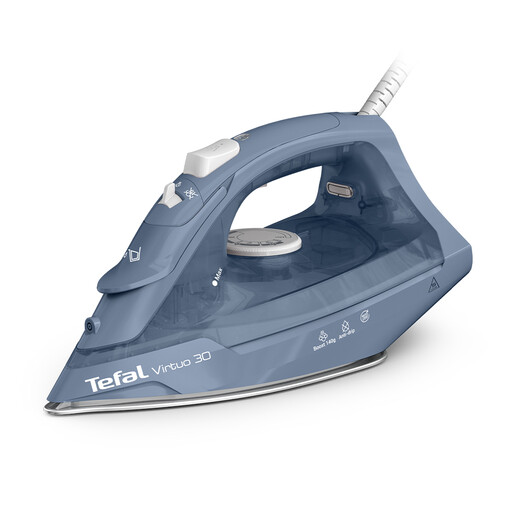
Why This Fits Their Persona: A practical choice for students, renters and smaller households that want a standard steam iron without the footprint of a separate generator base.
Its 240ml tank, anti-drip system and auto shut-off provide useful everyday functions without requiring a larger ironing station.
2200W power, 30g/min continuous steam, 140g/min boost, ceramic soleplate and vertical steaming.
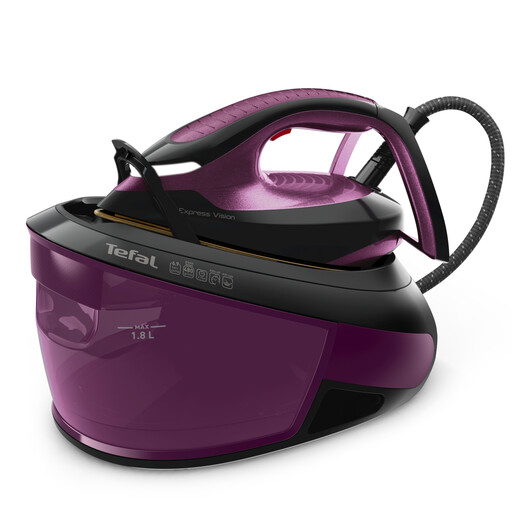
Why This Fits Their Persona: Suitable for busy UK families and households handling sizeable laundry loads, where fewer refills and stronger steam are priorities.
The 1.8L removable tank addresses frequent refilling, while the scale collector makes routine maintenance more visible.
6.9-bar pressure, 130g/min continuous steam, 480g boost, One Temp technology and vertical steaming.
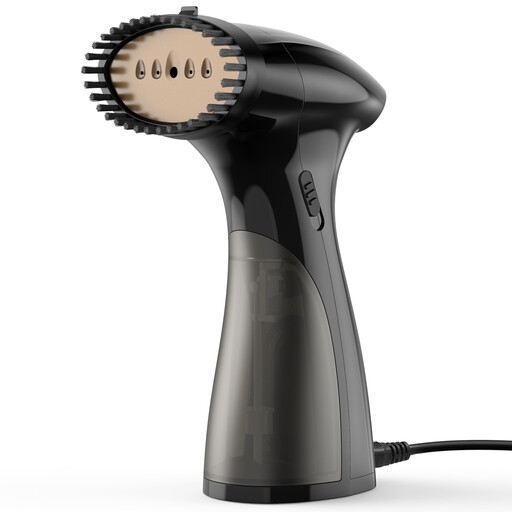
Why This Fits Their Persona: A convenient option for commuters, office users, frequent travellers and anyone refreshing hanging clothes without setting up an ironing board.
Its 150ml tank and 0.8kg weight make portability clear, while vertical and horizontal operation offers more flexibility than a vertical-only steamer.
800W output, 360-degree operation, one-button control and a bristle brush attachment for thicker fabrics.
Before buying, also check auto shut-off, anti-drip protection, cord length, heat-up time, warranty terms and UKCA or CE marking where applicable. Use the garment care label as the final guide for temperature and steam.
We have compiled a complete, real-time list of products that fully satisfy these strict selection criteria and UK safety regulations.
No. Read the appliance manual first. Some irons recommend tap water, filtered water or a specific mixture. If the manufacturer permits ironing water, follow the product directions and do not dilute it unless instructed. Emptying the tank after use can help reduce stagnant water and residue.
Running cost depends on wattage, ironing time, energy tariff and operating mode. A steam generator may complete a large load more quickly, but it can use more power while heating. Eco modes may reduce energy consumption; compare the stated specifications rather than assuming a larger appliance is automatically more economical.
Lifespan depends on frequency of use, water quality, storage and maintenance. Empty the tank, clean the soleplate as directed and use the anti-scale system regularly. Keep the iron upright and allow it to cool before storing. A product with clear warranty and repair information may offer more practical long-term value than one selected on price alone.