For modest batches of cotton shirts between holiday-let changeovers, choose a conventional steam iron with steady steam and a tip that can reach collars and button areas. Consider a steam generator when larger loads make its separate base and greater tank capacity worthwhile, provided you have room to use and store it. In a hard-water area, check the model’s descaling instructions whichever type you choose.
Who is pressing the shirts?
Changeover-day shirt pressers
Hosts or cleaners working through a small batch between stays may value steady steam, enough water for the session and a tip that reaches collars and spaces between buttons. Tefal UK and Morphy Richards UK list these features on specific conventional irons; compare the actual models rather than assuming every iron has them.
Hard-water-area operators
Where scale builds up quickly, a cleaning process that fits the changeover routine matters alongside steam output. Philips UK advises that scale develops faster with harder water, so check the chosen model’s water and descaling instructions.
High-volume linen-and-shirt managers
Operators pressing shirts alongside larger laundry loads may find a steam generator’s larger tank useful for reducing refill interruptions. Philips UK describes a compact generator format with a 1.5 L tank; allow space for the separate base before choosing this route.
What matters when choosing an iron?
Conventional steam iron
Choose when: Shirt batches are modest and you want a one-piece appliance for working around collars, cuffs and buttons.
Allow for: You hold the whole iron and may need to refill its smaller tank during a longer session.
Steam generator iron
Choose when: You regularly press larger loads and have room for a separate base.
Allow for: The base needs storage and setup space, even if a larger tank means fewer refill stops.
| Concern |
What to check |
Who this matters to |
| Working through a batch |
Compare continuous steam separately from the short steam boost. Check tank capacity for the number of shirts you usually press. |
If I have several shirts to finish before a changeover, I want steam I can use throughout the batch rather than judging the iron by one brief boost. Around 36% of consumers put batch pace first. |
| Collars, cuffs and buttons |
Look for a precision tip and controllable settings; follow each shirt’s care label. |
A smooth shirt front is not enough if I struggle to reach its collar and button placket. For around 29% of consumers, detail control is the primary need. |
| Scale and upkeep |
Check the model’s scale-collection or self-cleaning method and its instructions for water and descaling. |
With hard water, I need a cleaning routine I can keep up so scale does not disrupt pressing. Scale management comes first for around 21% of consumers. |
| Storage and handling |
Measure the ironing area and storage shelf; compare the appliance format, tank size and cord reach. |
If cupboard space is tight, I would rather manage an occasional refill than store a separate base. Around 14% of consumers prioritise space and simple handling. |
Buying pitfalls to avoid
-
Choosing by the steam-boost figure alone
A boost is intermittent, while continuous steam describes output during sustained pressing. The distinction matters when you are working through several cotton shirts.
Compare the two figures separately, then check the tank size and whether the tip reaches narrow shirt areas.
-
Leaving descaling out of the routine
Philips UK advises that harder water speeds scale formation and that regular descaling helps avoid marks, leaks and reduced steam output.
Read the exact model’s water and cleaning instructions before buying, and make the required maintenance part of the holiday-let routine.
-
Buying a generator without planning where it goes
A larger tank can mean fewer refills during substantial loads, but a steam generator also has a base to set up and store.
Measure both the storage shelf and working area. Choose the larger format when the usual workload justifies that space.
-
Treating auto-off as the whole safety plan
Auto-off is a model feature, not a substitute for keeping the appliance, plug and cable in safe condition.
Check the model’s instructions, inspect and maintain the equipment appropriately, and unplug it after use.
Brands to consider
Tefal
The Ultimate Pure range is relevant if you are comparing conventional irons with sustained steam and a scale-filter feature.
- Tefal UK specifies 60 g/min continuous steam, a 260 g/min boost and a 350 ml tank for the Ultimate Pure FV9845G0.
- The MicroScale filter and any claims about filtered steam or preventing stains are Tefal’s model-specific claims, not features or outcomes to assume across its irons.
Morphy Richards
Its cited conventional irons offer different balances of steam output, tank size and appliance weight.
- Morphy Richards UK specifies 50 g/min continuous steam, a 380 ml tank and a precision tip for its Turbosteam 2800W model.
- Its Steam Flow 2400W is specified at 35 g/min continuous steam with a 450 ml tank and a 1.2 kg body; do not transfer one model’s figures to another.
Philips
Philips is relevant to the steam-generator route for larger loads and provides model-specific descaling guidance.
- Philips UK describes a compact generator format with a 1.5 L tank for substantial ironing loads.
- Check the condition and exact model of a listing: the cited PerfectCare 6000 PSG6026/20R1 is refurbished, and its specifications should not be assumed for other Philips generators.
Joybuy product choices
These choices cover a conventional steam iron for shirt details and a steam generator to consider for larger pressing sessions. Check tank capacity, maintenance instructions and available space against your own changeover routine.
 No image available
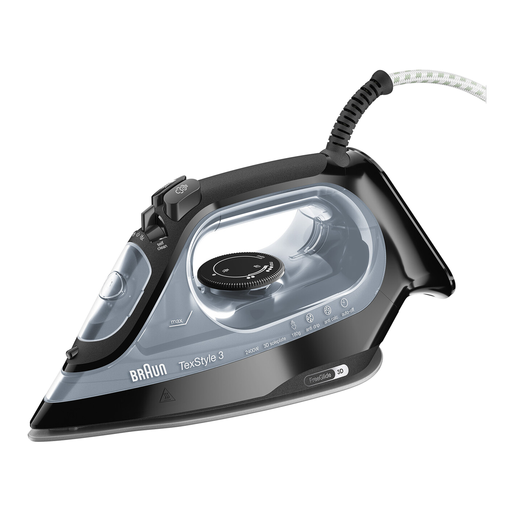
Braun TexStyle 7 Pro SI7160BL Steam Iron, Blue
Consider this conventional iron if reaching collars and button areas matters during a modest shirt batch. Its product name specifies a precision tip, 2600 W rating and FreeGlide 3D EloxalPlus soleplate; check whether its tank capacity suits your usual load.
View on Joybuy
 No image available
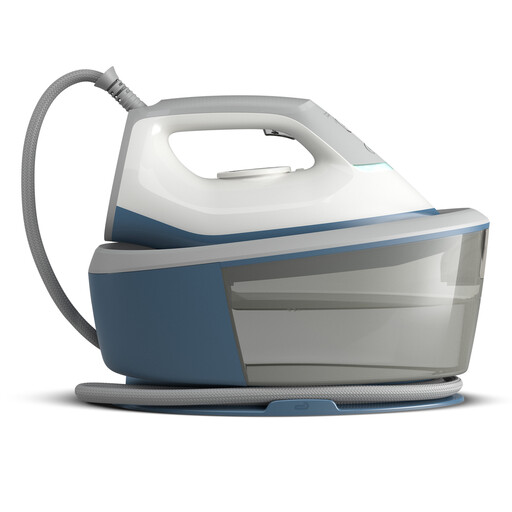
Philips 2000 Series PSG2000/20 Steam Generator
Consider the generator format if shirt pressing is part of a larger, frequent laundry session and you have room for its separate base. The product name specifies a 2400 W rating; check the unit’s footprint, shirt-detail controls and cleaning instructions before choosing it.
View on Joybuy
Common questions
Do I need a steam generator for holiday-let cotton shirts?
Not for a modest batch: a conventional steam iron keeps the setup compact while letting you work on collars and buttons. Consider a generator for regularly larger loads if you can accommodate its separate base; Philips UK describes a compact generator format with a 1.5 L tank, but that figure does not apply to every model.
Should I compare continuous steam or the steam boost?
Compare continuous steam first when pressing several shirts, because the boost is only a brief burst. For distinct model examples, Tefal UK specifies 60 g/min continuous steam and a 260 g/min boost for the FV9845G0; Morphy Richards UK specifies 50 g/min and 170 g/min respectively for its Turbosteam 2800W.
How do I manage an iron in a hard-water area?
Follow the chosen model’s water and descaling instructions rather than applying one routine to every iron. Philips UK advises that harder water accelerates scale formation; check how often the model needs cleaning and make that task part of regular upkeep.
Does a holiday-let iron need annual PAT testing?
Do not assume that one annual testing rule covers every holiday let or portable appliance. For self-catering holiday homes in England, GOV.UK directs operators to Health and Safety Executive electrical-safety guidance. The Health and Safety Executive says electrical equipment must be maintained to prevent danger and does not prescribe annual PAT testing for all portable appliances in low-risk environments. Check the requirements for the nation and circumstances of your property.


