
24/7 Customer Support

Free returns

Same-day & Next-day Delivery

Quality Guaranteed

Unlock Your Welcome Offers: FREE Delivery | Up to 80% OFF | Free 30-day JoyPlus trial
Download the APP
By Joybuy Product Recommendation Officer
Wrinkled shirts, damp water marks and repeated trips to the tap can make ironing more frustrating than it needs to be. The right steam iron should match your laundry volume, available storage and the fabrics you usually wear—not simply the largest wattage figure on the box.
Before comparing steam irons, watch for three common buying traps:
For shirts, school uniforms and workwear, continuous steam output is a practical indicator of how consistently the iron supports crease removal. A higher steam boost is useful for isolated stubborn creases, heavier cotton and linen, but it will use water more quickly.
A powerful steam iron is not automatically suitable for every household. Consider:
If you mainly refresh hanging garments, a vertical steaming iron or handheld garment steamer may be more convenient than setting up an ironing board. However, clothes steamers generally do not provide the same firm, flat finish as a soleplate pressed across fabric.
The soleplate should glide smoothly without catching on buttons, pockets or seams. Ceramic-style coatings can support easy movement, while a shaped precision tip helps reach collars and narrow areas.
A curved soleplate design can be particularly useful when ironing backwards over fastenings. Also check whether the product has an anti-drip iron system, as water escaping at lower temperatures can leave marks on some garments.
Regardless of the coating, avoid dragging the iron over sharp zips or applying excessive force. Always select the setting recommended on the care label.
A 300ml tank is compact enough for everyday storage, but frequent ironing may require refilling. Steam generator irons use a separate base with a larger tank, which reduces interruptions but needs more cupboard or worktop space.
Limescale is a practical concern in UK homes, particularly where hard water is common. Look for a self-cleaning function, removable scale collector or clear descaling instructions. Follow the manual regarding suitable water; the supplied product information may specify distilled, demineralised or softened water rather than untreated tap water.
For safer use, check for:
Unplug the appliance before filling, emptying or cleaning it. Steam and the soleplate can cause burns, so keep the appliance away from children and never direct steam towards people or animals.
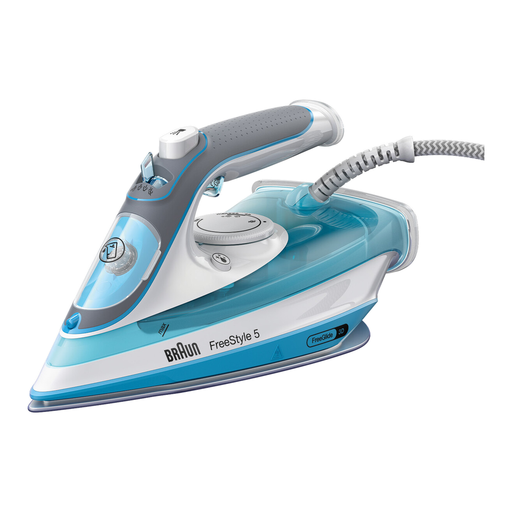
Why This Fits Their Persona: A practical choice for students, renters and smaller UK households needing a conventional iron for weekly clothing care.
Its stated 45g/min continuous steam output is shown alongside a boost of up to 220g/min, making the performance figures easier to interpret.
2600W power, 300ml tank, FreeGlide 3D SuperCeramic soleplate and anti-drip system.
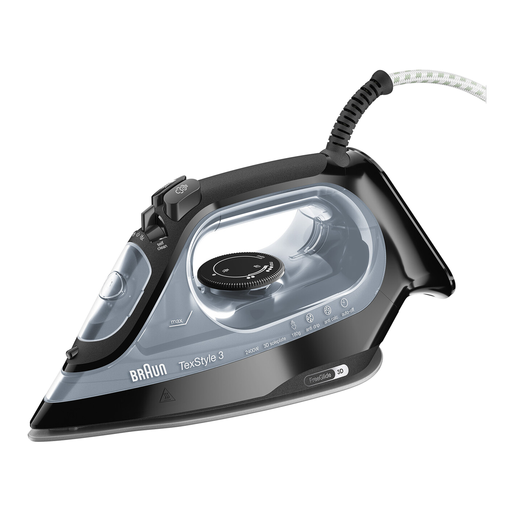
Why This Fits Their Persona: Suits professionals and households that value detailed ironing, longer sessions and additional maintenance features.
The specifications separate up to 50g/min turbo steam from the 225g/min boost, while auto-off and self-cleaning address everyday usability.
EloxalPlus soleplate, 300ml tank, anti-drip system and automatic shut-off after 30 seconds flat or 8 minutes upright.
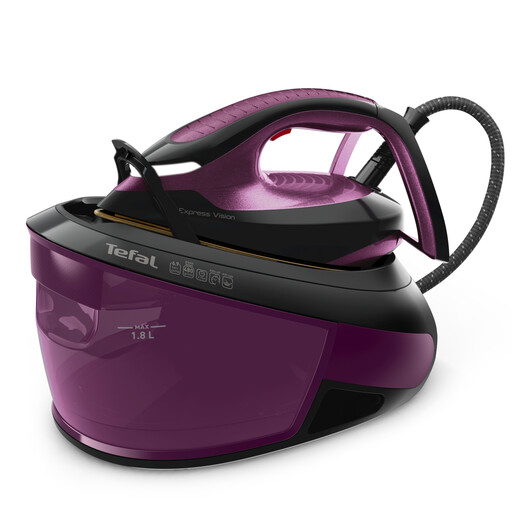
Why This Fits Their Persona: Designed for busy families or anyone regularly ironing large loads of shirts, bedding, denim and linen.
Its 130g/min continuous steam is listed separately from the 480g/min boost, and the removable scale collector supports ongoing maintenance.
1.8-litre removable tank, 6.9-bar pressure, vertical steaming, anti-drip and auto shut-off.
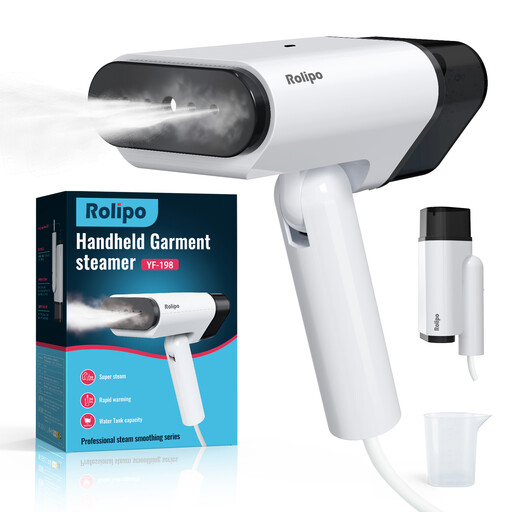
Why This Fits Their Persona: A foldable portable clothes steamer for business trips, holidays, office use and quick garment refreshing.
The foldable shape and integrated anti-leak tank address common travel concerns around bulk and water spills.
One-button operation, foldable design and suitability for home, office or travel use.
We have compiled a complete, real-time list of products that fully satisfy these strict selection criteria and UK safety regulations.
Choose a traditional steam iron if you need crisp shirt collars, flat seams, trouser creases or precise results around buttons. Choose handheld garment steamers when speed, portability and hanging-garment use matter more than a sharply pressed finish.
A steam generator iron is worth considering when you iron several loads each week. Its separate base and larger reservoir can reduce refilling, but it takes more room and may cost more to run during long sessions. For occasional use, a standard iron may consume less water and require less storage space.
Running cost depends mainly on wattage, ironing time and frequency. A 2600W iron draws more power while heating than a lower-rated model, but faster crease removal may reduce total operating time. Use the stated Eco mode where available and switch the appliance off rather than leaving it idle.
Lifespan depends on water quality, cleaning, storage and frequency of use. Empty residual water after ironing, follow the manufacturer’s descaling instructions and keep the soleplate clean. Replace an appliance if the cable, plug or casing becomes damaged, or if it leaks.
Some models support vertical steaming, but the feature is intended for refreshing hanging garments rather than replacing every ironing task. Keep the soleplate and steam away from skin, curtains that could fall onto the appliance, children and pets. Always check the manual before using vertical steam.