
24/7 Customer Support

Free returns

Same-day & Next-day Delivery

Quality Guaranteed

Unlock Your Welcome Offers: FREE Delivery | Up to 80% OFF | Free 30-day JoyPlus trial
Download the APP
A steam iron can make laundry quicker, but the wrong model may leave water marks, require constant refilling or struggle with heavier fabrics. UK shoppers often focus on wattage or a dramatic steam boost figure while overlooking the details that affect daily use.
Three common buying traps are worth avoiding:
The right steam iron should suit your laundry volume, preferred handling weight, fabric mix and available storage space.
For everyday shirts, school uniforms and cotton clothing, look at continuous steam output, measured in grams per minute. Around 20–30g/min is represented across several compact household models in this selection.
A steam boost or steam shot is designed for concentrated bursts on thicker fabrics and irons for stubborn creases. Higher figures can be useful for denim, linen, seams and hanging curtains, but they do not necessarily mean the iron will produce that level continuously.
A vertical steam iron function is convenient for refreshing hanging garments. It is not a complete replacement for pressing clothes on an ironing board, particularly where sharp creases are required.
A ceramic soleplate steam iron is designed to move smoothly across garments and is commonly chosen for mixed household loads. Non-stick coatings can also provide easy movement, although users should follow the care instructions and avoid dragging the soleplate forcefully over hard zips or sharp fasteners.
A precision tip is useful around collars, cuffs, seams and buttons. Curved soleplate designs may also help the iron move backwards over pockets and other raised details.
Tank capacity affects how often you need to refill. A 240–300ml tank is practical for many regular ironing sessions, while a steam generator iron with a separate tank is more suitable for large laundry loads.
Weight is a personal choice. A lightweight steam iron can be easier to manoeuvre, while a heavier model may feel more stable when pressing thick cotton. Check the cord length and heel-rest design as well as the stated product weight.
For hard-water areas, look for an anti-scale, calc-clean or self-cleaning system. An anti-drip steam iron helps reduce water leakage at lower temperatures, while an auto shut-off iron can switch off when left stationary. These features support safer use, but the appliance should still be unplugged after ironing.
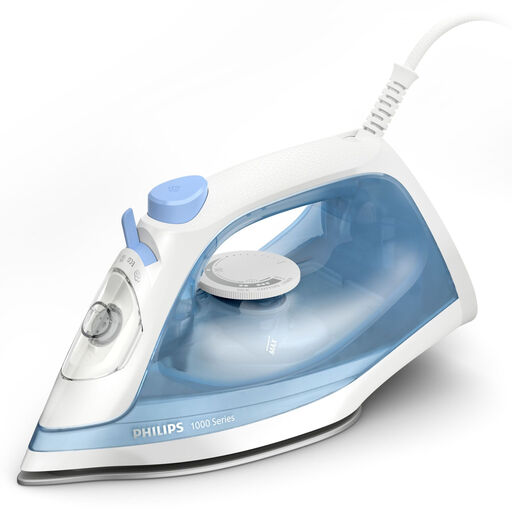
Why This Fits Their Persona: A straightforward option for students, smaller households and occasional ironing, with a compact design and practical controls.
Its 250ml tank, calc-clean function and anti-drip design address frequent refilling, limescale and leakage concerns.
2000W power, up to 20g/min continuous steam, up to 90g steam boost and an ergonomic textured handle.
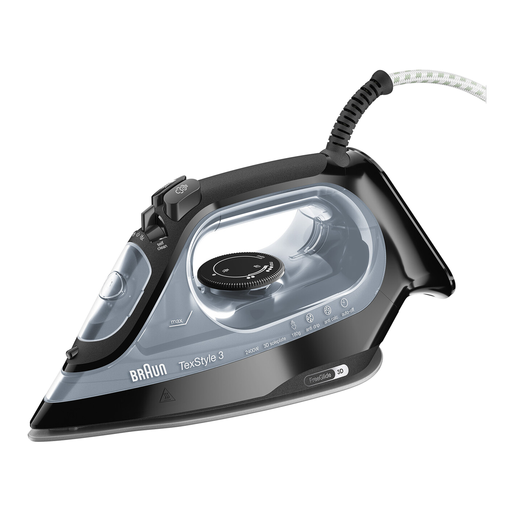
Why This Fits Their Persona: Suitable for shoppers who value a longer cord, strong steam delivery and a soleplate designed to move around buttons and pockets.
The anti-drip and self-cleaning functions help address staining and limescale, while auto shut-off adds a useful safety layer.
Up to 50g/min constant steam in Turbo mode, up to 225g/min steam boost, a 300ml tank and 2.5m cord.
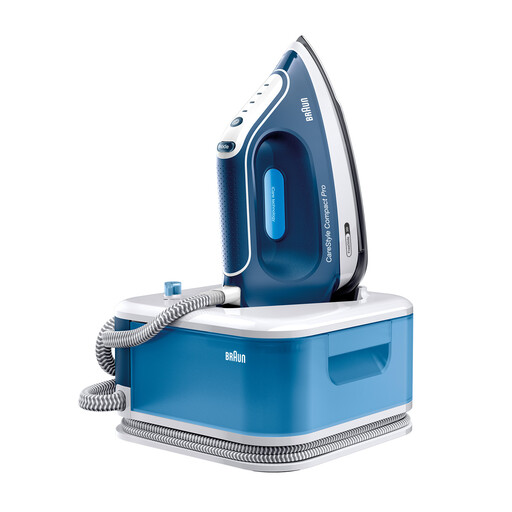
Why This Fits Their Persona: A steam station for families and households handling large laundry piles, thick fabrics or frequent ironing.
Its separate 1.5-litre removable tank reduces repeated refilling, while 7.5-bar pump pressure provides a clear distinction from standard irons.
Up to 125g/min continuous steam, up to 550g/min steam shot and iCare temperature technology.
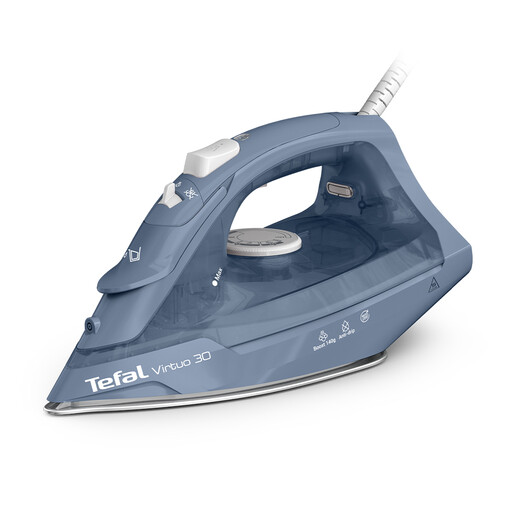
Why This Fits Their Persona: A compact corded steam iron for regular family use, workwear and quick touch-ups before leaving home.
The ceramic soleplate, anti-drip system, anti-scale function and auto shut-off cover several practical concerns often missed in basic models.
2200W power, approximately 30-second heat-up, up to 30g/min continuous steam, vertical steaming and a 240ml tank.
We have compiled a complete, real-time list of products that fully satisfy these strict selection criteria and UK safety regulations.
Running cost depends mainly on power rating and how long the appliance is used. A 2000W iron uses 2kWh if operated continuously for one hour, although thermostatic controls mean it may not draw maximum power throughout. Shorter sessions, Eco modes and switching the iron off between tasks can reduce consumption.
Some listed models are designed for tap water, but water hardness varies across the UK. Always follow the specific manual. If the instructions recommend filtered, softened or demineralised water, use that guidance and activate the calc-clean function regularly. Emptying the tank after use can also help with storage and maintenance.
Service life depends on frequency of use, water quality, storage and cleaning. Do not continue using an iron that leaks, has a damaged cord or shows electrical faults. Unplug before filling, emptying or cleaning, keep the hot soleplate away from children and follow every garment care label. A suitable steam iron, maintained according to its instructions, is more likely to remain consistent across regular laundry sessions.