
24/7 Customer Support

Free returns

Same-day & Next-day Delivery

Quality Guaranteed

Unlock Your Welcome Offers: FREE Delivery | Up to 80% OFF | Free 30-day JoyPlus trial
Download the APP
Choosing STEM toys for kids can be surprisingly difficult. Product descriptions often focus on bright colours, large piece counts or impressive-looking experiments, while leaving out details that affect everyday play. A kit may look exciting in the box but become frustrating if the instructions are unclear, replacement materials are difficult to find or the recommended age does not match the child’s ability.
As the Joybuy Product Recommendation Officer, I focus on practical details that help families compare products without relying on exaggerated marketing language.
A set with 126 pieces may appear more useful than a 36-piece set, but quantity alone does not guarantee engaging play. Check what the pieces actually do. Magnetic tiles with track components can offer construction and motion-based play, while a smaller set may be more suitable for a young child developing grip and shape-recognition skills.
Many science kits for kids contain small parts, powders, modelling materials or chemicals. “Educational” does not mean suitable for independent use. Always check the age grading, warning label and whether an adult must supervise each activity.
Magnetic building toys need particular care. If a magnet becomes exposed or is swallowed, it can cause serious internal injury. Inspect magnetic tiles regularly and stop using any piece that is cracked, damaged or has a loose magnet.
Some chemistry sets for children need household ingredients, batteries, protective clothing or a clear work surface. Others include most of the materials but still require cleaning after use. Before buying, check what is included and whether the activity suits your available space, especially in a smaller UK home.
Age recommendations are a useful starting point, not a substitute for supervision. For ages 3 and above, look for larger, easy-grip components and straightforward construction. Magnetic tiles and simple DIY craft kits for kids can work well for short, repeatable play sessions.
For children aged 8 and above, electrical circuit kits, crystal-growing kits and more structured chemistry sets can introduce sequencing, observation and cause-and-effect. These activities usually require more patience and careful instruction-following.
Look for clear material information, such as ABS plastic, rounded edges and stated safety declarations. Some products in this selection identify BPA-free plastic and smooth finishes. These details can help with everyday handling, but parents should still inspect toys before use.
For magnetic building toys, check that the magnets are enclosed securely. Store loose pieces in a closed box and keep them away from younger children and pets.
A low-priced kit may require additional batteries or consumables. For example, some electrical and chemistry products require AA or AAA batteries, which are not included. Other kits use household materials such as water, salt or sugar, while crystal and slime activities may have limited included ingredients.
Compare the number of experiments, the quality of the instructions and whether the set can be reused. A reusable construction toy may offer frequent play, whereas a one-time experiment kit may be more suitable as a focused birthday activity.
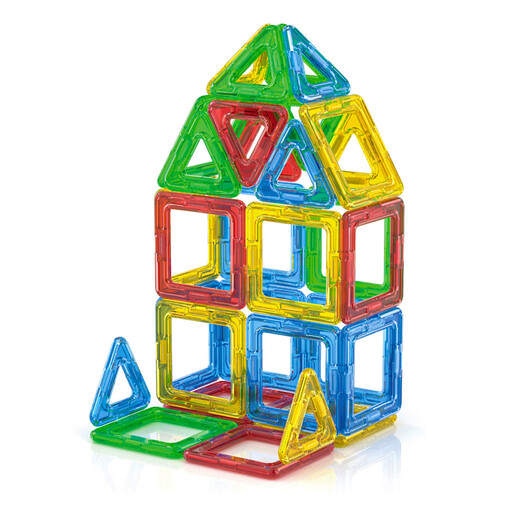
Why This Fits Their Persona: A compact introduction to magnetic construction for children aged 3 and above, suitable for smaller play areas and first-time buyers.
It presents a clearly stated 36-piece format rather than relying on an inflated component count, with a colour box for storage.
ABS plastic, rounded edges, no batteries required and lightweight pieces designed for small hands.
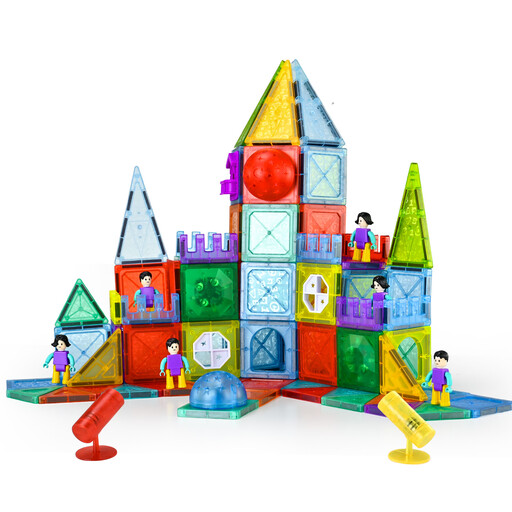
Why This Fits Their Persona: Suits families wanting a larger educational building toy with construction, motion and visual play in one set.
The 126 pieces include geometric tiles and track components, giving the child more than decorative blocks to arrange.
Transparent 3D pieces, rolling-ball tracks, no batteries and a listed weight of 1.85 kg.
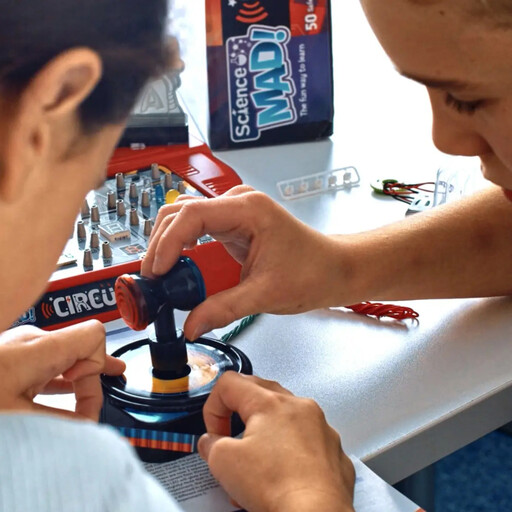
Why This Fits Their Persona: Designed for children aged 8 and above who are ready to move from general building play into structured electrical experiments.
It is positioned around circuit building rather than vague science play, with components for connections, lamps and basic controls.
Includes circuit components and an instruction guide; requires 2xAA batteries, which are not included.
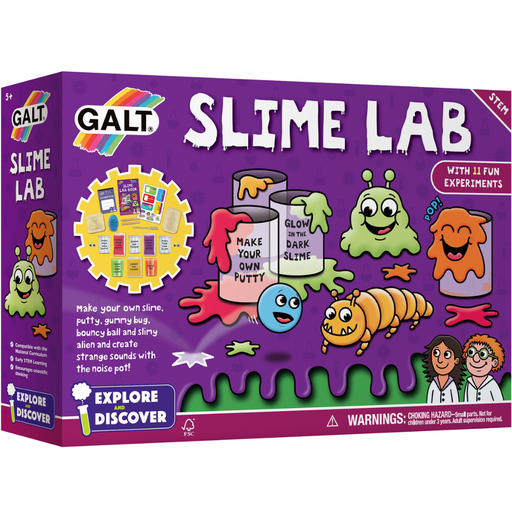
Why This Fits Their Persona: A practical choice for children aged 5 and above who enjoy tactile activities and adults who can prepare a protected work surface.
The set specifies seven slime-based experiments and includes a lab book, making the activity clearer than a generic tub of slime.
Includes glow slime, bouncing putty, a notepad and full-colour instructions; no batteries are required.
We have compiled a complete, real-time list of products that fully satisfy these strict selection criteria and UK safety regulations.
Some are. Magnetic tiles, simple construction sets and early science activities may be suitable from age 3 or 4, depending on the product label. Avoid kits containing small parts, magnets or chemicals for younger children unless the packaging specifically confirms suitability. Adult supervision remains important.
A clear, wipeable table is usually sufficient for smaller kits. Cover the surface, keep food and drinks away, and follow the instructions for storage and cleaning. Larger construction toys and marble runs need additional floor space to build stable structures.
Some have none beyond the original purchase. Manual magnetic tiles and many building toys do not require batteries. Electrical kits may require AA or AAA batteries, while chemistry, slime and crystal activities may use up certain materials. Check the contents list before buying so the total cost is clear.