
24/7 Customer Support

Free returns

Same-day & Next-day Delivery

Quality Guaranteed

Unlock Your Welcome Offers: FREE Delivery | Up to 80% OFF | Free 30-day JoyPlus trial
Download the APP
A step stool can make handwashing, reaching cupboards and changing a light fitting more convenient, but choosing the wrong design can create problems quickly. A model may look stable in a product photo yet feel unsuitable on a tiled bathroom floor, while a compact folding stool may be stored easily but lack the height needed for your shelves.
Before buying a step stool, look beyond colour and promotional wording. The most useful comparison points are stability, dimensions, load information, surface grip and how the stool will be stored between uses.
A stated load limit is useful, but it does not tell you everything about stability. The platform size, base width, locking mechanism and condition of the floor also affect how the stool behaves. A stool with a generous weight limit may still be unsuitable if the user stands on the edge or leans sideways.
Always check the manufacturer’s instructions, use the stool on a flat, dry surface and avoid exceeding the stated maximum load.
A folding step stool is convenient for kitchens, bathrooms and utility rooms, particularly where storage space is limited. However, it must be fully opened and locked before use. Folding mechanisms can also present a finger-trapping risk, so children should not open or close these products without adult supervision.
Look for clear instructions and inspect the hinges, locking points and standing surface regularly.
Grooved or textured platforms can provide additional grip, but they cannot compensate for wet floors, unsuitable footwear or climbing behaviour. A toddler step stool should be used with an adult nearby, especially beside a sink or kitchen worktop.
Avoid allowing children to rock, jump or carry items while standing on the stool. An anti-tip step stool should still be positioned centrally and checked for movement before each use.
For a bathroom sink, a low children’s bathroom step stool may be sufficient. For high shelves or cupboards, adults may prefer a two-step ladder stool with a taller top platform. Measure the height of the surface you need to reach, then consider the user’s own height and whether they can stand comfortably without stretching.
A kitchen step stool should not encourage overreaching across hot surfaces, sharp objects or heavy appliances. For regular household access, choose a platform that allows the user to stand centrally with both feet supported.
A wide pedal or standing platform can make positioning easier, particularly for younger children. Integrated handles may also help a child hold the sides while climbing, although they should not be treated as a substitute for supervision.
Check whether the product uses a broad base, reinforced joints or a trapezoidal frame. For a portable step stool, balance compact storage against the size of the standing area. A very small folded product may be easy to carry but less comfortable for larger feet.
Common materials include polypropylene, high-density board and bamboo. Polypropylene is lightweight and practical for a folding step stool. High-density board can suit a fixed toddler design, while a bamboo footstool may appeal to households wanting a natural finish and a more furniture-like appearance.
Check that painted surfaces are smooth and free from visible burrs or splinters. A surface that can be wiped with a damp cloth is useful in bathrooms and kitchens, where toothpaste, soap and food residue can accumulate. Also review the assembly instructions, included fixings and any stated load information before purchase.
For products sold in the UK, read the supplied warnings and product information carefully. Where applicable, look for relevant conformity information and follow the manufacturer’s age, weight and household-use instructions.
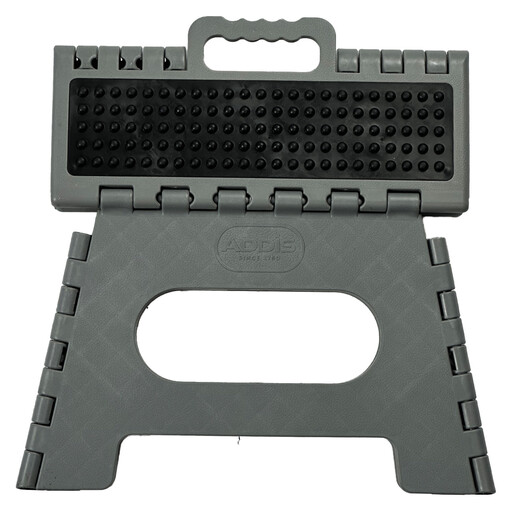
Why This Fits Their Persona: A practical choice for households wanting one compact stool for cupboards, wardrobes and occasional bathroom tasks without permanent floor space.
The product description specifies a textured standing surface, a fully opening lock and a 150 kg maximum weight limit. Users must still follow the flat-surface and no-overreaching warnings.
Fold-flat storage; integrated carry handle; polypropylene construction; dimensions of 28.5 × 34.5 × 22.5 cm.
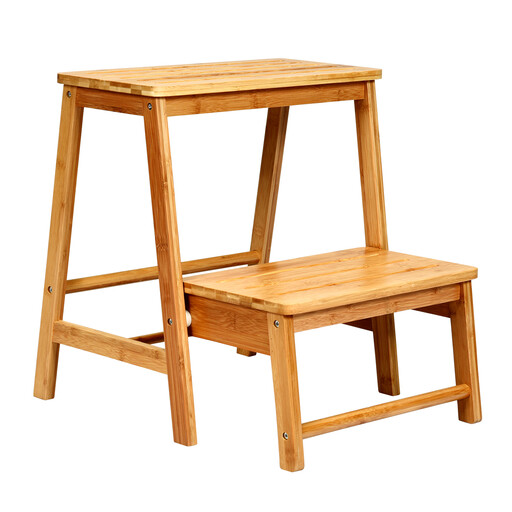
Why This Fits Their Persona: Suitable for buyers who want a two-step ladder stool that can remain visible in a kitchen, living room, office or garage rather than being stored away after every use.
Its two wide steps have anti-slip grooves, while the trapezoidal frame is designed for a broader stance. The stool should still be used on a stable surface and checked before climbing.
Natural bamboo construction; foldable lower step; 45 × 52 × 48 cm dimensions; listed load capacity of up to 100 kg.
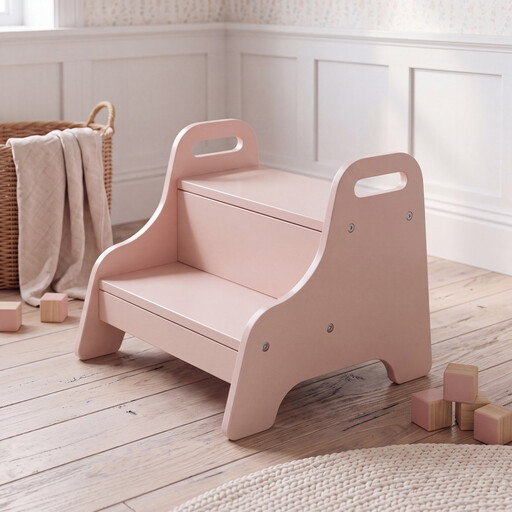
Why This Fits Their Persona: Designed for families helping a toddler reach a bathroom sink, kitchen counter or study area with a fixed, child-oriented design.
The design includes wide pedals, integrated side handles and a mortise-and-tenon structure reinforced with screws. Adult supervision remains necessary during use.
High-density board construction; water-based painted finish; smooth surface; suitable for handwashing, brushing teeth and reaching nearby items.
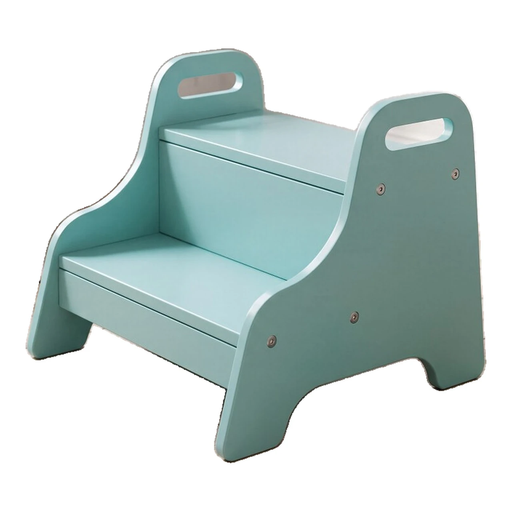
Why This Fits Their Persona: A child-focused option for households that prefer a blue finish while using the stool across bathroom, kitchen and study spaces.
It uses the same described wide-step, side-handle and reinforced mortise-and-tenon format as the pink version, rather than relying on colour or appearance alone.
High-density boards; water-based paint; wipe-clean finish; assembly uses the supplied stool boards and screws.
We have compiled a complete, real-time list of products that fully satisfy these strict selection criteria and UK safety regulations.
Measure the gap between the floor and the user’s comfortable standing position at the sink. A toddler step stool is generally intended to provide a modest lift for handwashing and brushing teeth. The child should be able to stand with both feet on the platform without leaning over the basin.
Some folding models can be used by children, but only when the product instructions allow it and an adult supervises them. Check that the stool is fully unfolded and locked, and keep children away from the folding mechanism. A fixed children’s bathroom step stool may be more straightforward for a dedicated sink area.
Lifespan depends on frequency of use, load, moisture, assembly quality and storage. Inspect the platform, feet, joints, hinges and screws regularly. Replace the stool if it develops cracks, excessive movement or a damaged locking mechanism, regardless of how long it has been owned.