Operators counting individual servings
An 80-stick box suits a shop that issues one measured stick per drink and counts remaining portions. Check that an exact count, rather than an approximate number of cups, is needed.


Choose an 80-stick box if the shop needs exactly 80 individually portioned servings and an easy way to count them. If the count is flexible and customers need a choice of regular and decaf coffee, jars or refills with a separate, clearly labelled decaf option give the shop a different way to organise service; staff will need a consistent serving measure.
An 80-stick box suits a shop that issues one measured stick per drink and counts remaining portions. Check that an exact count, rather than an approximate number of cups, is needed.
A separate, clearly labelled decaf option gives customers a choice without replacing regular coffee. The NHS notes that sensitivity to caffeine varies between people.
Staff preparing drinks need to know which coffee, milk, whitener or speciality sachet is being used. Food Standards Agency guidance addresses allergen information for both prepacked and non-prepacked food and drink.
Choose when: exactly 80 measured portions and countable stock matter to the shop.
Trade-off: the Carte Noire 80-stick listing identifies caffeinated coffee, so a decaf choice would need a separate product.
Choose when: the exact count is optional and the shop wants separate regular and decaf choices.
Trade-off: staff need an agreed measure to make portions consistent and estimate when to reorder.
| Priority | What to check | Your needs |
|---|---|---|
| Portion count | Decide whether 80 means individual sticks or an estimated number of cups. For a jar, set a serving measure before calculating yield from its weight. | I need to count individual portions without measuring granules, or I can work with a measured serving from a jar. |
| Caffeine choice | Identify regular and decaf packs separately. Check the exact variant on the label before assigning it to either service position. | Customers should be able to tell which option is decaf rather than having one coffee chosen for everyone. |
| Ingredients and allergens | Check each current pack label, especially for drinks made with milk, whitener or speciality sachets. Keep the information used by staff aligned with the products served. | If we prepare drinks or sell unopened packs, customers need accurate information about the product they receive. |
| Serving procedure | For jars and refills, specify the measure staff use. For sticks, check the pack count and whether one stick matches the shop’s intended serving procedure. | A straightforward routine matters when different staff members prepare drinks or check stock. |
Each stick is a countable portion; jar yield changes with the amount used per cup. Tesco Groceries gives a specific 1.8g measure for its Nescafé Original 300g jar, while its Tesco Gold 500g instructions allow 1–2 teaspoons per cup.
Set the shop’s serving measure before estimating how many drinks a jar will make. Choose sticks if counting individual portions is the requirement.
Milk-containing drink sachets and added milk need different allergen checks from a plain coffee stick. Tesco Groceries also cautions that product ingredients and allergen information can change.
Check the current physical labels, keep different products identifiable in storage and make sure staff can provide the relevant allergen information.
The NHS notes that caffeine sensitivity varies. A decaf-only arrangement would also remove the regular choice for customers who want it.
Where the shop offers both, label and store regular and decaf coffee distinctly so staff can serve the requested option.
An Amazon.co.uk listing identifies Carte Noire instant coffee in a box of 80 caffeinated sticks, each containing 1.8g.
Tesco Groceries lists regular and decaf Nescafé instant coffee.
Kenco identifies regular and decaf instant coffees in its range; Tesco Groceries also lists a Kenco decaf refill.
Tesco Groceries lists Pure Gold and Pure Decaffeinated instant coffees among its coffee options.
Tesco Groceries lists Gold and Decaff Gold 200g instant coffees, as well as Tesco Gold in a 500g jar.
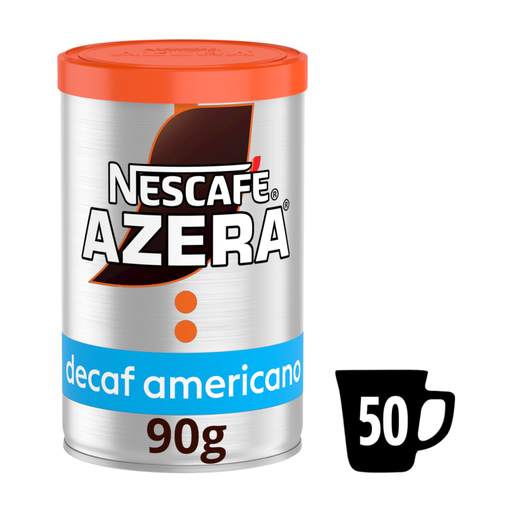
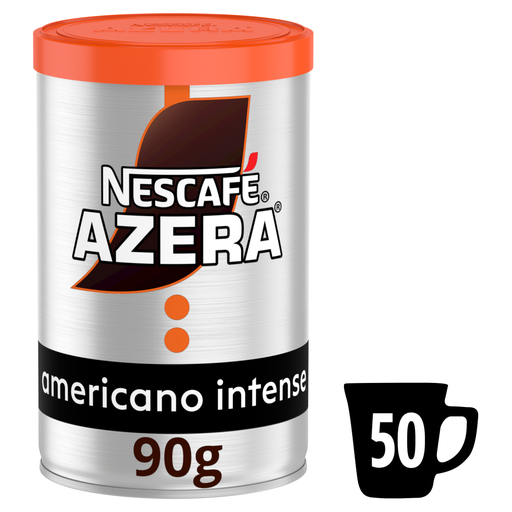
These Joybuy options are tins and jars to consider for a separate decaf service, rather than 80-stick boxes. Check the pack identity particularly carefully for the Azera Americano Intense listing, whose name and product description differ on whether it is decaf.
 No image available
A 90g decaffeinated instant-coffee tin for a separately labelled decaf option. It does not provide individually counted portions; choose a serving measure if the number of cups matters, and check the current pack label.
 No image available
A 300g jar of decaffeinated soluble coffee for a decaf service position. Set a serving measure rather than assuming the preparation yield stated for a different Nescafé Original product applies to this jar.
 No image available
A 90g Americano-style coffee tin. Its product description describes decaffeinated coffee, but the product name does not identify it as decaf: confirm the exact variant on the physical pack before choosing it for decaf service.
 No image available
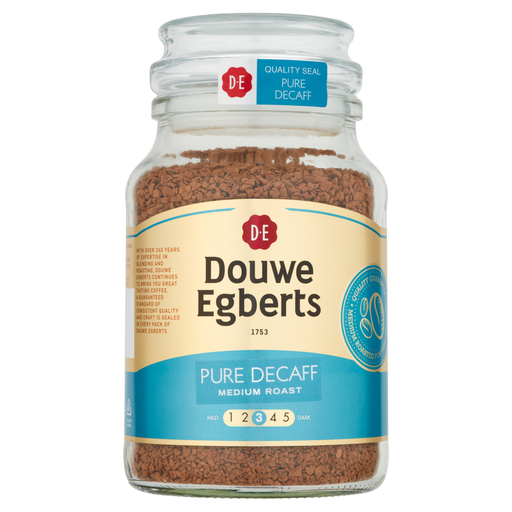
A 190g jar for a separately labelled decaf option, rather than individually measured sticks. The product description reports naturally occurring caffeine below 0.1%; do not treat decaffeinated as meaning zero caffeine. Set a serving measure and check the current pack label.
 No image available
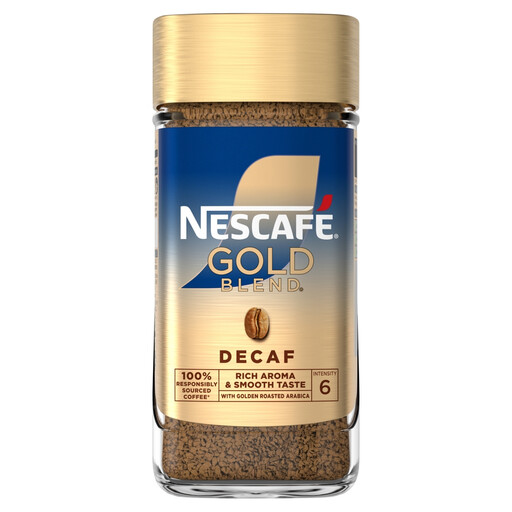
A 190g jar of decaffeinated instant coffee for a decaf choice alongside a separately selected regular coffee. It is not an 80-stick pack; use a consistent measure if staff need to estimate servings, and check the current label.
A separately labelled decaf option is a practical choice when the shop wants to serve customers with different caffeine preferences. The NHS notes that caffeine sensitivity varies; keep regular coffee identifiable too if the shop offers both.
Check the current label of every product used, particularly milk, whiteners and speciality drink sachets, and make the relevant information available to customers. Food Standards Agency guidance covers allergen information for prepacked and non-prepacked food and drink; Tesco Groceries cautions that formulations and allergen information can change.
An 80-stick box suits a requirement for exactly 80 countable, pre-measured portions. A jar or refill can suit a shop that does not need that exact count and wants to organise regular and decaf choices separately, provided staff use a consistent measure when preparing drinks.