
24/7 Customer Support

Free returns

Same-day & Next-day Delivery

Quality Guaranteed

Unlock Your Welcome Offers: FREE Delivery | Up to 80% OFF | Free 30-day JoyPlus trial
Download the APP
Asian stir-fried instant noodles offer a quick alternative to soup-based noodles, with the cooked noodles drained before being mixed with sauce, seasoning oil or toppings. They suit busy working days, student kitchens, packed lunches and household cupboard stocking.
However, attractive packaging can make comparison difficult. A large box is not always good value, preparation times vary and flavour names do not tell you whether a product contains fish, dairy, sesame or other allergens. Use the checks below before choosing instant fried noodles, Mi Goreng noodles, yakisoba noodles or other dry-style instant noodles.
A multipack may look economical, but compare the number of individual portions, not just the outer box weight. A 40-pack of 80g noodles serves differently from a 5-pack of 130g noodles. Also check whether each portion includes separate sauce, oil and topping sachets.
For occasional meals, a single pack or small multipack can reduce cupboard waste. Families, offices and food-service buyers may find an Asian noodles multipack more practical, provided the flavour is likely to be used before the best-before date.
Most dry-style noodles still require cooking. Some are boiled in a saucepan and drained, while cup formats use boiling water before draining through a specially designed lid. Check the preparation method, required water volume and cooking time before buying for an office or student accommodation.
For example, several Japanese stir-fry noodles are ready in around three minutes, but they still need hot water and careful draining.
Many Asian stir-fried instant noodles contain wheat, soya or sesame. Others may include fish sauce, fish pieces, milk, egg, celery or mustard. “Vegetarian-friendly” and “halal instant noodles” should only be assumed where the product information or recognised certification supports it.
Always check the current packaging, particularly if you have an allergy or are buying for someone with dietary restrictions. Imported products may also have updated labels or different formulations.
Choose between:
Preparation times in the supplied range are commonly around three minutes, while some salted egg bowl products indicate approximately three to five minutes. Follow the pack instructions rather than relying on the flavour name.
Mi Goreng noodles generally use a dry mixture of sweet soya sauce, seasoning powder, oil and fried onion or shallot. Yakisoba noodles tend to use a concentrated, savoury sauce associated with Japanese-style stir-fried noodles. Spicy instant noodles can range from mild chilli seasoning to stronger chilli and kimchi profiles.
Distinctive options include salted egg, Japanese curry, chilli-crispy onion, BBQ chicken and XO seafood-style sauces. If you prefer to customise your meal, choose noodles with a separate sauce sachet rather than a fully blended seasoning.
Compare the per-portion figures where available, especially salt, saturated fat and energy. Some products list nutrition per 100g, while others also provide a prepared serving value. Do not compare figures without checking the basis used.
For instance, the supplied Indomie Original information lists 4.0g salt per 100g, while the Nissin Soba Classic information lists 1.3g per 100g. These figures are product-specific and should not be generalised across an entire category. Adding eggs, vegetables or lean protein can make a quick noodle meal more substantial, but does not remove the need to check the original nutrition label.

Why This Fits Their Persona: A five-pack gives students, first-time buyers and occasional noodle eaters a manageable way to try Indonesian-style dry noodles without committing to a large case.
The pack quantity is clear, and the preparation method is straightforward: cook, drain and mix the seasoning components.
Five individual 80g portions; includes sauce, oil and crispy fried onion elements. Contains wheat, soya and celery.

Why This Fits Their Persona: The cup format suits UK offices and homes where convenience, portion control and tidy preparation matter.
The product description explains the three-minute soak and built-in draining cap, reducing uncertainty around preparation.
90g cup format; includes yakisoba sauce, cabbage and chicken pieces. Contains wheat and soya.
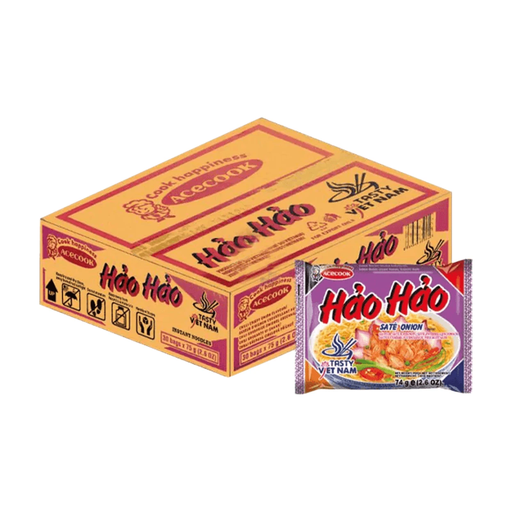
Why This Fits Their Persona: The 30-pack is suited to families, office kitchens, hospitality settings and regular noodle consumers who want a larger stock.
The case quantity and 75g serving size are stated clearly, making it easier to assess storage needs and likely consumption.
30 individual packs; chilli and crispy onion flavour; three-minute hot-water preparation. Contains wheat, fish, milk and sesame.
The range also includes Nongshim Instant Noodle Shin Stir-Fry Ramyun 5x130g Halal and NONGSHIM Shin Kimchi Stir-Fry Instant Noodles 5 × 137g (Halal). Their labels identify halal suitability, while the ingredient information still advises checking for fish, soya, wheat and possible traces of other allergens.
For distinctive flavours, consider Kool Salted Egg Flavour Stir Fried Instant Noodle Bowl, MAMA OK Stir-Fry Salted Egg Noodles Multipack or NISSIN Soba Cup Japanese Curry. These offer alternatives to standard spicy instant noodles, but each has different allergen and preparation details.
We have compiled a complete, real-time list of products that fully satisfy these strict selection criteria and UK safety regulations.
Usually, boil the noodle block for around three minutes, drain thoroughly and mix in the sauce and seasoning sachets. Cup versions normally require boiling water, a short standing time and draining through the lid. Always follow the instructions printed on the product.
They can provide a lower-cost quick meal, especially in multipacks, but value depends on portion size, delivery charges and how often the noodles are eaten. Compare the price per individual serving rather than the headline pack price.
Keep unopened packs in a cool, dry place away from direct sunlight and moisture. Check the best-before date on the packaging. Once opened or prepared, follow the product’s storage guidance and consume promptly.