
24/7 Customer Support

Free returns

Same-day & Next-day Delivery

Quality Guaranteed

Unlock Your Welcome Offers: FREE Delivery | Up to 80% OFF | Free 30-day JoyPlus trial
Download the APP
A storage bench can solve several everyday problems at once: shoes scattered in the hallway, spare bedding taking over a wardrobe or a bedroom lacking a comfortable place to sit. However, attractive furniture photography does not always reveal the details that affect daily use.
Before buying, UK shoppers should look beyond colour and upholstery. A bench that is too deep for a narrow hallway, difficult to open or unable to accommodate the items you need to store can quickly become wasted space. The following guide explains the main pitfalls, specifications and layouts to consider before choosing a storage ottoman bench, shoe storage bench or upholstered storage bench.
A bench may look compact online but still be too wide for an entrance or too deep for the end of a double bed. Measure the available floor area, including space needed to walk around it and open the lid. For an end-of-bed bench, check that the remaining gap allows drawers and doors to open comfortably.
Also compare the product’s external dimensions with its internal capacity. Thick panels, hinges and padding can reduce the usable storage area.
A stated maximum weight capacity is not an invitation to overload the furniture or use it in any position. Check whether the figure refers to static weight, evenly distributed weight or seating on a fully closed lid.
For example, a folding storage ottoman may be suitable for bedding and occasional seating, but oversized items can prevent the lid from closing correctly. Always follow the supplied instructions and ensure the lid is fully covered before sitting on it.
A hidden storage bench keeps clutter out of sight, but frequent access can be inconvenient if the lid is heavy or the bench must be moved away from a wall. Open shelving, such as that found on an entrance bench with storage, offers faster access for shoes but leaves contents visible.
Consider your routine. Bedding and seasonal blankets suit a lift-up bedroom storage bench, while everyday footwear is generally easier to organise on open shelves.
Measure the bench against the intended room:
Capacity should be considered in litres where available. A 131-litre compartment, for instance, gives a clearer indication of storage potential than a vague phrase such as “large capacity”. Pack soft items loosely rather than forcing the lid down.
Look for clear material information rather than relying on phrases such as “premium quality”. MDF and particleboard are common furniture materials, but thickness, joinery and reinforcement influence stability. Metal corner guards may help protect exposed lid edges, while strong hinges can make repeated opening more manageable.
A padded storage bench needs a seat surface that suits the intended use. Linen-look fabric can provide a softer, textured appearance, while PU upholstery is easier to wipe clean for a hallway setting. Neither material should be treated as automatically stain-proof; follow the care instructions and deal with spills promptly.
Check the listed maximum weight capacity and distinguish between static load and everyday use. Place the bench on a level floor and avoid using it as a step. For homes with children, position lift-up furniture where the lid can be opened and closed safely, and inspect hinges periodically.
UK household furniture should be supplied with appropriate product and safety information. Keep assembly instructions, check all fittings after assembly and contact the seller if any component arrives damaged or incomplete.

Why This Fits Their Persona: Its 80 cm width suits many hallways, flats and student rooms, while the white finish can work with light or neutral interiors.
It combines a lift-up compartment with three lower tiers, so everyday shoes do not need to be retrieved from concealed storage.
Padded PU seat, alloy hinges, side handles and stated 136 kg static weight capacity.

Why This Fits Their Persona: The camel brown linen-look finish and tufted surface suit shoppers wanting concealed storage with a more traditional upholstered appearance.
The dimensions and 131-litre volume are clearly specified, helping buyers compare it with the available space and storage requirement.
Measures 110 x 38 x 38 cm, folds for storage and has MDF panels with metal corner guards.
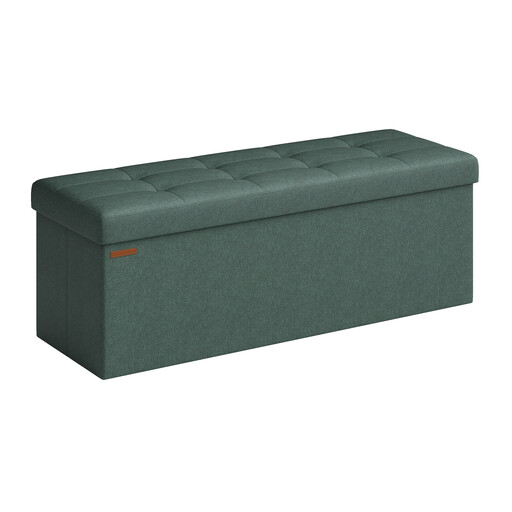
Why This Fits Their Persona: Its long 110 cm format provides a substantial surface for an end-of-bed layout, while the concealed compartment stores blankets, pillows and household items.
The stated 300 kg maximum capacity and reinforced lid construction provide useful reference points, while the usage notes clarify that the lid must be fully closed before sitting.
131-litre storage volume, 25D high-resilience foam and a foldable design for convenient seasonal storage.
We have compiled a complete, real-time list of products that fully satisfy these strict selection criteria and UK safety regulations.
Yes, provided its width and depth leave enough clearance for walking and opening nearby furniture. Measure the bed frame, the available gap and the bench’s full external dimensions. A lift-up design is practical for bedding, but the lid should be fully closed before anyone sits on it.
Lifespan depends on construction, loading, frequency of use and care. Avoid exceeding the stated capacity, do not stand on the bench and tighten fittings if they loosen. Keep fabric away from prolonged moisture and clean spills according to the manufacturer’s instructions.
No. A conventional upholstered storage bench, shoe bench or storage ottoman does not require electricity, batteries or a subscription. Ongoing costs are generally limited to cleaning supplies and any replacement parts required after extended use.