
24/7 Customer Support

Free returns

Same-day & Next-day Delivery

Quality Guaranteed

Unlock Your Welcome Offers: FREE Delivery | Up to 80% OFF | Free 30-day JoyPlus trial
Download the APP
A storage bench can add seating, hide clutter and make better use of otherwise wasted space. However, attractive upholstery and large capacity claims do not always tell the full story. A bench that looks suitable online may be too deep for a narrow hallway, uncomfortable for everyday use or unable to organise smaller items effectively.
As the Joybuy Product Recommendation Officer, I focus on practical details that help UK shoppers compare products beyond promotional wording. Here are the common buying traps to avoid, followed by our top recommendations for different homes and routines.
A storage chest may advertise a generous volume, but thick panels, hinges and internal supports reduce the space available for blankets, shoes or bedding. Check the external dimensions and consider what you actually need to store. A 110cm-wide ottoman storage bench may suit spare duvets and cushions, while a narrower hallway bench could be more appropriate for a flat entrance.
Also measure doorways, staircases and the intended position. An end of bed bench needs enough clearance to open fully without obstructing walking space.
A stated maximum weight is useful, but it does not explain how the load should be distributed or whether the lid must be fitted correctly. For example, some upholstered benches specify that the lid must be fully covered before sitting on it and that oversized items should not be placed inside.
Look for a stable base, properly supported lid and clear usage instructions. Do not assume that a high load figure means the product is suitable for jumping, standing or uneven loading.
Velvet storage bench designs can bring colour and softness to a bedroom or living room, but pale fabric may show marks more readily in a busy hallway. Linen-look fabric has a relaxed appearance, while PU upholstery can be simpler to wipe clean. Natural rope and rattan seats offer texture but may not provide the same cushioning as a padded bench.
Consider how the bench will be used, who will sit on it and how much maintenance you are prepared to undertake.
Measure three areas:
A 38cm-deep bench is relatively compact for many UK bedrooms and living rooms. A shoe storage bench measuring 30cm deep may fit more easily beside a narrow entrance. Seat height also matters: around 44–45cm can pair comfortably with standard seating and dining furniture, while a 38cm-high ottoman may work better as a footstool or low coffee table.
A single large compartment is practical for bedding, throws and cushions. Separate compartments or removable boxes are more helpful for smaller items such as accessories, socks and paperwork.
Check whether the lid is hinged, removable or simply lifted away. Hinges with safety features can reduce accidental closure, while a fully removable lid may provide wider access. For shoes, open shelves are often easier to use daily than a deep hidden compartment.
The frame material affects stability and weight. MDF or particleboard panels can create a firm structure, while solid beech wood and metal frames offer a different visual and construction profile. Foam padding improves sitting comfort, but the product description should still be checked for intended use.
Pay attention to the listed maximum static capacity, not just the appearance of the seat. The products below state capacities ranging from 136kg to 300kg, but always follow the supplied instructions and avoid placing oversized items inside.
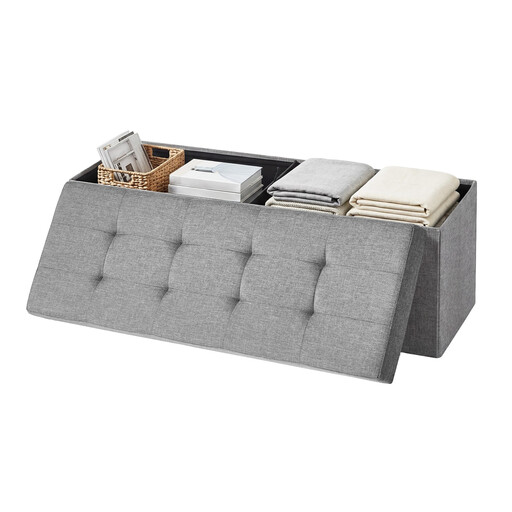
Why This Fits Their Persona: Its foldable construction suits renters, students and first-home buyers who may need flexible furniture that can be stored under a bed or in a cupboard.
The listed 110 x 38 x 38cm dimensions make planning easier, while the removable bottom panel allows the bench to fold flat when it is not needed.
Linen-look tufted fabric, MDF panels, metal corner guards and a listed 131L volume provide practical everyday storage.
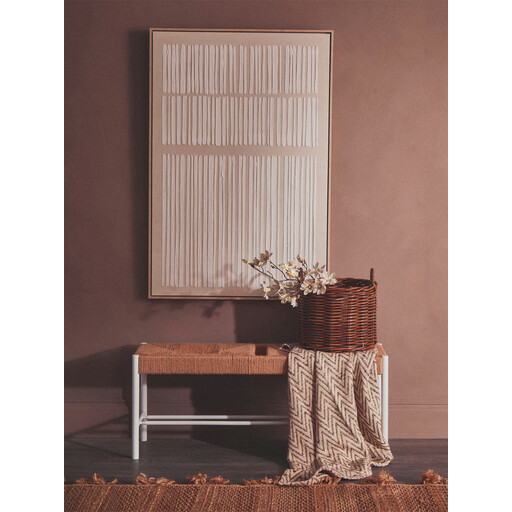
Why This Fits Their Persona: This suits design-conscious households seeking a natural-material bedroom bench, dining bench or decorative seat rather than concealed storage.
The product is clearly positioned as open seating, so shoppers are less likely to mistake a decorative bench for a storage chest.
It measures 110 x 35 x 45cm and combines a beech wood frame with a handwoven hemp rope seat.

Why This Fits Their Persona: It is suited to busy entrances, family hallways, flats and student accommodation where sitting down to put on shoes and organising footwear are equally important.
Its open lower shelves provide visible shoe access, while the upper compartment stores smaller hallway items away from view.
The 80 x 30 x 44cm design includes space for up to seven pairs of shoes and a listed 136kg static capacity.
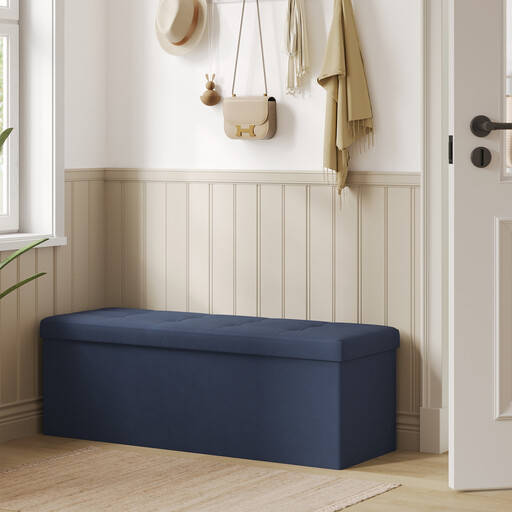
Why This Fits Their Persona: A practical choice for shoppers who want a living room bench, bedroom bench or occasional seat that can be moved or stored when room layouts change.
The two additional storage boxes address the problem of one deep compartment becoming difficult to organise, and the folding design helps with occasional use.
It has a 131L listed volume, foam padding, velvet upholstery and a stated 300kg total maximum capacity.
We have compiled a complete, real-time list of products that fully satisfy these strict selection criteria and UK safety regulations.
Yes, provided its width and depth leave enough room to walk around the bed. A low, padded design can store bedding while offering a convenient place to sit. Measure the gap between the bench and nearby furniture before ordering.
Follow the care instructions for the specific material. Regularly vacuum fabric surfaces using a suitable attachment and deal with spills promptly. Velvet, linen-look fabric, PU and natural rope require different cleaning methods, so avoid applying strong products without checking the manufacturer’s guidance.
Many ottoman-style designs require only basic setup, such as inserting a base panel. Foldable storage benches can generally be opened and assembled without complex tools. Wooden or shoe-storage designs may require more assembly, so check the package contents and available floor space before starting.