
24/7 Customer Support

Free returns

Same-day & Next-day Delivery

Quality Guaranteed

Unlock Your Welcome Offers: FREE Delivery | Up to 80% OFF | Free 30-day JoyPlus trial
Download the APP
A tidy home often starts with a simple, effective storage system. Yet, the search for the right storage boxes can be surprisingly frustrating. We’ve all been there: you buy what looks like the perfect solution, only to find it failing you just a few months down the line. As a Joybuy Product Recommendation Officer, my role is to help you see past the marketing and focus on what truly matters for lasting organisation. Before you make your next purchase, be aware of these common pitfalls that lead to wasted money and continued clutter.
By understanding these issues, you can shift your focus from simple appearances to the core features that define a durable and practical storage solution.
To avoid the pitfalls, you need to know which details to check. These three parameters are non-negotiable for finding reliable storage boxes that will serve you well for years.
The material of a storage box dictates its durability, safety and ideal use case.
A box is only as good as its lid. The closure mechanism determines how well it protects its contents and how securely it stacks.
Finally, consider how the box's design fits your specific needs.
To help you apply this knowledge, here are a few options from our catalogue, matched to different household needs. Each one is chosen based on its ability to solve a common storage problem effectively.
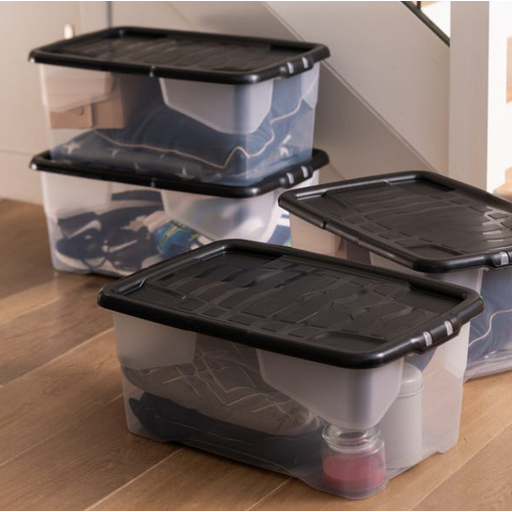
Why This Fits Their Persona: This value set is ideal for anyone undertaking a large decluttering project. The 42-litre size is versatile enough for clothing, paperwork or loft storage, allowing you to create a consistent system across the entire home without breaking the bank.
It directly addresses the "stackable myth" with solid, clip-on lids designed to stay put. The use of durable recycled plastic also helps avoid the brittle plastic trap common in cheaper multi-packs.
A cost-effective set of four for building a uniform storage system. The clear body allows for easy identification of contents.
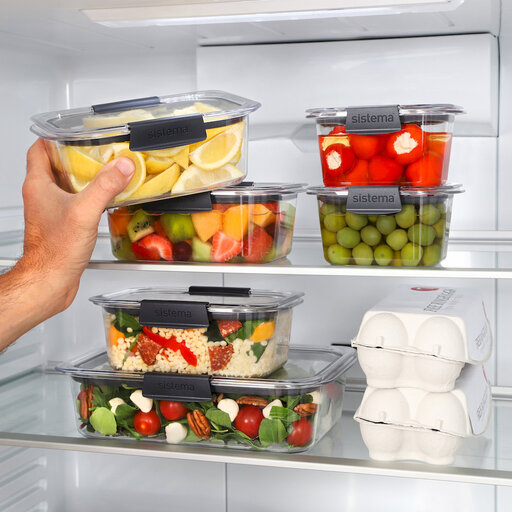
Why This Fits Their Persona: For those who batch-cook or need a reliable container for taking lunch to work, this product is built for performance. Its large 2L capacity is great for family-sized portions, and its leak-proof design gives you confidence when transporting soups or stews.
This container directly counters the "food-staining fiasco." It is crafted from stain- and odour-resistant Tritan plastic, ensuring it stays crystal clear. The guaranteed 100% leak-proof seal also solves the common issue of leaky lids.
Features integrated steam vents for splatter-free microwave reheating. It is also freezer and dishwasher safe for complete convenience.
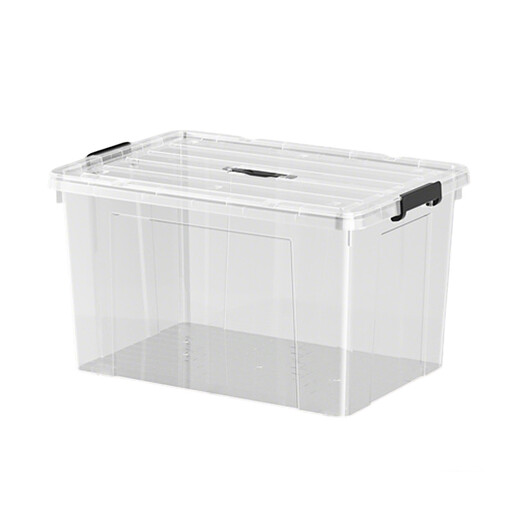
Why This Fits Their Persona: This set is for those storing heavier items in the garage, loft or utility room. If you need to stack tools, bulky seasonal decorations or camping gear, you need a box that is structurally engineered for the job.
It tackles both the "brittle plastic" and "stackable myth" pitfalls head-on. The body is made from 2.5mm thickened PP plastic with reinforcing ribs for structural stability, while the anti-slip bottom is specifically designed for secure stacking.
Engineered for load-bearing and stability. Features ergonomic built-in handles that make lifting heavier loads more comfortable.
We have compiled a complete, real-time list of products that fully satisfy these strict selection criteria and UK safety regulations.
1. What is the difference between PP and PET plastic for storage boxes? Polypropylene (PP) is generally more flexible, impact-resistant and better suited for storage in areas with temperature fluctuations, like a garage or loft. Polyethylene terephthalate (PET) is often used for food and drink containers due to its clarity and barrier properties, but it can be more rigid and less impact-resistant than PP in a storage box format. For general-purpose boxes, PP is often the more durable choice.
2. How can I stop stackable storage bins from sliding? The most effective way is to choose boxes designed with this in mind. Look for features like interlocking lids, grooves or an anti-slip texture on the base and lid. Beyond product choice, always place heavier boxes at the bottom of the stack and avoid overfilling them, as a bulging lid creates an unstable surface for the box above it.
3. Are all plastic food containers freezer and microwave safe? No, they are not. It is crucial to check the product's specifications or look for symbols on the container itself. A container that is safe for both will be clearly marked. When microwaving, it is always a good practice to remove the lid completely or ensure it is vented to allow steam to escape safely. Using a container in the microwave that is not designed for it can cause the plastic to warp or leach chemicals.