
24/7 Customer Support

Free returns

Same-day & Next-day Delivery

Quality Guaranteed

Unlock Your Welcome Offers: FREE Delivery | Up to 80% OFF | Free 30-day JoyPlus trial
Download the APP
Storage boxes can make a small flat, busy family home or shared student room easier to manage—but only when the size, material and opening system suit the items being stored. A low price can be misleading if a box bends under weight, wastes cupboard space or has a lid that becomes awkward after frequent use.
Joybuy’s Product Recommendation Officer has filtered the practical details that matter most, so you can compare storage boxes without relying on exaggerated marketing language.
A box may advertise a generous volume but still be unsuitable for a wardrobe shelf, under-bed space or car boot. Always compare the external measurements with the available area, including room for handles and the lid. For cube storage boxes, check the shelf compartment dimensions rather than assuming every 33 cm box will fit.
Stackable storage containers need more than a flat lid. A stable base, reinforced sides and an anti-slip surface help reduce movement. Overloading the bottom box can still cause deformation, particularly in warm rooms, lofts or garages. Check the stated load guidance and avoid placing heavy items above lighter containers.
Clear plastic storage boxes are useful for clothing, stationery and household items, but general-purpose plastic should not automatically be used with food. Food storage tubs with lids should clearly state their intended use and care instructions. Even when a container is described as microwave or freezer safe, follow the manufacturer’s guidance about venting lids and allowing hot food to cool.
For household storage, polypropylene (PP) boxes with reinforced sides can provide a practical balance of weight and rigidity. The 2.5 mm body specified for some thick clear plastic storage boxes is a useful detail to compare, alongside rounded corners, three-dimensional reinforcing ribs and an anti-slip bottom.
Fabric organisers are better suited to lighter items such as clothing, toys and accessories. Look for the fabric weight, internal support and stated load capacity. A foldable storage box is convenient when empty, but it should have a base insert or frame if you expect it to hold its shape on a cube shelf.
Measure the storage location first:
A larger box is not automatically more efficient. Several medium stackable storage containers can be easier to lift and organise than one oversized box filled with mixed items.
Snap-on lids can help protect contents from dust and make boxes easier to carry, while built-in handles are useful for seasonal clothing or moving items between rooms. Transparent walls allow quick identification, but opaque boxes may be preferable for light-sensitive or visually distracting contents.
For food containers, check whether the lid is included, whether the tub is reusable and whether microwave, freezer or dishwasher use is specifically stated. For pill organisers, use the compartments only as an organisational aid and follow the directions supplied with the medication or supplements.
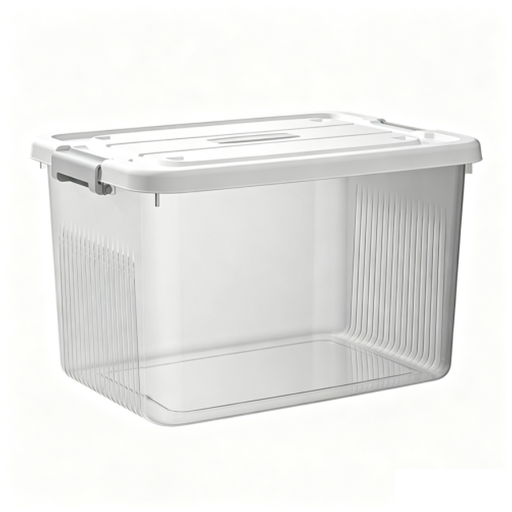
Why This Fits Their Persona: A four-pack gives renters, students and first-time home organisers several matching boxes for clothes, cables, toys or cleaning supplies without committing to one oversized container.
The specified 2.5 mm body, reinforcing ribs and anti-slip bottom address concerns about flimsy sides and sliding stacks. Do not exceed the recommended load or expose it to high heat.
Clear PP construction supports visual storage; snap-on lids and built-in handles support carrying and stacking.
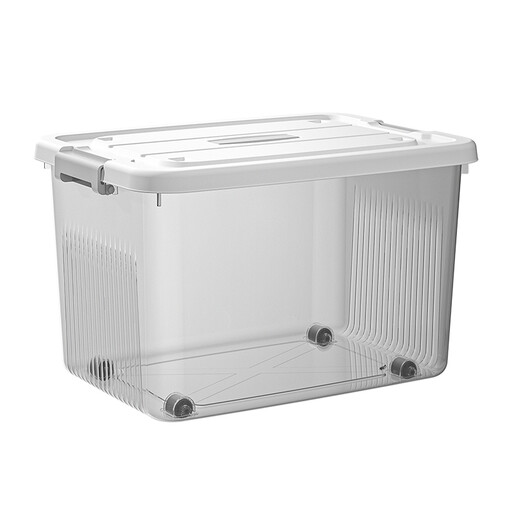
Why This Fits Their Persona: The larger format suits households storing bulky bedding, seasonal clothing, baby-care items or equipment in a cupboard, garage, balcony or car boot.
The dimensions are stated clearly, helping you measure before purchase. Reinforced construction and a fitted flat lid support vertical stacking, subject to load limits.
50.4 × 37.6 × 28.8 cm size; ergonomic handles and snap-on lids support movement and access.
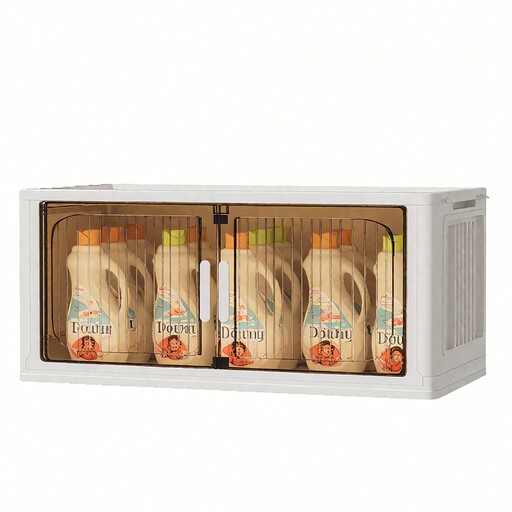
Why This Fits Their Persona: A multi-tier arrangement is suited to families, craft rooms and households managing large quantities of clothing, toys or household supplies.
The supplied guidance indicates approximately 15–25 kg per layer, giving a practical reference point instead of relying on vague “heavy duty” wording.
Four 84-litre storage units provide substantial capacity; the foldable format can be reduced when not in use.
We have compiled a complete, real-time list of products that fully satisfy these strict selection criteria and UK safety regulations.
Measure the tallest available space first, then select matching stackable storage containers. Place lighter, less frequently used items higher up and keep everyday belongings at waist or chest level. Clear boxes are useful when labels are likely to be forgotten.
Lifespan depends on plastic thickness, loading, handling and exposure to heat or sunlight. Avoid sharp objects, open flames, prolonged direct sunlight and loads above the stated limit. Wipe boxes with a damp cloth and allow enclosed storage areas to ventilate.
They can reduce repeated replacement costs when the format matches the task. Compare the pack size, usable dimensions, lid quality and intended use—not just the headline price. Buying several purpose-sized boxes can also reduce wasted space and make household organisation easier to maintain.