
24/7 Customer Support

Free returns

Same-day & Next-day Delivery

Quality Guaranteed

Unlock Your Welcome Offers: FREE Delivery | Up to 80% OFF | Free 30-day JoyPlus trial
Download the APP
Storage boxes can make a noticeable difference in a busy bedroom, rented flat, student room or family home. However, the wrong design may waste space, collapse under everyday use or leave you opening every container to find one item.
The main buying traps are easy to overlook:
A useful storage system starts with the room, the items being stored and how frequently you need to access them.
Measure width, depth and height rather than relying on the product’s capacity alone. Leave room to lift a lid, pull out a box or open a wardrobe door.
For underbed storage boxes, check the lowest clearance point beneath the bed frame. A product measuring 32cm high, for example, will not fit in a 30cm gap even if the length and width are suitable. For cube storage organisers, dimensions of approximately 30 x 30 x 30cm are designed for many standard cube shelving units, but shelf openings can vary.
Plastic storage boxes with lids are practical for clothing, toys, paperwork, bedding and garage items because they can be wiped clean. Clear storage boxes also reduce searching time, particularly when several containers are stacked together.
Fabric storage cubes are more suitable for light, frequently used belongings such as jumpers, books, accessories and children’s toys. Look for a firm base, reinforced sides and handles that are securely attached. They are generally less appropriate for sheds, garages or areas exposed to condensation.
A lid protects contents from household dust, but it does not automatically make a container airtight or suitable for preventing damp. Store boxes on a dry, stable surface and avoid placing moisture-sensitive items away while they are still damp.
Check the maximum static weight capacity where provided. The JOYFURNOS fabric cubes list a maximum static capacity of 5kg per box, which is appropriate for lighter household organisation rather than dense books or tools.
For stackable storage boxes, use flat floors and place heavier containers at the bottom. A clip-on lid can help keep contents contained, but it should not be treated as a guarantee against tipping. If you need storage that moves between rooms, storage boxes with wheels or a wheeled cabinet may be more practical than repeatedly lifting full containers.
Capacity also affects handling. 30L storage boxes are easier to move and suit bedding, shoes and smaller household items. 42L storage boxes provide more room for seasonal clothing, toys, paperwork or DIY supplies, but can become heavy when filled.
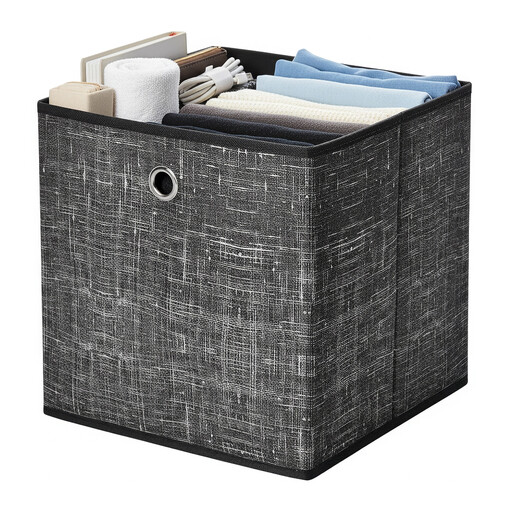
Why This Fits Their Persona: A six-piece set suits renters, students and households starting an organised shelving system without adding rigid furniture. Each cube measures 30 x 30 x 30cm and includes a handle for easier access.
The stated dimensions make shelf compatibility easier to assess, while the fold-flat design avoids leaving unused boxes taking up permanent floor space.
Set of six; fabric construction; handles; folds flat; listed 5kg static capacity per box.
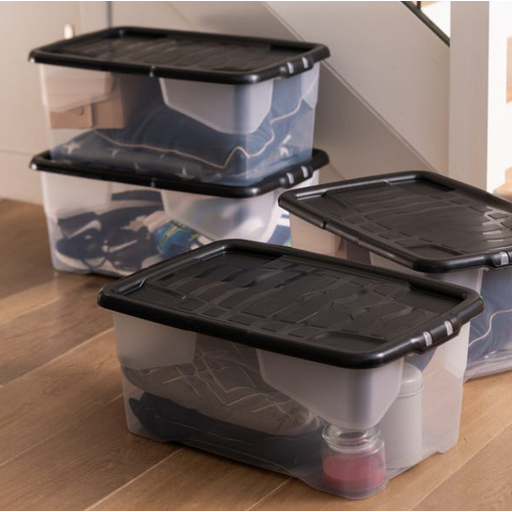
Why This Fits Their Persona: Homeowners and families wanting a consistent storage system can use four matching containers across wardrobes, utility rooms, lofts or offices.
The clear/translucent bodies reduce guesswork, while solid clip-on lids provide a defined closure for dust-conscious storage.
Four 42L boxes; recycled plastic; clip-on lids; stackable design; 60 x 40 x 40cm dimensions.
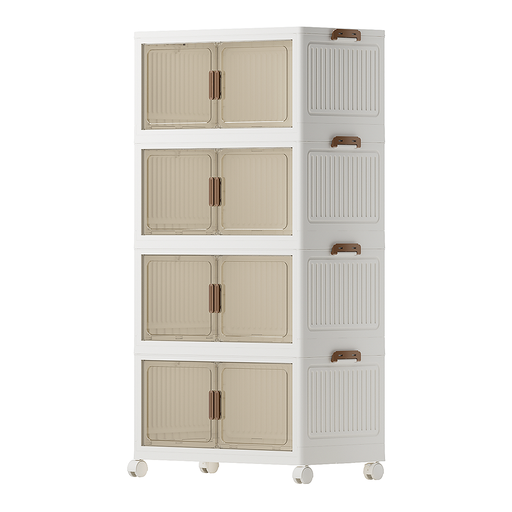
Why This Fits Their Persona: This foldable storage cabinet suits small flats, student accommodation and home offices where flexible access and movable compartments matter more than compact individual tubs.
The 45cm width is easier to plan around than a larger cabinet, and magnetic closures allow tool-free setup and folding when storage needs change.
Four compartments; PP plastic structure; nylon wheels; foldable format; no tool assembly.
We have compiled a complete, real-time list of products that fully satisfy these strict selection criteria and UK safety regulations.
For a lower-profile option, the Strata Curve Storage Box & Lid 30L pack includes four clear/black boxes with lids. Their stated dimensions are 60 x 40 x 32cm, making them worth comparing with the clearance beneath your bed or shelving.
They can be, provided the dimensions leave enough clearance and the bed base can accommodate the weight. Check the height, lid shape and access route before ordering. A 30L box may be easier to pull out and handle than a larger container, particularly when filled with bedding or shoes.
Lifespan depends on material, load, temperature, sunlight and handling. Plastic boxes should be kept away from extreme heat and should not be overloaded. Fabric storage cubes can remain useful when their base and seams are not strained, but folding them flat when not needed may help preserve available space and reduce unnecessary wear.
Most storage boxes have no ongoing running cost. The practical cost is usually the purchase price, available space and time spent reorganising. Wheeled cabinets can reduce lifting and clear containers can make items quicker to locate, while stackable designs may reduce the need for additional shelving.