
24/7 Customer Support

Free returns

Same-day & Next-day Delivery

Quality Guaranteed

Unlock Your Welcome Offers: FREE Delivery | Up to 80% OFF | Free 30-day JoyPlus trial
Download the APP
A tidy home often starts with a simple plan: putting things away. Yet, the search for the right storage boxes can quickly become a frustrating exercise. We’ve all been there – you buy a set of boxes that look promising, only to find the lids crack, the sides bow under weight, or the fabric sags after a few months. Effective home organisation shouldn't be a cycle of replacing poor-quality products.
As a Joybuy Product Recommendation Officer, my role is to help you see past the marketing jargon and focus on what truly matters. Before you spend another pound on a storage solution that won't last the year, let's look at the common pitfalls and how to sidestep them.
Many storage solutions fail not because of extreme use, but because of fundamental design flaws that aren't obvious on the shop floor. Here are the main issues UK households encounter:
To ensure your investment in organisation pays off, focus on these three core parameters. They are the difference between a lasting solution and a temporary fix.
The material dictates a box's durability, suitability for different environments and longevity.
For any stackable storage boxes, the lid is as important as the box itself. A good design incorporates:
Consider what you are storing. Bulky items like duvets or winter coats need deep, large-capacity boxes. Smaller, miscellaneous items are better organised in smaller containers to avoid them becoming a jumbled mess. For those using cube shelving units, measure the internal dimensions of your shelf and choose fabric storage cubes that fit snugly, typically around 30 x 30 cm. Buying multi-packs of varied sizes is often more practical than a single-size bulk purchase.
Based on these practical criteria, here are a few options from our catalogue, matched to different household needs.
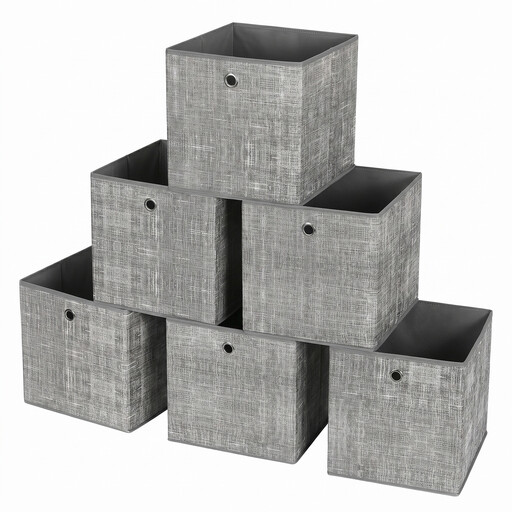
Why This Fits Their Persona: This set of six offers an affordable way to tackle a whole project, like organising a wardrobe or a child's playroom. The 30x30x30 cm size is designed to fit standard cube shelving units, common in many UK homes and rentals.
It directly counters the "Fabric Box Fade-Out" by using a specified 80 g/m? non-woven fabric and sturdy cardboard, giving it a more reliable structure than unbranded, flimsy alternatives.
The foldable design saves space when not in use, and the multi-pack format provides excellent value for a coordinated home organisation project.
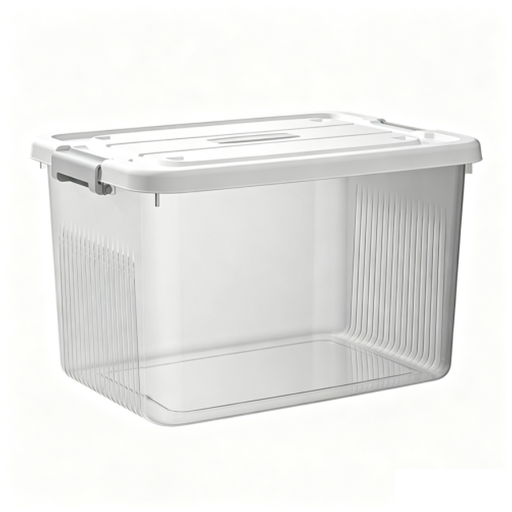
Why This Fits Their Persona: Ideal for homeowners needing to organise a garage, loft or shed. This box is built for durability, protecting tools, seasonal clothes or important documents from dust, pests and dampness.
It tackles both the "Stackable Myth" and "Brittle Plastic Problem". The design specifies a 2.5mm thickened PP body, reinforcing ribs and an anti-slip bottom for stable stacking. The snap-on lid provides a secure closure.
The robust construction ensures longevity and reliable protection. The clear material allows for quick identification of contents, saving time and effort.

Why This Fits Their Persona: For those organising visible areas like a living room bookshelf or bedroom closet, aesthetics are key. This box's neutral grey fabric and clean lines blend into modern decor, while the lid keeps clutter hidden from view.
The "thickened" fabric and robust frame provide a more durable structure than basic fabric bins, preventing sagging. The lift-off lid ensures contents are concealed, maintaining a tidy appearance.
It combines function with form. The portable and foldable design offers versatility, while the solid pattern and shape provide a clean, organised look for any room.
We have compiled a complete, real-time list of products that fully satisfy these strict selection criteria and UK safety regulations.
1. How can I prevent plastic storage boxes from warping in the loft? The primary cause of warping is a combination of weight and temperature. Choose boxes made from temperature-resistant PP plastic and check for reinforced frames. Avoid stacking them too high, always placing heavier boxes at the bottom. If your loft has a skylight, try to keep the boxes out of direct, intense sunlight which can soften and deform the plastic over time.
2. Are fabric storage boxes suitable for storing clothes long-term? Fabric boxes are excellent for organising clothes within a wardrobe or on shelves for items you access regularly. For long-term or seasonal clothes storage, especially in a loft or garage, a plastic storage box with a secure lid is a more protective choice. It offers better defence against moisture, dust and pests. If using fabric boxes for seasonal items, ensure they have a lid and are stored in a dry, well-ventilated room.
3. What is the correct way to clean different types of storage boxes? For most plastic storage boxes, a simple wipe-down with a damp cloth and a mild cleaning solution is sufficient. For fabric storage cubes and storage baskets, it's best to check the manufacturer's instructions. Most recommend spot cleaning with a damp cloth and allowing it to air dry completely. Submerging fabric boxes with cardboard inserts in water will likely damage them permanently.