
24/7 Customer Support

Free returns

Same-day & Next-day Delivery

Quality Guaranteed

Unlock Your Welcome Offers: FREE Delivery | Up to 80% OFF | Free 30-day JoyPlus trial
Download the APP
A well-chosen storage cabinet can make a narrow bathroom, busy hallway or compact flat feel considerably easier to manage. However, attractive photographs and phrases such as “space-saving” do not always tell you whether a unit will fit, remain stable or hold the items you need.
Before buying storage cabinets, look beyond appearance and check the practical details that affect everyday use.
A cabinet may fit between two walls but still make a room awkward to use if its depth blocks a door, radiator or walkway. This is especially important when choosing a slim bathroom storage cabinet, narrow storage cupboard or hallway shoe cabinet.
Measure:
A unit measuring 30 cm deep can be suitable for a tight space, but the door or drawer may extend beyond that measurement when open.
Storage furniture often uses MDF, particleboard, plastic panels or steel frames. Each has different care requirements. MDF storage furniture can provide a smooth, furniture-style finish, but prolonged exposure to splashing water or high humidity may lead to swelling or warping if the surface or edges are not protected.
For bathrooms, avoid placing a cabinet where it will be frequently splashed. For entryways, check whether wet shoes will sit directly inside the unit. Product instructions and stated load limits matter more than broad marketing descriptions.
Tall furniture has a higher centre of gravity, particularly when shelves or drawers are loaded. A wall-fixing or anti-tip kit is therefore an important safety feature rather than an optional extra. Check whether it is included and whether the wall type in your home requires suitable fixings.
Also look at the capacity of each shelf, drawer or compartment. A cabinet may have plenty of sections but still be unsuitable for heavier bottles, boots or cleaning supplies if the individual limits are low.
For a tall bathroom cabinet, vertical storage can make use of unused wall space while preserving floor area. Yet height should be compared with ceiling height, coving and ventilation arrangements. A slim unit with several small compartments may suit toiletries and towels, while larger shelves are more useful for cleaning products or folded linen.
For shoe storage, check internal compartment dimensions against your footwear. Trainers and children’s shoes usually need less clearance than boots. A modular shoe storage cabinet can be useful where the layout may change, but confirm the overall size of each possible configuration before assembly.
MDF offers a smooth surface that can be wiped clean and finished in a range of colours. Melamine-coated MDF, as used on the Vida Designs shoe cabinet, is intended to provide a more resistant outer surface for everyday indoor use. Nevertheless, harsh chemicals, abrasive cleaners and standing moisture should generally be avoided unless the care instructions specifically permit them.
Plastic panels and steel frames can be practical for a shoe organiser with doors, particularly where visibility and easy cleaning are priorities. Look for ventilation, secure connectors and a frame that remains stable on a level floor.
Do not compare cabinets solely by the total number of compartments. Check the maximum static load per shelf, drawer or compartment. This is a more useful measure for deciding whether the furniture can hold toiletries, books, accessories or footwear safely.
Follow the assembly instructions carefully, fully insert connectors where applicable and use the included anti-tip device. Wall fixing is particularly important for tall or heavily loaded furniture.
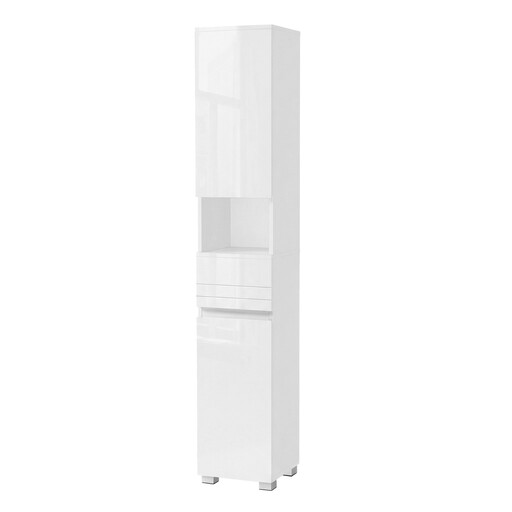
Why This Fits Their Persona: Its 30 x 30 cm footprint suits renters, first homes and compact bathrooms where vertical space is more available than floor area. Six compartments provide separate areas for toiletries, towels and household items.
The dimensions and shelf limits are stated clearly, while adjustable shelves and reversible doors help avoid a poor fit caused by a rigid internal layout.
Six storage compartments; adjustable shelves; included anti-tip kit; 22 lb (10 kg) maximum static load per shelf and drawer.
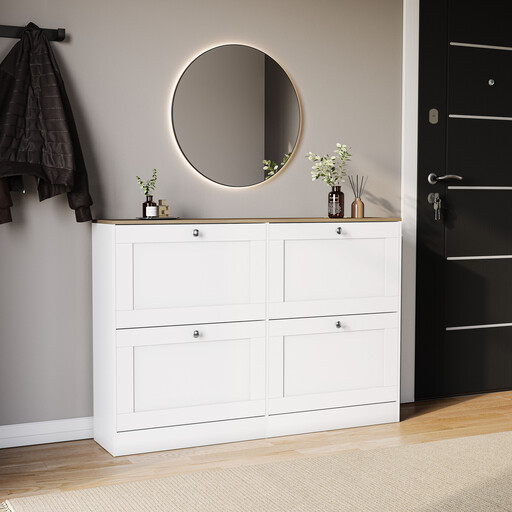
Why This Fits Their Persona: This freestanding shoe storage option is suited to homeowners who want concealed footwear storage with a furniture-style appearance in a hallway, entrance or living area.
Its 24 cm depth is specified, so shoppers can compare it with their hallway clearance rather than relying on a vague space-saving label. The 30 kg total capacity is also stated.
Four pull-down compartments; MDF construction with melamine finish; oak-effect top; 105 x 80 x 24 cm overall dimensions.
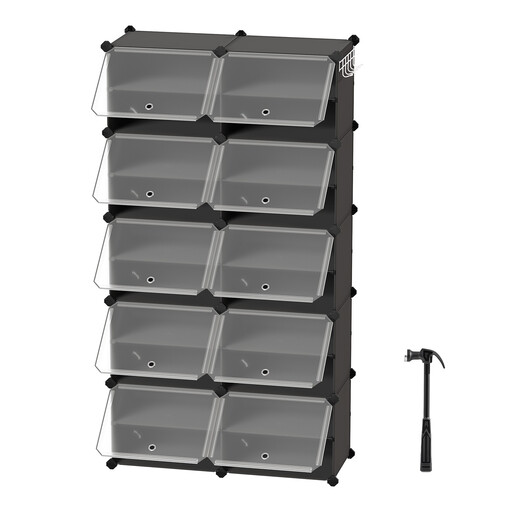
Why This Fits Their Persona: Families and larger footwear collections can use its ten compartments, clear doors and modular layout in an entrance, hallway or wardrobe area.
The internal compartment dimensions and 5 kg limit per section make it easier to judge whether boots or heavy items are suitable. Ventilation and doors also address dust and airflow concerns.
Ten compartments; stackable or split modular design; steel frame; clear ventilated doors; two anti-tip devices included.
We have compiled a complete, real-time list of products that fully satisfy these strict selection criteria and UK safety regulations.
They can be, provided the height, depth and door swing work with the room layout. Leave clearance around taps, shower areas and radiators, and keep MDF furniture away from frequent splashes. Secure a tall unit to the wall using the supplied anti-tip kit.
Lifespan depends on construction, loading, assembly and care. Keep within the stated weight limits, tighten connectors correctly and avoid excess moisture. Wipe surfaces with a soft, slightly damp cloth and follow the manufacturer’s cleaning guidance.
Ventilation is useful when storing footwear that may retain moisture. A shoe organiser with doors and built-in vents can help airflow, but shoes should be allowed to dry before being placed inside. Do not overload compartments or use indoor storage furniture outdoors.
When comparing storage cabinets, prioritise measured dimensions, usable compartment sizes, materials, load limits and stability provisions. These details provide a clearer basis for choosing furniture that fits your home and remains practical beyond the initial purchase.