Buying priorities
Start with the resident plan, then check the ingredient list and storage instructions before deciding whether a plain, gluten-free or convenience format fits the breakfast service.
| Priority |
What to check |
Your needs |
| Adaptable plain base |
Choose a plain oat ingredient list; check preparation instructions; confirm that the intended liquid and additions fit the resident plan. |
I need a breakfast base that the kitchen can adapt for individual portions rather than relying on one fixed recipe. |
| Allergen and gluten-free control |
Read the current pack label; distinguish a gluten-free claim from ordinary oats; check for wheat bran, milk, nuts and cross-contact warnings. |
For a resident with a documented gluten-free or allergen-management requirement, I need a clearly identified product and the home’s usual controls. |
| Finished texture |
Check the cooked porridge at serving temperature; follow the prescribed IDDSI level; avoid unassessed lumps, seeds or toppings. |
When a resident has a swallowing-support plan, I need the prepared porridge to match that plan, not simply to look soft. |
| Storecupboard handling |
Check whether the product is dry or chilled; follow cool, dry and post-opening instructions for dry oats; keep chilled products below their stated temperature. |
I want a dependable dry staple for routine breakfast service, with storage and preparation steps the kitchen can follow consistently. |
Joybuy product options
Joybuy product options for care-home breakfast preparation, including plain dry oats and a separately identified gluten-free oat option.
 No image available
Flahavan's Organic Porridge Oats 2kg (2 x 1kg)
A plain dry-oat option for kitchens preparing portions to suit individual resident plans.
Stated as 100% organic wholegrain oat flakes in two 1kg packs, with cool, dry storage. It is not presented as certified gluten-free; check the resident plan and current pack before use. Prepare and test the finished porridge where an IDDSI prescription applies.
Joybuy
 No image available
Morrisons Free From Gluten Free Oats 1kg
A separately identified dry-oat option for residents with a documented gluten-free requirement.
Described as gluten-free oat flakes made from 100% oats, in a 1kg pack with cool, dry storage instructions. Verify the current physical pack and cross-contact controls before service, and test prepared texture where required.
Joybuy
 No image available
Flahavan's Organic Porridge Oats 1kg
A plain dry breakfast base for made-to-order or batch preparation under the home’s resident-specific controls.
Stated as 100% organic wholegrain oat flakes in a 1kg pack for cool, dry storage. It should not replace a product labelled gluten-free where that is required; assess prepared texture against any IDDSI plan.
Joybuy
 No image available
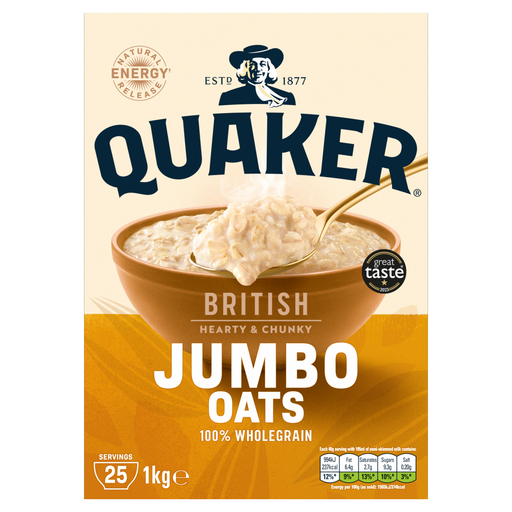
Quaker Jumbo Rolled Oats 1kg
A plain oat option for routine kitchen recipes where residents can manage the finished texture.
The listing states 100% wholegrain oats in a resealable 1kg dry pack. It may contain traces of wheat, so do not use it as a substitute for certified gluten-free oats; check finished texture for residents with an IDDSI prescription.
Joybuy
 No image available
Scotts Porage Oats Old Fashioned Porridge Oats 1kg
A dry rolled-oat option with stated hob and microwave preparation directions for routine breakfast service.
The listing states 100% rolled oats in a 1kg pack, with cool, dry and airtight post-opening storage instructions. It may contain wheat and barley, and the cooked result must be tested where a resident has an IDDSI prescription.
Joybuy
Frequently asked questions
Are standard porridge oats suitable for every resident in a care home?
No. Standard oats can be a flexible breakfast base, but each resident’s assessed nutritional needs, allergies, preferences and swallowing plan still apply. In England, the Care Quality Commission states that Regulation 14 is intended to ensure adequate nutrition and hydration and reduce the risks of malnutrition and dehydration.
Do we need oats labelled gluten-free for a resident on a gluten-free diet?
Yes, use a product currently labelled gluten-free where the resident’s documented care or clinical plan requires it; do not assume ordinary porridge oats qualify. The Food Standards Agency states that a gluten-free claim is limited to foods containing no more than 20 mg/kg gluten, while oats remain an emphasised allergen on labels.
Can porridge be served to a resident with dysphagia?
Only if it is prepared to the resident’s prescribed IDDSI texture level and tested at the intended serving temperature. IDDSI states that testing confirms flow and texture under serving conditions; for Level 4, food should be smooth, lump-free, non-sticky and without liquid separating from solids.
Are sachets or ready pots better than bulk oats for a care home?
Choose sachets or pots where controlled portions and simpler preparation are the priority, but check ingredients, allergens and packaging requirements. Bulk plain oats allow more recipe flexibility, while chilled ready porridge is not a storecupboard alternative because it requires refrigeration below 5°C and should not be reheated once cooled.
How should opened dry porridge oats be stored?
Follow the manufacturer’s pack instructions. For the Waitrose dry oats cited, the instruction is to store them in a cool, dry place and keep them in an airtight container after opening; the home’s food-safety procedures still govern handling and service.


