Consider a desiccant dehumidifier if the home office regularly gets cold, especially if it can fall below 10°C; Meaco advises that this is where desiccant models are more suited than compressor models. If the room stays heated, compare both types rather than assuming desiccant is the right choice, and check humidity control, noise at the setting you would use, and how you will empty the tank or arrange drainage.
Who needs to consider one?
People storing clothes in a cold office
If the office cools substantially in winter, temperature matters as well as the humidity around wardrobes, drawers or clothes rails. Meaco advises that desiccant models are more suited to rooms below 10°C than compressor models.
People working close to the appliance
Calls and concentration make the sound level at the intended fan setting more relevant than a single headline extraction figure. Leave room for the clearances required by the model's instructions, even if space beside the desk is limited.
People drying washing near stored clothes
Indoor drying adds moisture to the room. A laundry setting may help manage that moisture, but the tank or drain still needs attention and ventilation remains important.
What matters when choosing?
Start with the office's usual winter temperature: Meaco favours desiccant models for rooms below 10°C, while Electrical Safety First cautions that desiccant types may use more energy overall. Then assess the controls and upkeep that fit the way the room is used.
| Concern |
What to check |
Who this matters to |
| Cold-room moisture control |
Check the operating-temperature range against the office's winter temperature and look for a selectable humidity setting. |
If my office gets cold, I need moisture control for stored clothes without relying on a warm-room extraction figure; around 31% of consumers would put cold-room operation first. |
| Noise near a desk |
Compare stated dB(A) levels by mode and whether a quieter mode can be used with humidity control. |
Working beside the unit means I need to hear calls without unnecessary fan noise. Around 25% of consumers would make desk-side quietness their primary concern. |
| Moisture from indoor laundry |
Look for a laundry setting and a tank or permitted drain arrangement that suits how often washing dries indoors. |
When washing dries near the office, I need to manage the added moisture as well as protect stored clothes; roughly 25% of consumers would prioritise laundry-related moisture. |
| Emptying and safe placement |
Check tank capacity, drainage instructions and the clearance required around vents and cables. |
With furniture and clothes storage close by, I need a place for the unit that leaves its airflow clear and is practical to maintain; around 19% of consumers would put upkeep and placement first. |
What should you avoid?
-
Choosing by litres per day alone
An extraction figure depends on its stated test conditions. Meaco, for example, specifies the DD8L Junior's 7.5 litres/day figure at 20°C and 60% relative humidity; that figure alone does not describe its extraction in a colder office.
Compare rating conditions and operating-temperature ranges alongside the room's winter temperature. Check the sound level at the setting you expect to use, too.
-
Assuming desiccant is the economical choice in a heated room
Electrical Safety First notes that desiccant types may use more energy overall. That trade-off deserves attention if the office stays warm rather than regularly needing cold-room operation.
Compare the stated input power and control settings of desiccant and compressor models against the hours you expect to run them.
-
Using the appliance instead of addressing a damp source
Removing moisture from the air does not repair a leak or building defect. Manchester City Council advises fixing the cause where damp comes from penetrating damp, rising damp or defective plumbing.
Investigate recurring damp patches and leaks, and keep the room's ventilation working as intended while managing indoor moisture.
-
Squeezing the unit between a desk and clothes storage
Restricted airflow and neglected tanks or drain hoses make a convenient-looking position harder to use safely.
Follow the model's clearance and maintenance instructions, keep cables out of walkways, and check the tank or drain route regularly. Follow its instructions on unattended operation.
Brands to consider
These brands provide points of comparison for this decision; features and figures below apply to the named models or the brands' stated guidance, not every product they make.
EcoAir
EcoAir's DD1 Simple MK3 is a reference point for comparing controls and placement needs in a cool home office.
- EcoAir specifies a 1–35°C operating range, a 2-litre tank, selectable humidity settings and optional continuous drainage for the DD1 Simple MK3.
- EcoAir states 34 dB(A) and power consumption of 300 W or 580 W by mode for that model. Check which mode you would use before applying either figure to desk-side use or energy planning.
Meaco
Meaco's DD8L Junior offers a way to compare laundry operation, humidity-led control and sound levels by mode.
- Meaco specifies a laundry mode and sound levels of 39, 43 and 48 dB(A), depending on the DD8L Junior's running mode.
- Its stated 7.5 litres/day extraction is measured at 20°C and 60% relative humidity, so compare test conditions before applying that figure to a cold office.
Ebac
Ebac provides a compressor-model perspective when the office is normally heated.
- Ebac recommends refrigerant models for occupied UK homes, making it a useful brand viewpoint to consider alongside the office's actual temperature.
- That recommendation is Ebac's own guidance, not a finding that a compressor model will suit every cold room or stored-clothes setup.
Desiccant models on Joybuy
These EcoAir desiccant models are relevant to moisture control around clothes stored in a home office, with laundry settings if washing is also dried nearby. Compare their operating range, humidity controls, mode-specific noise and energy use before deciding whether either fits the room.
 No image available
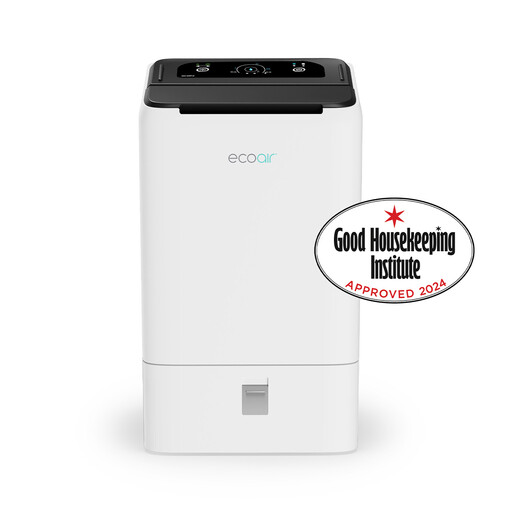
EcoAir DD2 Simple desiccant dehumidifier, white
Consider this model if you also dry washing near the office: its product name specifies a laundry mode and advertises extraction of 9 litres/day. Check the rating conditions and operating-temperature range against the office's winter temperature, and confirm its humidity controls, noise by mode and tank capacity for your setup.
View on Joybuy
 No image available
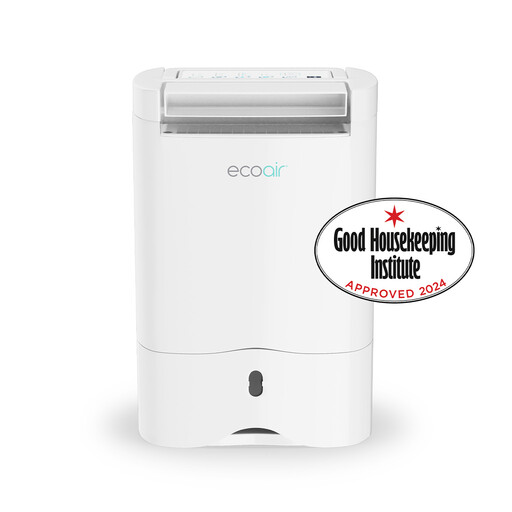
EcoAir DD3 Slimline desiccant dehumidifier, white
For an office where indoor laundry also adds moisture, this model's product name specifies a laundry mode, a 3-litre tank and advertised extraction of 10 litres/day. Before choosing it for desk-side use or a cold winter room, check the extraction rating conditions, operating range, selectable humidity controls, noise by mode and energy use.
View on Joybuy
Frequently asked questions
Should I choose a desiccant dehumidifier for a heated home office?
Not automatically: compare a compressor model as well if the office stays heated. Meaco advises that compressor models generally suit rooms above 10°C and desiccant models are more suited below 10°C; Electrical Safety First also notes that desiccant types may use more energy overall. Check the room's usual winter temperature and each model's operating conditions.
What humidity setting should I use around stored clothes?
Use a selectable humidity setting rather than running the appliance continuously at maximum. EcoAir's DD1 Simple MK3 manual describes 40%–60% relative humidity as a comfort range, not a guarantee that every storage arrangement will stay dry; follow the instructions for the model you choose and check for condensation around the storage area.
Can a dehumidifier replace ventilation when I dry clothes indoors?
No. UK government home-ventilation guidance explains that moisture can become trapped and form condensation without effective ventilation. Keep the room's intended ventilation working while using a dehumidifier to manage moisture from indoor drying.
What electrical and placement checks matter near a desk?
Check the plug and cable condition, the clearance specified in the model's manual, and whether its vents will remain unobstructed beside furniture or clothes. Electrical Safety First advises following the appliance instructions for maintenance and unattended use; register the appliance so you can receive recall information.
Will a dehumidifier fix damp caused by a leak?
No. Manchester City Council advises repairing the cause of damp from defective plumbing, penetrating damp or rising damp. A dehumidifier can help manage moisture while the area dries, but it does not replace the repair.


