Solo fresh-snack keeper
If prepared vegetables, fruit and a small weekly shop take up most of your fridge, look at the usable drawer and shelf space before paying attention to total capacity. An ice box may be enough if you seldom keep frozen food.


Choose the format that fits your kitchen and the amount of frozen food you actually keep. A compact fridge-freezer suits a tight space and modest shopping; a slim full-height model gives you more separate storage, while an under-counter fridge with an ice box makes sense only if frozen food is occasional. For prepared carrot sticks, check the usable chilled layout and keep the fridge at 5°C or below, as the NHS advises for chilled ready-to-eat food.
If prepared vegetables, fruit and a small weekly shop take up most of your fridge, look at the usable drawer and shelf space before paying attention to total capacity. An ice box may be enough if you seldom keep frozen food.
A narrow appliance still needs room for its depth, open door and ventilation, as well as a clear route into the kitchen. Which? identifies compact fridge-freezers as an option for smaller households, including people living alone.
If you regularly freeze meal portions alongside fresh vegetables, compare separate fridge and freezer capacities. A full freezer compartment may matter more to your routine than choosing the shortest cabinet.
Choose when: Kitchen space is tight and both fresh and frozen shopping are modest.
Trade-off: The smaller cabinet leaves less room for larger shops or frozen portions.
Choose when: You need more chilled and frozen storage but have a narrow appliance gap.
Trade-off: The height and overall capacity may be more than a small solo shop requires.
Choose when: Fresh-food storage takes priority and frozen items are occasional.
Trade-off: An ice box offers less frozen-food storage flexibility than a separate freezer compartment.
Choose when: You have compatible fitted-kitchen housing and regularly use both compartments.
Trade-off: The cabinet opening and hinge arrangement must match the appliance.
| Concern | What to check | Who this matters to |
|---|---|---|
| Kitchen fit | Measure height, width, depth and the delivery route; allow for the door to open and follow the model’s ventilation instructions. | If the kitchen gap is narrow, I need an appliance I can get into place and open properly. Around 42% of consumers put physical fit first. |
| Chilled-food organisation | Check the produce drawer and whether shelves accommodate your carrot-stick container. Follow the NHS advice to keep the fridge at 5°C or below. | When prepared vegetables are my regular snack, I want them easy to find without crowding the rest of my food. Accessible chilled storage is the main concern for around 33% of consumers. |
| Freezer routine | Compare separate fridge and freezer capacities, then check whether the defrost system is Frost Free or Low Frost. | If I freeze portions for later, an ice box may leave too little usable space. Enough freezer room and manageable defrosting come first for around 25% of consumers. |
A large total can still leave too little accessible room for your produce container or frozen portions.
Compare the chilled and frozen capacities separately, then look at the drawer and shelf layout for your usual shop.
A fridge-freezer may fit the quoted width but still lack room for its door, hinges or required airflow.
Check the full dimensions, delivery route and manufacturer’s ventilation instructions. For an integrated model, confirm the cabinet opening and hinge compatibility too.
Frost Free is intended to avoid manual freezer defrosting; Low Frost reduces ice build-up but may still require defrosting.
If avoiding that task matters to you, check the exact model’s defrost specification before choosing it.
Prepared carrot sticks need the appliance to maintain an appropriate chilled temperature, not just a setting that sounds suitable.
The NHS advises setting a properly working fridge to 5°C or below for chilled ready-to-eat food. Use a fridge thermometer if you are unsure of the storage temperature.
The Bosch UK KGN27NLEAG illustrates the slim full-height route rather than the smallest-appliance route.
Beko offers models relevant to freestanding and integrated layouts, including 50/50 fridge-freezers.
The Hotpoint H55V1 112W offers an under-counter route when chilled-food space matters more than a full-size freezer.
These models cover compact and slim freestanding fridge-freezers, plus an integrated option for compatible fitted kitchens. Compare their stated dimensions with your space and choose the fridge/freezer layout that matches your food routine.
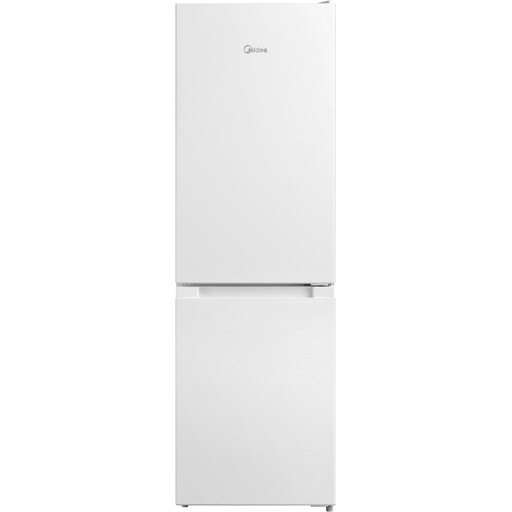 No image available
Consider this freestanding model if a 50 cm-wide appliance fits your kitchen and you want a separate freezer rather than an ice box.
The stated total capacity is 173 L and the energy class is E. Check the full dimensions, interior layout and defrost requirements against your routine.
 No image available
Its stated 47 cm width makes this freestanding model worth measuring for a particularly narrow kitchen gap.
It is 144 cm tall, has 157 L of stated total capacity and carries an E energy class. Low Frost reduces ice build-up but does not mean manual defrosting is eliminated.
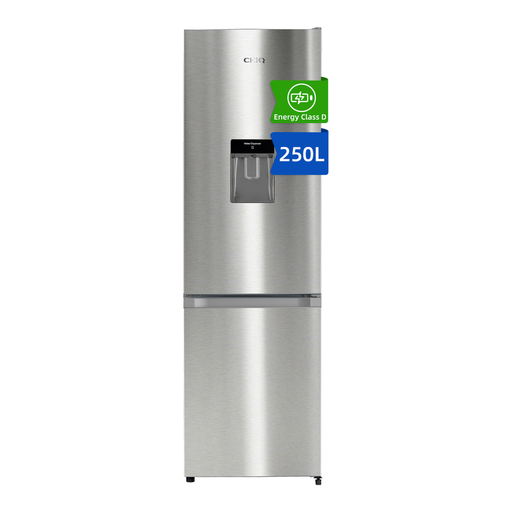 No image available
Consider this freestanding full-height model if you want more storage while keeping to a stated width of 54 cm.
It is 181 cm tall, has Total No Frost and carries a D energy class. Check that its height, depth and capacity suit your space and shopping routine.
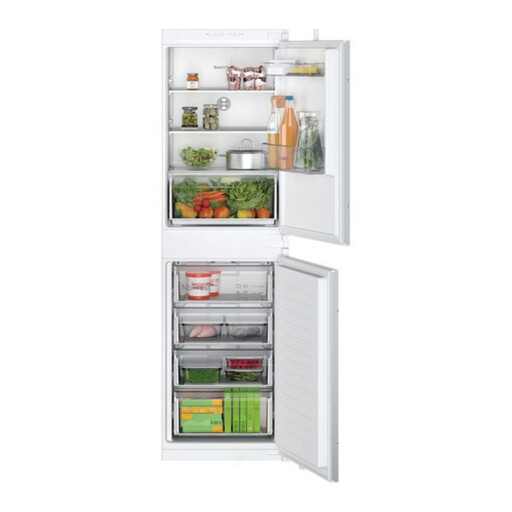 No image available
Choose an integrated model only if your fitted-kitchen housing and cabinet door can accommodate it.
This model is listed as 177 cm tall, with a sliding hinge, Frost Free operation, 249 L of total capacity and an E energy class. Confirm the cabinet opening, hinge arrangement and ventilation requirements before ordering.
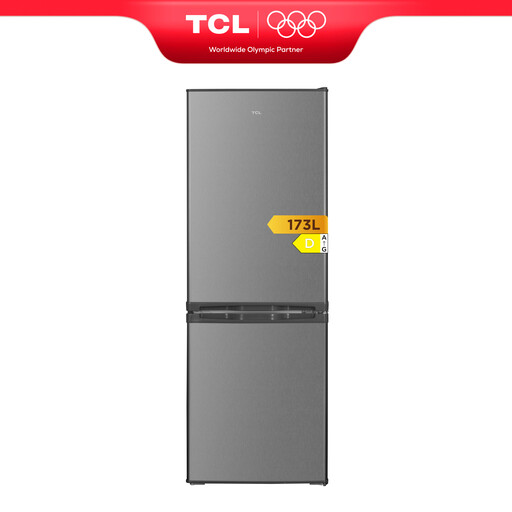 No image available
This freestanding model is an option to compare when you want a narrow fridge-freezer with a separate freezer.
The stated width is 50 cm, height 143 cm and energy class D. Joybuy lists a 52 L freezer capacity; check the drawer and shelf arrangement if prepared vegetables are your main reason for buying.
Keep the fridge at 5°C or below: that is the NHS advice for chilled ready-to-eat food. Keep prepared carrot sticks in a clean, covered container and follow any storage instructions on the pack.
No, a salad crisper is not essential, but it can give produce a defined place in the fridge. Check whether the drawer or an adjustable shelf will accommodate the container you use rather than relying on a general freshness claim.
No: a 50/50 layout makes sense if you use chilled and frozen storage regularly, including for batch-cooked portions. If frozen items are only occasional, compare the space taken by a full freezer with a compact model or an under-counter fridge with an ice box.
Compare the displayed energy class and labelled information for appliances that meet your storage needs. GOV.UK states that products within the energy-labelling rules must display an energy label at the point of sale; the label does not replace checking capacity and dimensions.
Check the exact model’s ambient-temperature instructions before placing it there. Beko says the freezer compartment in applicable FreezerGuard models can operate down to -15°C ambient temperature, but does not recommend using the fridge compartment in low ambient temperatures.