A rechargeable wireless keyboard is worth considering if you want to avoid a permanent keyboard cable at a desk with limited plug sockets, but you will still need to charge it. For turn-based strategy games, choose a compact layout if mouse space matters more than a number pad; choose a larger layout if you regularly use number-pad shortcuts or want more dedicated keys. Check the battery claim’s lighting and connection conditions, your preferred key layout and whether your chosen wireless mode uses a PC USB port.
Who this suits
Players with limited desk sockets
You want fewer permanent cables around your desk but can accommodate occasional charging. A model offering Bluetooth, a 2.4 GHz receiver and wired operation gives you different ways to connect, provided they suit your PC.
Strategy players who use shortcuts
You regularly use navigation keys, a number pad or remapped commands. Compare the exact key arrangement with the space you can give the keyboard rather than choosing by size alone.
Players in shared spaces
Switch feel and typing noise matter alongside wireless convenience when you share a room or play late. Check the fitted switches on the exact model; wireless connectivity does not tell you how it will sound.
What to check when buying
Start with how the keyboard will connect and charge, then decide which keys you need within the desk space available.
| Concern | What to check | Who this matters to |
|---|
| Sockets and cables |
Check Bluetooth or receiver-based connection options, the charging method and the conditions attached to battery-life claims. |
If I want to leave a scarce desk socket free, I need wireless use without an inconvenient charging routine. Around 39% of consumers put reducing socket and cable dependence first. |
| Strategy-game controls |
Inspect the exact layout for arrows, a function row, number pad and any dedicated or remappable keys you rely on. |
When I use familiar shortcuts throughout a long game, direct access matters more than a smaller keyboard. Roughly 23% of consumers prioritise their key layout and controls. |
| Desk space |
Compare 75%, TKL and larger layouts against your available width; check which navigation keys move to a function layer. |
If my keyboard crowds my mouse, I would accept fewer dedicated keys to reclaim space. About 23% of consumers make keyboard footprint their primary concern. |
| Feel and noise |
Identify the fitted switch and check hot-swap compatibility if you intend to change switches; do not treat damping claims as a measured noise rating. |
In a shared room, I care about how the keys feel and sound, especially during long sessions. Around 15% of consumers put feel, noise or customisation first. |
Buying pitfalls
-
Assuming wireless means no charging to plan for
Wireless use removes a permanent keyboard cable, not the need to recharge. CORSAIR states up to 266 hours for the K65 PLUS WIRELESS via 2.4 GHz with RGB off; that figure should not be read as RGB-on runtime.
Compare battery claims under their stated connection and lighting conditions, and check whether the model offers wired use while charging.
-
Choosing a compact board before checking its keys
A 75% layout can retain arrows while omitting the number pad. That trade-off may frustrate you if number-pad commands are part of your games or other work.
Check the exact variant’s key map, including its UK or US layout and function-layer commands, before choosing a size.
-
Letting polling rate decide the purchase
A high wireless polling-rate specification does not, by itself, establish an advantage for deliberate turn-based play. Layout, connection choice and charging needs may be more relevant to this desk setup.
Decide which controls you will use before giving extra display, dial or polling-rate features weight in the decision.
-
Daisy-chaining extension leads to make room
Overloaded or daisy-chained extension devices can create a fire risk. Electrical Safety First advises using only one extension device per socket and staying within its marked current rating.
Do not plug one extension lead into another. Replace damaged leads or plugs, and seek advice from a registered electrician if additional fixed sockets are needed.
Brands to consider
CORSAIR
The K65 PLUS WIRELESS is a compact wireless option for players considering a 75% layout.
- CORSAIR specifies a 75% layout, tri-mode connectivity and hot-swappable switches for this model.
- Its stated battery figure applies to 2.4 GHz use with RGB off, and its compact layout omits the number pad.
Logitech G
The G915 X LIGHTSPEED range offers a choice between a full-size wireless keyboard and a narrower TKL version.
- Logitech G specifies Bluetooth, LIGHTSPEED wireless and wired connection options for the full-size G915 X LIGHTSPEED, along with nine assignable G keys.
- The full-size version uses more desk width than a TKL or 75% board; check which controls each exact variant retains.
Razer
The BlackWidow V4 Pro 75% is relevant if you want a compact wireless layout with switch customisation and additional controls.
- Razer specifies hot-swap support, Bluetooth switching between three devices, a Command Dial and an OLED display for this model.
- Its stated 4,000 Hz wireless polling rate does not establish a benefit for turn-based strategy play; decide whether you would use its extra controls.
Joybuy product choices
These wireless keyboards offer different approaches to the same socket-conscious setup: compact 75% boards, layouts that retain a number pad, and a full-size option. Check each listed key layout before choosing one for your shortcuts.
 No image available
ASUS ROG Strix Scope II 96 Wireless Gaming Keyboard, White, UK Layout
Consider this model if you want wireless use and prefer a UK keyboard layout.
Check the exact key map against your strategy-game shortcuts and confirm the battery-life conditions that match your settings.
View on Joybuy
 No image available
AULA F99 Wireless Mechanical Keyboard, Light Blue, Reaper Switch, US Layout
Consider the F99 if you want wireless connection choices without ruling out wired use.
The title specifies wired, Bluetooth and 2.4 GHz modes and a US QWERTY layout. Check whether that key arrangement suits your shortcuts and how often your chosen settings will require charging.
View on Joybuy
 No image available
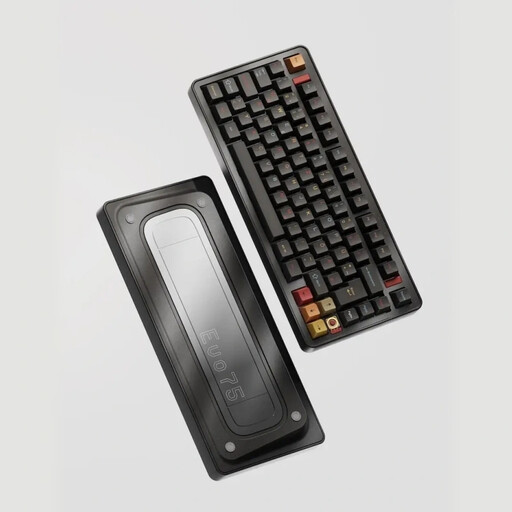
Ticktype EVO75 Wireless Mechanical Keyboard, Nebula, Creamy Rye Switches
Consider this 75% model when desk space and the option to customise switches matter.
Its title specifies a US layout, wired, Bluetooth and 2.4 GHz modes, hot-swappable switches, VIA compatibility and an 8000mAh battery. Confirm the exact navigation keys and expected charging frequency; capacity alone does not establish runtime.
View on Joybuy
 No image available
AULA F75 75% Wireless Gaming Keyboard, US QWERTY Layout
Consider the F75 if a compact keyboard footprint matters more to you than a number pad.
The title specifies wired, Bluetooth and 2.4 GHz modes, RGB lighting and PBT keycaps. Check the exact navigation-key arrangement and charging expectations for the settings you plan to use.
View on Joybuy
 No image available
Ticktype DP104 Wireless Keyboard, Gecha Gray, Silent Tactile Switches
Consider this full-size option if keeping more keys available matters more than minimising keyboard width.
The title specifies 108 keys, a US layout, tri-mode connectivity, hot-swappable Silent Tactile switches and an 8000mAh battery. Allow room for the full-size footprint, and check the key map and charging expectations; battery capacity is not a runtime figure.
View on Joybuy
Common questions
Will a wireless keyboard free up a plug socket?
It can avoid a permanent keyboard charging cable at your desk, but you will still need to charge it periodically. Check whether you can use Bluetooth, whether a 2.4 GHz connection needs an available PC USB port, and whether the model works by cable when needed.
Is a 75%, TKL or full-size keyboard better for strategy games?
Choose by the keys you actually use: a 75% layout can retain arrows in a smaller footprint, TKL removes the number pad, and full-size suits regular number-pad use. Inspect the exact variant’s key map and function-layer commands before trading dedicated keys for desk space.
Can an extension lead solve the socket problem instead?
An extension lead may be an option if used within its marked current rating, but do not daisy-chain extension devices. Electrical Safety First advises using only one extension device per socket and fully unwinding a cable reel to achieve its current rating.


