Apple-device households
If family videos are mainly on an iPhone or iPad, Apple’s documented AirPlay sharing offers a way to send videos, photos or a mirrored screen to Apple TV. Check that the devices can use the same Wi-Fi network.


Check the television and the devices holding your family videos before choosing a streamer: 4K HDR output needs compatible content and a compatible TV, while a new streamer cannot remove screen reflections. Apple TV 4K offers an AirPlay route for Apple-device households, and Google TV Streamer (4K) supports casting from compatible apps and has built-in Ethernet. Roku and Fire TV sticks may suit particular remote or network needs, but check how your own videos will play before choosing either.
If family videos are mainly on an iPhone or iPad, Apple’s documented AirPlay sharing offers a way to send videos, photos or a mirrored screen to Apple TV. Check that the devices can use the same Wi-Fi network.
If videos are difficult to see in daylight, assess the television’s picture and reflections before changing the streamer. Apple and Google specify compatible display requirements for 4K HDR playback; a streamer cannot change the screen’s bright-room performance.
If lounge Wi-Fi is inconsistent, consider whether a network cable can reach the TV area or whether a wireless stick better fits the setup. Google lists built-in Ethernet for Google TV Streamer (4K), while Roku describes a long-range Wi-Fi receiver for Streaming Stick 4K.
Start with the TV and the videos you want to show, then check the sharing method and network connection. The four device routes below address different parts of that decision; none can make an unsuitable display easier to see in daylight.
Consider it: When the family mainly shares videos from Apple devices using AirPlay.
Allow for: An HDMI cable sold separately and the usual same-Wi-Fi-network requirement for sharing.
Consider it: When the family uses compatible Cast-enabled apps and wants built-in Gigabit Ethernet.
Allow for: A separately sold certified HDMI 2.1 cable; the sending device and streamer must share a Wi-Fi network for casting.
Consider it: When a compact stick, TV-control remote and Roku’s stated long-range Wi-Fi feature fit the lounge.
Check first: That the family’s preferred app or sharing method plays its videos.
Consider it: When the family already has a suitable Fire TV video workflow and values its listed storage or network options.
Allow for: A compatible router to benefit from Wi-Fi 6E, or a separate compatible adaptor for Ethernet.
| Concern | What to check | Who this matters to |
|---|---|---|
| Daytime visibility and picture formats | Assess reflections and the TV’s bright-room picture. Check its resolution and HDR support against the videos you intend to play. | If daylight makes our family videos hard to see, I need to assess the screen before paying attention to the streamer’s picture formats. Around 36% of consumers put display compatibility first. |
| Sharing existing videos | Identify the phones, tablets or computers holding the clips and check the intended app’s AirPlay or Cast workflow. | When clips are spread across our devices, I want to show one without repeatedly changing apps or moving files. Sharing from existing devices is the primary concern for around 29% of consumers. |
| Connection in the lounge | Check Wi-Fi where the TV sits and whether an Ethernet cable can reach it; Wi-Fi 6E benefits require a compatible router. | If the router is far from the TV, I care most about keeping playback connected during a viewing session. Around 21% of consumers prioritise network reliability. |
| Setup and everyday controls | Check HDMI clearance, power access and whether the remote can control the TV functions your family uses. | With several people starting videos, I would rather have controls everyone can use than extra features we will ignore. Straightforward setup and controls come first for around 14% of consumers. |
Apple and Google specify compatible television requirements for 4K HDR playback. Even with the right signal, reflections and the screen’s own bright-room performance still affect viewing.
Look at the TV in the lounge’s usual daylight, then check its resolution, HDR support and available HDMI input before choosing a streamer.
Apple documents AirPlay sharing, while Google Cast requires a Cast-enabled app and a shared Wi-Fi network. Neither establishes that every household app or video file will follow the same path.
Identify where the clips are stored and try a representative video using the intended app when you can.
Amazon says Fire TV Stick 4K Max needs a compatible router to benefit from Wi-Fi 6E. Google TV Streamer (4K) has built-in Ethernet, while using Ethernet with Fire TV Stick 4K Max requires a separate compatible adaptor.
Check the signal at the TV and whether a network cable can reach it before deciding which connection option is useful.
In the UK, TV Licensing’s criteria concern what you watch: live TV and BBC iPlayer have licence requirements regardless of the device used. Playing private family recordings is a different activity.
If the household also watches live programmes or uses BBC iPlayer, check the applicable TV Licensing criteria rather than deciding on the basis of the streamer alone.
Apple TV 4K is a set-top route for households sharing videos from Apple devices.
Google TV Streamer (4K) suits a workflow built around compatible Cast-enabled apps, with a wired connection available.
Roku Streaming Stick 4K is a compact route for households considering a TV-control remote and the model’s stated long-range Wi-Fi feature.
Fire TV Stick 4K Max is worth considering when the household’s video-sharing workflow already works with Fire TV.
These two Roku streaming-stick listings are choices to consider if a compact TV streamer suits the lounge. Check how each listing works with the family’s videos and the television before choosing between them.
 No image available
Consider this stick if you want to show family videos on a TV and can confirm a suitable sharing app or method.
Roku lists Dolby Vision support for Streaming Stick 4K; viewing in that format depends on compatible video and a TV. Check the screen’s daytime visibility separately.
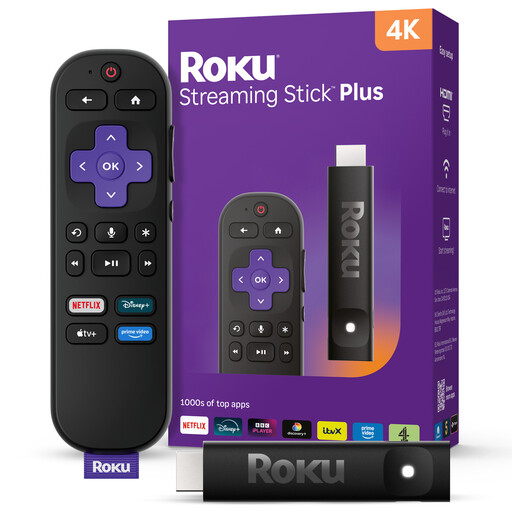 No image available
Consider this 4KPlus listing if you want a Roku streaming stick and can confirm how the household’s video app will share clips with it.
Check the connected TV’s resolution and its visibility in daylight; the stick’s 4K designation does not establish either.
Not by itself: Apple and Google specify a compatible television for 4K HDR playback, and Google also specifies suitable content and a high-speed connection. Assess the TV’s daylight picture and reflections separately from the streamer’s output formats.
Yes, Apple documents AirPlay for sharing video and photos or mirroring an iPhone or iPad screen to Apple TV. The devices normally need to be on the same Wi-Fi network; check the app and clip you intend to use.
It can receive video from compatible Google Cast-enabled apps. Google says the sending device and streamer must be on the same Wi-Fi network, so check whether the app holding your family videos supports Cast.
Playing private family recordings alone is not a licence-triggering activity under the viewing criteria described by TV Licensing. Its requirements do apply to watching live TV and using BBC iPlayer, so check those criteria if the household also uses either service.