Wildlife-picture-quality viewers
If the communal TV and chosen programme support 4K and HDR, you want a streamer that can handle the relevant formats rather than limiting playback to HD.


Choose a 4K/HDR streaming device for wildlife programmes if the communal TV and the intended programme or service support those formats; otherwise, those video features will not change what you can watch. If shared Wi-Fi is unreliable, weigh Roku’s long-range Wi-Fi against the Google TV Streamer’s built-in Ethernet, which needs a workable cable route. Check the household’s apps, accounts and subscriptions before choosing either device.
If the communal TV and chosen programme support 4K and HDR, you want a streamer that can handle the relevant formats rather than limiting playback to HD.
If the TV is far from the router or the shared wireless connection is troublesome, consider whether Wi-Fi reception or a practical wired connection matters more to your setup.
You need access to the household’s chosen apps and a plan for subscriptions and sign-ins. For BBC iPlayer or live TV, check the applicable TV Licence requirement separately from the device purchase.
For a shared flat watching wildlife programmes, check the TV and intended content first, then the connection at the TV and the services everyone expects to use.
| Concern | What to check | Who this matters to |
|---|---|---|
| Picture compatibility | Check the TV’s resolution, HDMI input and HDR formats, plus the format offered for the intended programme by its service. | If the TV and wildlife programme support 4K/HDR, I want the streamer to handle those formats too. Around 40% of consumers put picture compatibility first. |
| Connection reliability | Check reception where the TV sits and whether a cable can reach the router; compare built-in Ethernet with an adapter-dependent route. | When the router is far from the communal TV, I care most about having a workable connection for viewing. Around 30% of consumers put network reliability first. |
| Shared use and apps | Confirm apps on the exact device, subscription and sign-in arrangements, and whether planned BBC iPlayer or live-TV viewing is covered by a TV Licence. | For a screen everyone uses, I need our services and a clear way to manage accounts. Around 30% of consumers prioritise straightforward shared use. |
The streamer, television and selected programme or service must all support the relevant format. An HD television cannot display 4K simply because a connected device offers it.
Check the communal TV’s resolution and HDR formats, then check the specific programme before choosing a device for Dolby Vision or other HDR support.
Roku specifies long-range Wi-Fi for its Streaming Stick 4K, but that does not establish how the connection will perform in your flat. Google TV Streamer has built-in Ethernet; Amazon offers a separate Ethernet-adapter route for Fire TV Stick 4K Select.
Find the router and assess reception at the TV. If you want a wired connection, establish whether a cable can be run safely and whether the chosen device needs an adapter.
Access to an app does not necessarily include its subscription. Google also specifies a certified HDMI 2.1 cable for Google TV Streamer and says it is sold separately.
List the household’s services, accounts and required accessories for the exact device before making a choice.
TV Licensing says a TV Licence is required to watch or download BBC iPlayer programmes and to watch live TV on streaming services. The type of streaming device does not change those requirements.
Check that your planned viewing is covered before using BBC iPlayer or watching live TV.
Roku’s Streaming Stick 4K is a compact HDMI-stick option for a shared TV that must connect over Wi-Fi.
The Fire TV Stick 4K Select is a stick-format option for households checking access to commonly used UK streaming apps.
Google TV Streamer (4K) is a set-top option when a wired router connection or personalised Google TV home screens matters to flatmates.
These Roku sticks are options for a shared TV using a wireless connection. Compare the exact variant with your television, intended wildlife service and remote-control needs.
 No image available
Consider this model if the shared TV must use Wi-Fi and supports the picture formats offered by your chosen programme. Roku specifies 4K, Dolby Vision, HDR10+ and a long-range Wi-Fi receiver for the Streaming Stick 4K. Check reception at the TV: the stated wireless feature does not guarantee stable playback on your shared network.
 No image available
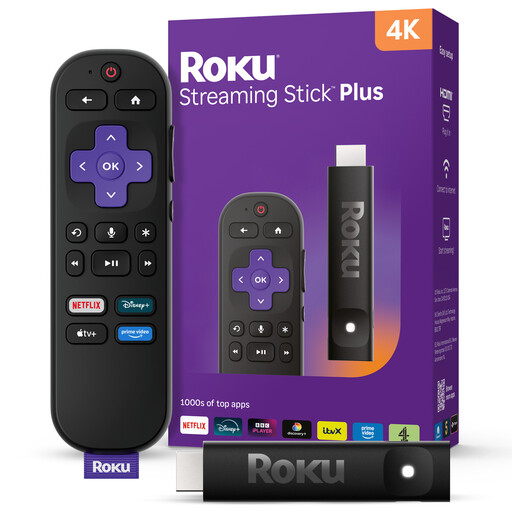
This Roku stick is another option to consider for the communal TV. Its product name identifies the 4KPlus variant; check the exact listing for its HDR formats, required apps and remote functions, and confirm that reception at the TV suits the household’s connection.
Yes. TV Licensing says you must be covered by a TV Licence to watch or download programmes on BBC iPlayer, whatever device you use. Check that the planned viewing in your shared flat is covered before watching.
TV Licensing says you do not need a TV Licence solely to watch on-demand programmes on services other than BBC iPlayer, such as Netflix, ITVX or YouTube. Watching live TV on a streaming service does require a licence, and BBC iPlayer has its own requirement for both live and on-demand viewing.
Check for a free HDMI input, nearby power and an internet connection that works where the TV sits. For Google TV Streamer (4K), Google specifies a certified HDMI 2.1 cable sold separately; its setup also requires a Google Account and a Wi-Fi or Ethernet connection.
No. An available app does not necessarily include a subscription to its content; Amazon notes that subscription fees may apply to Fire TV services. Check the particular apps and account arrangements your flatmates intend to use.
Google TV supports multiple profiles for personalised home screens on a shared television. Check profile and account rules within each streaming app separately, because a Google TV profile does not automatically separate those services.