Which setup sounds familiar?
Start with what is unsatisfactory about the current setup: access to services, a reliable connection or TV sound.
Keeping an older screen
If your TV has a working HDMI input and its picture still suits you, an HDMI streaming player is an alternative to replacing it. Roku says its players work with HDMI-equipped TVs, although 4K and HDR require a compatible display.
Dealing with interruptions
If apps already work but programmes buffer, check the connection at the viewing location before changing players. A wired connection is an option only if the device has Ethernet or supports a compatible adapter and you can run a cable.
Changing the TV sound
If the picture and streaming apps meet your needs but TV sound does not, consider an audio connection rather than another video player. Check the TV and soundbar for compatible HDMI ARC or eARC connections, or an optical connection where supported.
What should you check before buying?
Choose the route that addresses the problem you actually have, then check the exact screen, device and services together.
HDMI streaming player
Choose it when: Your current HDMI-equipped screen still meets your size and picture needs, but you want a different way to access streaming apps.
Allow for: Another device to power and set up, and a separate remote; some box-style players also need an HDMI cable.
Smart TV replacement
Choose it when: The existing display is faulty, lacks a usable HDMI input or no longer meets your screen needs.
Allow for: Replacing the whole display rather than only its streaming interface; check required apps on the exact TV model.
| Priority |
What to check |
Your needs |
| Screen connection |
Look for a working HDMI input on the TV, monitor or projector. Check that a stick will physically fit or that a box has the cable it needs. |
I want to keep a screen that still works for me and add streaming without replacing the display. |
| Required services |
Confirm each essential app for the exact device model and UK service offering, including relevant account, plan and software requirements. Netflix says support is device-specific and may end on older devices. |
My household needs particular services, not just a device described as a smart TV or streaming player. |
| 4K and HDR |
Check the display, its specific HDMI input, any intervening audio equipment, the cable, and the service plan and content. Roku specifies HDMI 2.0 and HDCP 2.2 throughout its compatible 4K connection path. |
If I am choosing 4K equipment, I want to know whether my existing screen and connections can actually show the intended format. |
| Network |
Test the connection at the device’s usual location. Netflix recommends stable speeds of at least 3 Mbps for HD, 5 Mbps for Full HD and 15 Mbps for 4K; check Ethernet-port or adapter compatibility before planning a wired connection. |
Programmes interrupt my viewing or lose picture quality, so I need to identify whether the connection is the limiting factor. |
| TV audio |
Check whether the TV and chosen soundbar share HDMI ARC or eARC; inspect CEC settings if shared control matters. Where supported by both products, optical audio may offer another connection. |
The screen and apps suit me, but I want to address the TV sound without complicating everyday control. |
Which brands illustrate the options?
These manufacturer examples help distinguish connections and variants; they do not indicate that every product line or model has the same features.
Roku
Roku offers HDMI streaming players and a Streambar route that combines streaming equipment with TV audio.
- Roku says its streaming players work with HDMI-equipped TVs.
- Roku’s 4K setup guidance requires compatible display hardware and an appropriate HDMI connection path; player capability alone is not enough.
Amazon Fire TV
Fire TV sticks offer an HDMI-connected route, with an optional wired-network approach for specified devices.
- Amazon lists an Ethernet adapter for particular Fire TV models that can connect them directly to a router.
- Adapter compatibility depends on the exact Fire TV model and generation.
Apple
Apple TV 4K (3rd generation) is an HDMI-connected box offered in distinct network variants.
- Apple specifies HDMI 2.1 and Wi-Fi 6 for both variants; the Wi-Fi + Ethernet version also has Gigabit Ethernet.
- The Wi-Fi-only variant does not have that Ethernet connection. Apple says an HDMI cable is sold separately and a compatible TV is required for 4K and HDR.
Google
Google TV Streamer (4K) is a box-style streaming route with built-in wired networking.
- Google lists Gigabit Ethernet, HDMI 2.1 and output of up to 4K HDR at 60 fps for this model.
- Google specifies a certified HDMI 2.1 cable, sold separately. Check required services and screen compatibility for your setup.
Joybuy options for this setup
These options cover Roku streaming sticks for adding video streaming to an HDMI-equipped screen, followed by a Bose soundbar for a setup where TV audio is the concern. A soundbar does not take the place of a video-streaming player.
 No image available
Roku Streaming Stick 4K with Dolby Vision
Consider this streaming-stick route if you are keeping a working HDMI-equipped screen. Check your essential apps on the exact device and confirm that the display and HDMI path meet the requirements for any 4K or HDR format you intend to watch.
Joybuy
 No image available
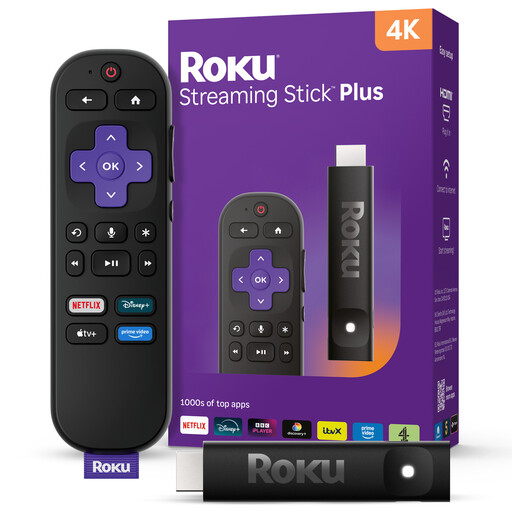
Roku Streaming Stick 4KPlus
This is another streaming-stick option for keeping an HDMI-equipped screen. Confirm support for the services you use on this exact model, and check the screen and HDMI connections before relying on 4K playback.
Joybuy
 No image available
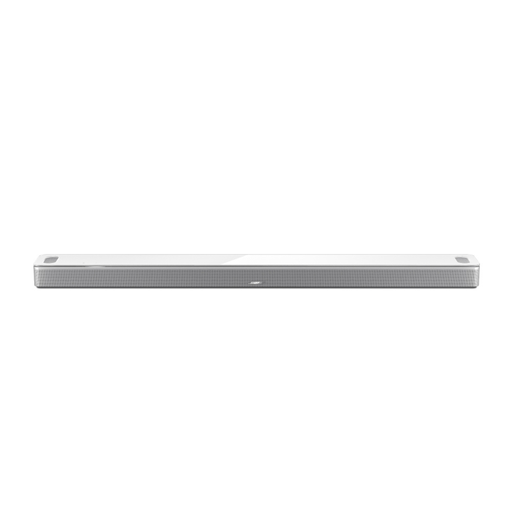
Bose Smart Ultra Soundbar, Arctic White
Consider an audio upgrade when the existing picture and streaming access suit you but TV sound is the issue. Before choosing this soundbar, confirm that its audio connections match your TV’s available ports and the control setup you want.
Joybuy
Streaming setup questions
Can I add streaming to an older TV without replacing it?
Yes, if the TV has a working HDMI input and still meets your screen needs, an HDMI streaming player is an option. Roku says its players work with HDMI-equipped TVs; an HD screen will not show 4K or HDR merely because the player supports them.
Why might a 4K streaming player show an HD picture?
The player is only one part of the 4K setup. Roku’s guidance calls for a compatible TV input and HDMI path, while the intended stream also depends on the connection, service plan and available content. Check any receiver or soundbar between the player and TV too.
Should I change players if programmes keep buffering?
Check the connection at the streaming device first rather than assuming the player is at fault. Netflix recommends stable speeds of at least 3 Mbps for HD, 5 Mbps for Full HD and 15 Mbps for 4K. Ethernet is worth considering where you have a practical cable route and a compatible port or adapter.
What should I check before adding a soundbar?
Match the TV’s audio output to a connection supported by the soundbar. Check for HDMI ARC or eARC and any CEC settings needed for shared control; if using optical audio instead, confirm that both products support it and that you have the required cable.
Will every streaming service work on any smart TV or player?
No. Netflix says device support is model-specific and that its app may no longer be available on some older TVs and streaming devices. Check each essential service for the exact device model, UK offering and any relevant account or software requirements.


