Choose a streaming stick or box for the apps, connection and listening features you need, but check the picture from your side seat before buying: a streamer cannot change the TV’s viewing angle. If colours or contrast shift noticeably from that seat, address the screen position or assess the display first. Then check that your TV, chosen service and home connection can support the picture quality you want.
Who this decision affects
Viewers who notice side-angle picture changes
If colours, brightness or contrast change when you move away from the centre of the sofa, assess the TV from your usual seat before changing streamers. RTINGS.com identifies viewing angle as a property of the display, not the device supplying its picture.
Viewers with an unreliable connection near the TV
If other devices share your broadband or Wi-Fi is weak beside the TV, check the connection at the screen before choosing a 4K device. An Ethernet-capable box is worth considering when a cable can reach it.
Viewers who need quieter or more accessible viewing
If you watch beside other people, compare headphone options and the caption or audio-description features you use. Check both the device and the particular streaming app: a device-level control does not establish that every programme offers the same feature.
What to check before choosing
Start with the picture at the side seat, then check service and TV compatibility before deciding whether a compact stick or an Ethernet-capable box suits your connection and listening needs.
| Concern |
What to check |
Who this matters to |
| Picture from the side |
Watch from your usual seat; check whether repositioning the screen helps. |
If scenery loses colour or contrast when I sit off-centre, changing the video source will not fix what I see. Around 36% of consumers put the side-seat picture first. |
| Apps and TV compatibility |
Confirm the required UK apps and a free HDMI input; for intended 4K viewing, check the display, content tier and relevant HDCP requirements. |
I need my travel programmes to be available on the device and to play at a resolution my TV can show. Around 29% of consumers make that compatibility their primary concern. |
| Connection stability |
Check speed and Wi-Fi reliability at the TV; consider an Ethernet-capable device if a cable is practical. |
When the connection near my TV drops, uninterrupted viewing matters more to me than a Wi-Fi label on the box. Roughly 21% of consumers put network reliability first. |
| Private and accessible viewing |
Check the exact headphone setup and the intended app’s captions or audio-description options. |
I want to listen without disturbing someone beside me, or use the access features I need for a particular programme. About 14% of consumers prioritise listening and accessibility. |
Buying mistakes to avoid
-
Buying a streamer to correct a poor side-angle picture
A streaming device cannot prevent a TV panel from changing colour or contrast when viewed off-centre.
Watch a familiar programme from your actual side seat. If the picture changes, consider screen positioning or assess the viewing-angle performance of the specific TV before replacing the streamer.
-
Assuming a 4K device guarantees 4K programmes
The display, content, connection and applicable HDMI protection requirements also matter. Netflix recommends at least 15 Mbps for UHD 4K; Google specifies a 4K-capable display, HDCP 2.2 and at least 20 Mbps for its 4K streaming route.
Check the TV input and the requirements of the service and device you intend to use, then assess the connection at the TV.
-
Treating Wi-Fi 6E as a buffering fix
Amazon says the Wi-Fi 6E feature of Fire TV Stick 4K Max requires a compatible Wi-Fi 6E router. The feature alone does not establish how reliably your connection will work beside the TV.
Check local Wi-Fi reliability and available broadband capacity; consider a wired connection where it is practical.
-
Choosing hardware before checking what you will watch
The device alone does not establish which travel programmes are available through your chosen services. Viewing rules can also depend on the programme: TV Licensing says a TV Licence is required for live TV and for BBC iPlayer programmes, including on-demand viewing.
Confirm the UK apps and programmes you want, their subscription terms and whether your viewing requires a TV Licence.
Relevant brands for reference
Roku
A compact-stick route for viewers who want app-based streaming and, with a compatible Roku device, mobile-app headphone listening.
- Roku describes Streaming Stick 4K as supporting 4K, Dolby Vision and HDR10+. Its mobile Headphone Mode can send audio to headphones connected to a phone or tablet.
- Headphone Mode requires the mobile device and compatible Roku device to share a wireless network. Check support for the exact stick you choose; it will not change the TV’s viewing angle.
Amazon Fire TV
A compact-stick route for households that prefer the Fire TV platform.
- Amazon specifies 16 GB of storage and Wi-Fi 6E support for Fire TV Stick 4K Max.
- Its Wi-Fi 6E feature needs a compatible router. 4K viewing also depends on suitable content, a compatible TV and an adequate connection; the stick cannot correct off-axis picture changes.
Google
A streaming-box route for viewers who want Google TV and a wired-network option.
- Google lists Gigabit Ethernet, HDMI 2.1 and 32 GB of storage for Google TV Streamer (4K).
- Google’s 4K requirements include a compatible 4K display, HDCP 2.2 and at least 20 Mbps. Check the cable requirements before setup; the box cannot improve the TV panel’s side-angle picture.
Apple
A streaming-box route for viewers who want Apple TV controls and Bluetooth-headphone support.
- Apple specifies Wi-Fi 6 for Apple TV 4K and Gigabit Ethernet for its Wi-Fi + Ethernet variant; Apple TV 4K can connect Bluetooth headphones.
- An HDMI cable is sold separately. A suitable 4K/HDR TV is required for 4K/HDR viewing, and app features can vary.
Streaming sticks on Joybuy
These compact Roku sticks are options for adding streaming to an existing TV that already looks acceptable from your side seat. Check your TV’s HDMI input and the exact model’s listening features before choosing between them.
 Image unavailable
Roku Streaming Stick 4K Dolby Vision
A compact add-on to consider when your TV’s picture already looks good from the side and you want streaming through an available HDMI input.
For 4K viewing, check your TV, chosen programme and connection. If headphones matter, confirm private-listening support for this exact model before buying.
View on Joybuy
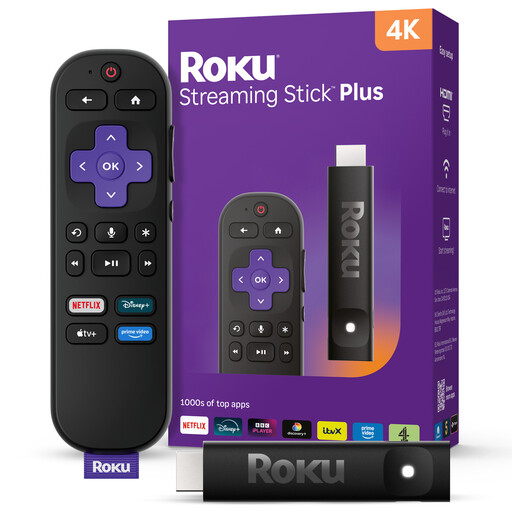 Image unavailable
Roku Streaming Stick 4KPlus
A portable streaming-stick option if you want an add-on for a TV whose picture is already satisfactory from the side.
If remote-based headphone listening is important, confirm the supplied remote, its headphone connection and compatibility. Check the TV and connection requirements for the programmes you intend to watch.
View on Joybuy
Frequently asked questions
Will a streaming stick improve a TV picture viewed from the side?
No: a streaming stick cannot change the TV panel’s viewing-angle behaviour. If colour or contrast shifts from your seat, try adjusting the screen position and assess the specific display’s side-angle performance before changing streamers.
What do I need to watch travel programmes in 4K?
You need compatible 4K content and a display, connection and service that support it. Netflix recommends at least 15 Mbps for UHD 4K; Google specifies a 4K-capable display, HDCP 2.2 and at least 20 Mbps for its 4K streaming route. Check the requirements for your chosen device and service rather than assuming that a 4K label is sufficient.
Can I listen through headphones from the side seat?
Yes, with a compatible device and headphone setup. Roku’s mobile Headphone Mode requires a compatible Roku device and a phone or tablet on the same wireless network; Apple TV 4K can connect Bluetooth headphones. Confirm the feature on the exact model you plan to buy.
Do I need a TV Licence to watch through a streamer in the UK?
A TV Licence is required if you watch live TV through a streaming service or watch BBC iPlayer programmes, including on demand, according to TV Licensing. The requirement depends on what you watch, not whether you use a streaming stick, box or another device.


