Choose a streaming platform around the theatre service you watch, then check how you will play it on your television. National Theatre at Home lists Amazon Fire TV and Roku TV apps, while Digital Theatre lists Fire TV, Roku and Chromecast; a device’s 4K or HDR capability only helps when the recording and display support it. If you rely on subtitles, check the exact playback route before prioritising picture specifications.
Who these choices suit
Direct theatre-app viewers
If you would rather watch on the television than rely on a laptop, start with your service’s supported devices. National Theatre at Home lists Fire TV and Roku TV apps; Digital Theatre lists Fire TV, Roku and Chromecast; Marquee TV lists Apple TV, Roku, Fire TV and Google or Android TV viewing options.
Viewers who rely on captions
Playback method matters as much as the device name when dialogue needs to be readable. National Theatre at Home says its recordings have optional subtitles, but Digital Theatre+ says subtitles do not appear when its content is played through Apple AirPlay.
Dark-room picture-quality viewers
If you use a 4K or HDR television or projector, compare device formats with the display and the recordings you actually watch. Apple, Roku and Amazon list HDR-capable models, but those specifications do not establish that a particular theatre production is available in HDR.
What matters when choosing
Confirm the service and its playback method first, especially if you need subtitles. Then match picture formats and connection options to your viewing setup.
| Concern |
What to check |
Who this matters to |
| Theatre-service access |
Check for a supported app or casting route for your service, and whether it is available through your account. |
I want to open the theatre service I use on my television without depending on a separate computer. Around 31% of consumers would put that service access first. |
| Picture-chain fit |
Check the recording’s available format and whether your television or projector and HDMI connection support it. |
In a dark room, I want to know whether my existing screen can use the picture format I am choosing a device for. For roughly 25% of consumers, that fit would be the primary concern. |
| Accessible playback |
Check captions for the chosen production and whether they remain available through the intended app or casting method. |
I need to follow the dialogue throughout a performance, so losing subtitles when I switch playback methods would rule out that setup. Around 25% of consumers would make accessible playback their first priority. |
| Connection reliability |
Check Wi-Fi at the television and consider an Ethernet-equipped device if a wired connection suits your setup. |
For a long recording, I would put uninterrupted playback ahead of an additional picture format. Roughly 19% of consumers would prioritise connection reliability. |
Mistakes to avoid
-
Choosing HDR branding before checking the recording
A streaming device cannot turn an HD recording into native 4K or HDR. Apple and Amazon also make clear that high-resolution playback depends on compatible content and a compatible display.
Check what the theatre service delivers for the productions you watch, then compare that with your television or projector and HDMI setup.
-
Assuming casting preserves subtitles
Digital Theatre+ says subtitles do not appear through its Apple AirPlay route, even though that route can play video on Apple TV.
If subtitles are essential, use a playback method the service recommends for them, such as viewing on the device or using a physical HDMI connection for Digital Theatre+.
-
Expecting a new stick to fix weak Wi-Fi
An unreliable connection can interrupt a long performance regardless of the device’s video-format support. Netflix recommends at least 5 Mbps for 1080p and 15 Mbps for 4K UHD on its service; a theatre service may have different requirements.
Check the connection where the television sits before choosing between Wi-Fi and an available wired option.
-
Overlooking the supplied-market version
For an electrical device, the supplied plug, power equipment and safety information affect whether the package suits your destination and setup.
Confirm those details and the seller’s support arrangements for the exact version you intend to order.
Relevant brands to consider
Roku
A streaming-stick route to consider if Digital Theatre is a main service and you want to check Roku playback options for other theatre subscriptions.
- Digital Theatre lists Roku. Roku lists 4K, HDR and Dolby Vision support for its Streaming Stick 4K.
- National Theatre at Home specifically lists a Roku TV app; confirm availability on the Roku device you plan to use, along with subtitles for your chosen service.
Amazon Fire TV
A route for viewers whose main services are National Theatre at Home or Digital Theatre.
- Both services list Amazon Fire TV. Amazon lists 4K Ultra HD, Dolby Vision and HDR10+ support for the cited Fire TV Stick 4K Max version.
- Amazon says 4K requires a 4K television and available 4K content; supported device formats do not establish the format of a theatre recording.
Apple
An Apple TV 4K route for an Apple-device household using a theatre service with a suitable app or AirPlay method.
- Apple lists Dolby Vision, HDR10+ and Wi-Fi 6 support, with Gigabit Ethernet on the Wi-Fi + Ethernet model.
- Digital Theatre+ says its subtitles do not appear through Apple AirPlay, so that route does not suit viewers who need those captions.
Google TV / Chromecast
A service-led route when the theatre provider supports casting or Google or Android TV playback.
- Digital Theatre lists Chromecast, while Marquee TV lists Google and Android TV options and Google Cast.
- Check whether your particular service offers a native app or casting method on the chosen device, and whether that method retains captions.
Joybuy products for Roku viewing
These Roku streaming sticks are options to assess for television-based theatre viewing, particularly if you use a service that lists Roku. Check the exact app and subtitle behaviour you need before choosing either variant; National Theatre at Home’s stated Roku TV support should not be assumed to cover every Roku stick.
 No image available
Roku Streaming Stick 4K
Consider this Roku stick if the theatre service you use supports playback on your chosen Roku device.
Roku lists 4K and Dolby Vision support for the Streaming Stick 4K; using those formats also requires compatible content and a compatible display. Check the app and subtitle route for your specific productions.
View on Joybuy
 No image available
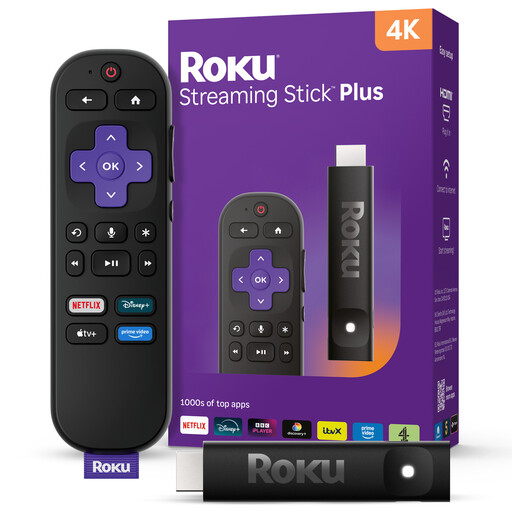
Roku Streaming Stick 4KPlus
Consider this 4KPlus variant if you want a Roku device for a theatre service that supports your intended playback route.
Its product name identifies it as a 4K streaming stick. If HDR matters to you, check the exact variant’s supported formats as well as the recording and display; also confirm app availability and subtitles.
View on Joybuy
Frequently asked questions
Will a 4K streaming device improve every theatre recording?
No. A device’s 4K or HDR support cannot add those formats to a recording that does not offer them. Apple and Amazon state that high-resolution streaming also requires compatible content and a compatible display; check the service and your HDMI setup before choosing for picture formats.
Can I watch National Theatre at Home directly on a Roku streaming stick?
Check the app on the specific stick before buying. National Theatre at Home lists a Roku TV app, as well as an Amazon Fire TV app, but Roku TV support alone does not confirm availability on every Roku streaming device.
Can I use Apple TV for Digital Theatre+ when I need subtitles?
Not through the Apple AirPlay route described by Digital Theatre+: the service says subtitles do not appear that way. For subtitle-dependent viewing, it recommends watching on the device or using a physical HDMI connection.
What connection speed should I check for high-resolution streaming?
Check your connection at the television, then consult the theatre service’s requirements. As a separate benchmark for its own service, Netflix recommends at least 5 Mbps for 1080p and 15 Mbps for 4K UHD; those figures are not requirements for every theatre platform.


