Choose a streaming device that fits your TV, audio equipment, home network and preferred services, rather than assuming any 4K stick will give a musical film the same picture and sound. For the formats you want, the film and service, device, HDMI connection, display and audio equipment all need to work together; a device cannot add HDR or immersive audio to an incompatible setup.
Who is this for?
Picture-and-sound-focused viewers
If stage lighting, dark scenes and soundtracks matter to you, check the formats available for the films you watch and whether your display and audio system can play them. A 4K or audio-format label on the device is only one part of that check.
Households that value straightforward viewing
If finding a film across familiar UK services matters more than adjusting equipment, start with the device’s available apps, search features and remote. Then check the particular film on the services you use.
Viewers with network or ecosystem requirements
If Wi‑Fi is unreliable, a wired connection may influence your choice. Existing Apple, Alexa or Google Home devices may also make one platform’s controls more useful to you, provided the streaming services you need are available.
What matters when choosing?
Start with the films and services you intend to use, then check your TV and sound system before comparing device formats. Finally, make sure the connection, power supply and viewing arrangements work in your room.
| Concern |
What to check |
Who this matters to |
| Picture and soundtrack |
Match the device’s HDR and audio formats to your chosen films, service, TV and sound equipment. Check the HDMI and HDCP requirements for 4K. |
If stage lighting and musical numbers are my priority, I want to know which picture and soundtrack formats my whole setup can deliver. Around 36% of consumers put picture and sound capability first. |
| Services and film discovery |
Check UK app availability and the individual film’s availability, audio options and service tier; consider whether the search and remote suit you. |
I want to find a film on the services I already use without switching awkwardly between apps. For around 29% of consumers, convenient service access and discovery are the primary need. |
| Network and setup |
Check router distance, available HDMI ports, wall power and whether your chosen model offers Ethernet if you need it. |
When my Wi‑Fi or TV connections make streaming difficult, a workable installation matters more to me than another format on the box. Dependable connectivity and setup come first for around 21% of consumers. |
| Ongoing viewing arrangements |
Check subscriptions, rentals and any service tier needed for a film. For UK viewing, consider whether you will watch live TV or use BBC iPlayer. |
I want to understand what watching my chosen films involves beyond acquiring the device, including any licence requirement. Around 14% of consumers prioritise those ongoing arrangements. |
What should you avoid overlooking?
-
Assuming a 4K device guarantees 4K HDR
A film will not play in 4K HDR simply because the streaming device supports it. The title, service, display and HDMI connection must meet the relevant requirements; Roku, for example, specifies a compatible 4K TV with an HDMI HDCP 2.2 port for 4K playback.
Check your TV or projector model, the port you will use and the formats offered for the film before choosing a device for its picture specifications.
-
Buying for Dolby Atmos without checking the audio path
Device support or pass-through does not mean that a particular film has an Atmos soundtrack or that your TV and audio equipment will play it in that format.
Check the film and service, where the device will connect, and the capabilities of your TV, soundbar or AV receiver.
Depending on your setup, using the desired audio format may also call for a compatible audio component, HDMI cable or service tier.
-
Assuming a TV USB port will power a streaming stick
Some TV USB ports do not supply enough power for reliable operation. Roku recommends a wall outlet for its Streaming Stick 4K, although a TV USB port may work in some setups.
Plan where the wall adapter will plug in, and follow the power instructions for the exact stick you choose.
-
Judging TV Licence requirements by the device
In the UK, the viewing activity matters. GOV.UK says a TV Licence is needed to watch or record live TV on any channel or service, or to use BBC iPlayer. TV Licensing distinguishes this from watching on-demand programmes on other services.
Decide whether your household will use BBC iPlayer or watch live programmes, rather than assuming that a streaming stick changes the rule.
Brands and device ranges to consider
These ranges offer different ways to connect and control a streaming setup. Check the precise model and generation: a feature described for one device should not be assumed to apply to every product from the same brand.
Apple
Apple TV 4K is a set-top-box option for viewers who use Apple devices or services and want to consider its supported picture and audio formats.
- Apple specifies Dolby Vision, HDR10+, Dolby Atmos and Wi‑Fi 6; a Wi‑Fi + Ethernet model offers Gigabit Ethernet.
- 4K HDR viewing requires a compatible TV, and Apple sells the HDMI cable separately. Choose the Wi‑Fi + Ethernet variant if that wired connection is necessary.
Amazon Fire TV
Fire TV Stick 4K is a compact stick option if its apps, controls and connections fit your existing TV setup.
- Amazon’s specifications for the relevant Fire TV Stick 4K generation list Wi‑Fi 6 and HDR10+.
- Confirm the generation and its video and audio-format support before buying; the connected equipment and service also affect soundtrack playback.
Roku
Roku’s Streaming Stick range is worth considering if you prefer a stick and want to check familiar UK streaming apps before choosing.
- Roku lists Netflix, BBC iPlayer, ITVX and Disney+ among major apps. Its Streaming Stick 4K supports Dolby Vision and is described by Roku as having long-range Wi‑Fi.
- Channels vary by country. 4K and HDR viewing depend on compatible content and display equipment, and some content requires an additional payment.
Google
Google TV Streamer (4K) is a box-style option if cross-app voice search, built-in Ethernet or Google Home and Matter features are useful in your setup.
- Google specifies Dolby Vision and Dolby Atmos support alongside its voice-search and Ethernet features.
- Google says setup requires a compatible mobile device; 4K viewing requires a 4K display, HDCP 2.2 and an internet connection of at least 20 Mbps.
Joybuy streaming devices
These Roku sticks are options if you want to connect a streaming device to your TV for musical films. Check the exact model against your preferred services, display and audio equipment before choosing between them.
 No image available
Roku Streaming Stick 4K
Consider this stick if your priority is watching films through a Roku device on a compatible TV. Roku specifies Dolby Vision for the Streaming Stick 4K range; confirm the picture and soundtrack formats available for your chosen film, service and audio setup.
View on Joybuy
 No image available
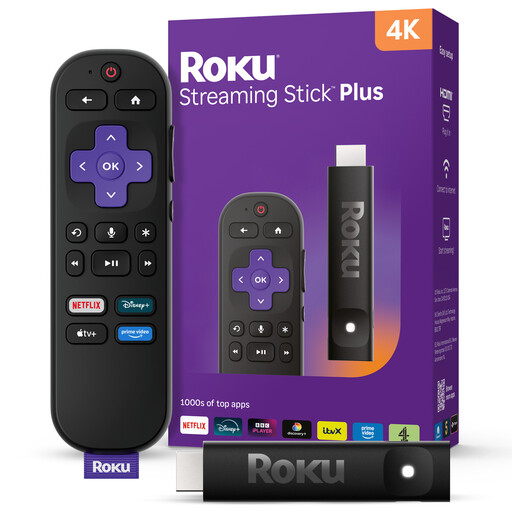
Roku Streaming Stick 4KPlus
Consider the 4KPlus variant if its stick format suits your TV installation. Before choosing it for a particular musical film, check the exact model’s HDR and audio support, the UK apps you use and the film’s available formats.
View on Joybuy
Questions about watching musical films
Will a 4K streaming device make every musical film look 4K HDR?
No: the film, service and any applicable tier must supply the format, and the display and connection must support it. Roku specifies a compatible 4K TV with an HDMI HDCP 2.2 port for 4K; Google says its Google TV Streamer (4K) also needs an internet connection of at least 20 Mbps for 4K content.
Does an Atmos-capable device guarantee an immersive soundtrack?
No: the service must offer the film with a compatible soundtrack, and the connection through your TV to a soundbar or AV receiver must support it. Check the format offered for the specific film and the audio-path requirements of the equipment you own.
Can I power a streaming stick from my TV’s USB port?
Sometimes, but follow the instructions for your exact stick rather than relying on the TV port. Roku recommends the supplied wall adapter for its Streaming Stick 4K because many TV USB ports do not provide enough power.
Do I need a TV Licence to stream musical films in the UK?
Not solely for watching on-demand films on services other than BBC iPlayer, provided you do not watch live TV. GOV.UK says you need a TV Licence to watch or record live TV on any channel or service, or to use BBC iPlayer; TV Licensing confirms that on-demand viewing on other services is treated differently.
What should I check before choosing a device for a particular film?
Check that the device has the UK service you intend to use and that the film is available there, then look at its offered picture and audio formats and any required service tier. Roku notes that channels vary by country and that some content requires a subscription or other payment, so an app’s presence does not settle what you can watch through it.


