Owners of a working older HDMI TV
If the bedroom, kitchen or spare-room screen still suits you, an HDMI streaming device may add apps without replacing the television. Confirm that it has an available input before choosing a device.


If a working second TV has an HDMI input, a streaming player or broadcaster-focused plug-in device can add apps without replacing the screen; an HDMI connection to a phone or computer is another option if you are happy to keep that device involved. Consider a new connected TV when the display, inputs or everyday usability also need changing. Whichever route you choose, check the exact device’s broadcaster apps, display compatibility and controls.
If the bedroom, kitchen or spare-room screen still suits you, an HDMI streaming device may add apps without replacing the television. Confirm that it has an available input before choosing a device.
If BBC iPlayer, ITVX or Channel 4 is central to your viewing, check support for the exact device and software version. ITV and Channel 4 publish platform requirements; a generic smart-TV label is not an app guarantee.
Consider the regular viewer’s ability to switch TV inputs, use the remote and complete account setup. If spoken menus or captions matter, check those functions on the device and in the intended apps.
For a second-room screen, decide whether you need apps on a standalone device, can keep a phone or computer connected, or have a reason to replace the television itself.
Choose it when: The existing TV works well and has a free HDMI input for an app-based player.
Bear in mind: It adds setup and control requirements but cannot improve the TV’s panel or speakers; broadcaster-app support depends on the exact device.
Choose it when: Access to live and on-demand UK broadcaster content through one interface is the main reason for upgrading an existing HDMI TV.
Bear in mind: Freely says its streaming devices need Wi-Fi and a minimum broadband speed of 10 Mbps for live internet channels or on-demand programmes; content and feature availability can vary.
Choose it when: The current screen, its usable inputs or its day-to-day operation also needs replacing.
Bear in mind: Replacing the screen does not remove the need to check app support for the new TV’s exact model and software.
Choose it when: You already have a compatible device that can remain connected while programmes play.
Bear in mind: This is a display connection, not a standalone TV-app interface; check the source device’s connector and the connection required by the TV.
| Concern | What to check | Who this matters to |
|---|---|---|
| Broadcaster apps | Check the exact model and software version against current BBC iPlayer, ITVX and Channel 4 support information. | If catch-up viewing is the reason for adding a device, I need my regular apps to install and keep working. Around 28% of consumers put broadcaster-app support first. |
| HDMI and picture fit | Confirm a free HDMI input, a suitable power connection and what resolution the TV can display; check the connection path if you intend to use 4K or HDR. | I want a player that connects to my older screen without assuming its 4K label will change the picture the panel can show. About 28% of consumers prioritise connection and display fit. |
| Keeping the existing TV | Decide whether the screen itself still suits the room, and check Wi-Fi, port position and any accessories needed for the chosen device. | If the spare-room TV is working, I would rather add viewing options than replace a screen I still use. Roughly 22% of consumers place a low-disruption upgrade first. |
| Controls and household viewing | Review the remote, spoken-navigation and caption options that matter to the viewer; check the household’s TV Licence position for intended viewing. | I need the regular viewer to manage the controls, and I want to know the viewing rules before setting up live TV or BBC iPlayer. Around 22% of consumers put these household needs first. |
ITV lists platform requirements for ITVX, while Channel 4 identifies older devices that have lost app support. An HDMI connection alone will not tell you whether the apps you need will run.
Check each required broadcaster’s current support information for the device family, exact model and relevant software version.
An HDMI player may work with an older HD television, but its 4K or HDR output requires a compatible display and connection path. The player cannot increase the panel’s resolution.
Check the television’s capabilities before treating 4K or HDR as a reason to choose one setup over another.
Some box-style setups also call for a separate HDMI cable; Google says the cable it recommends for optimal Google TV Streamer performance is sold separately.
TV Licensing bases the requirement on what the household watches, not whether it uses a traditional TV, stick or computer. Its guidance covers live TV and BBC iPlayer viewing.
Check the household’s licence position against its intended live viewing and BBC iPlayer use, separately from any service subscriptions.
A device that connects and runs the right app may still be awkward if switching inputs, reading menus or using the remote is difficult for the person in that room.
Check the exact device’s remote and spoken-navigation options, along with captions or audio description in the apps and programmes that matter.
Fire TV sticks offer an app-based route for a television with an available HDMI input. ITV lists Amazon Fire among its ITVX platforms.
Roku players are another HDMI streaming route; ITV lists Roku as an ITVX platform.
Google TV Streamer (4K) is an HDMI box route for an existing display; ITV lists Google TV among its ITVX platforms.
Freely lists the Manhattan Aero 4K TV Streamer as a broadcaster-focused plug-in option for an existing television.
Freely lists the Netgem PLEIO 4K Puck as a plug-in route for accessing its TV service on an existing screen.
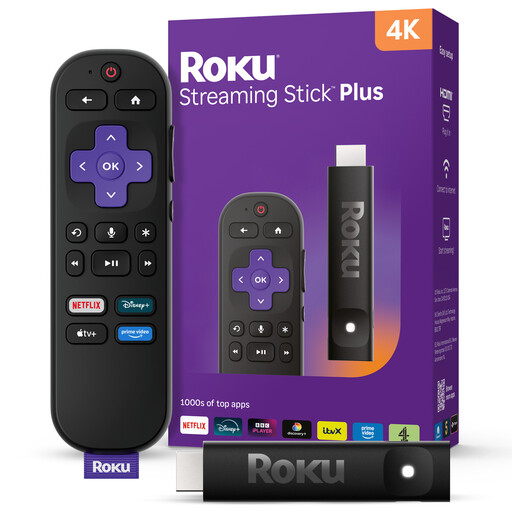
These Roku sticks are options for adding streaming to a working TV with HDMI. If UK catch-up apps are your priority, confirm support for each exact model and its software before choosing between them.
 No image available
Consider this streaming stick if you want to keep an HDMI television and add app-based viewing. Check current BBC iPlayer, ITVX and Channel 4 support for this exact model; its 4K capability will not increase an HD screen’s resolution.
 No image available
Consider the 4KPlus variant for streaming on an existing HDMI television. Check the exact model’s BBC iPlayer, ITVX and Channel 4 support, and review its remote and accessibility functions if those will affect daily use.
It can work if the television has a suitable HDMI input, but the screen will still display only the resolution it supports. Roku says its players work with HDMI televisions; check the full connection path before expecting 4K or HDR output.
Check BBC iPlayer, ITVX and Channel 4 against the exact device model and software version you intend to use. ITV lists supported ITVX platforms, while Channel 4 identifies older devices that have lost support, so a platform name alone is not enough.
Start with an available HDMI input, a suitable power connection and internet access, then check whether your chosen device needs an account or additional cable. Amazon specifies an account and internet connection for Fire TV Stick 4K Select; Freely specifies HDMI and Wi-Fi for its plug-in devices.
The device itself does not determine whether you need one. TV Licensing says the requirement applies to watching live TV on any service and to watching or downloading BBC iPlayer, regardless of the device used; check how the household intends to watch.
Check spoken menu navigation, the remote’s buttons and voice functions, plus captions or audio description in the apps you plan to use. Amazon documents VoiceView for Fire TV and Roku documents screen-reader controls, but confirm availability on the exact device.