For learning braking markers and corner exits on one screen, a 27-inch QHD IPS monitor with a high refresh rate and variable refresh rate (VRR) is a practical starting point. A larger QHD screen makes the image physically bigger without adding pixels, while OLED brings a panel-care consideration to long sessions with a fixed cockpit view. Choose the size for your seated distance, then check that your PC and connection can deliver the display mode you want.
Who this choice affects
Street-circuit detail learners
If you repeat laps to memorise braking boards, kerb edges, walls and corner exits, consider resolution and screen size together. The aim is to see those references clearly from your normal seated position, not simply to buy the highest advertised refresh rate.
Smooth-motion sim racers
If your PC can produce high but varying frame rates, check VRR support as well as refresh rate. As ZOWIE UK explains, VRR adjusts the monitor’s refresh to follow the game’s frame rate within its supported range.
Low-maintenance cockpit owners
If a fixed HUD or cockpit view stays on screen through long practice sessions, weigh OLED panel care against the contrast you want. Room lighting and where the screen can sit on your rig also affect the choice.
What to check when choosing
For a single screen used to learn street-circuit reference points, settle the viewing distance and physical fit before choosing a panel type or chasing a maximum refresh-rate figure.
| Concern |
What to check |
Who this matters to |
| Readable circuit detail |
Compare native resolution and panel size at your seated viewing distance. A 31.5-inch QHD screen shows a larger image than a 27-inch QHD screen, but both have 2560 × 1440 pixels. |
If I am learning closely spaced braking boards and kerb edges, I want them readable from my usual seat; around 31% of consumers put circuit detail first. |
| Motion as frame rate changes |
Check VRR compatibility with your graphics device and the refresh rate available through the connection you will use. |
Through quick turns, I want changing frame rates to be less distracting as I follow the scenery. Motion is the primary need for around 31% of consumers. |
| Cockpit and room fit |
Measure screen-to-eye distance and rig clearance; check the stand dimensions or mounting pattern. Consider the lighting where you race. |
If my wheelbase limits screen placement or daylight reaches the display, physical fit and room lighting come before panel specifications; around 23% of consumers prioritise that fit. |
| Long-session panel care |
For OLED, read the exact model’s panel-care instructions and warranty terms if your HUD or cockpit view remains static. |
I may leave the same dashboard elements visible throughout repeated practice laps, so I want to understand the upkeep involved. Around 15% of consumers make that their primary concern. |
Buying pitfalls
-
Buying from the maximum refresh-rate figure alone
The available mode can change with the graphics card, cable and port. LG specifies DisplayPort 1.4-capable graphics hardware and cable for the 27GS85Q-B’s 200Hz overclocked mode.
Note your PC or console output and intended cable, then check the exact monitor’s resolution and refresh-rate limits for that input.
-
Expecting a larger QHD screen to show more pixels
The 27-inch LG 27GS85Q-B and 31.5-inch LG 32GS75QN-B are both specified at 2560 × 1440. The latter makes the image physically larger rather than adding rendered circuit detail.
Choose the larger size if it suits your seated distance and available space; otherwise compare a 27-inch QHD screen at your normal position.
-
Choosing OLED contrast without considering a fixed HUD
MSI says OLED Care 2.0 reduces burn-in risk on its MAG 271QP QD-OLED X28; it does not say the risk disappears. That distinction matters when cockpit elements remain in the same position during repeated laps.
Read the panel-care guidance and warranty for the exact OLED model you are considering. Compare IPS or mini-LED if you prefer not to manage OLED-specific static-image concerns.
-
Treating a retailer’s return policy as your only recourse
Change-of-mind cancellation and remedies for faulty or misdescribed goods are different matters. GOV.UK’s distance-selling guidance says customers can cancel an online order up to 14 days after delivery; its refund guidance separately addresses faulty and misdescribed items.
Check the seller’s return instructions before mounting the monitor, and keep the order details if you need to raise a problem.
Relevant brands to compare
These model lines illustrate different size, connection and panel-care decisions; compare the exact model rather than assuming every monitor from a brand has the same features.
LG UltraGear
LG UK specifies the 27GS85Q-B as a 27-inch QHD Nano IPS monitor with 180Hz native operation and a 200Hz overclocked mode. Its 32GS75QN-B is a 31.5-inch QHD IPS model specified at 180Hz.
- The two models provide a direct size comparison at the same QHD resolution; LG also lists height adjustment and 100 × 100 mm VESA mounting for the 32GS75QN-B.
- The 27GS85Q-B’s 200Hz overclocked mode requires DisplayPort 1.4-capable graphics hardware and cable, so check the input you plan to use.
ASUS ROG
ASUS ROG UK specifies the ROG Strix XG27ACS as a 27-inch, 2560 × 1440 Fast IPS monitor with refresh capability up to 180Hz and DisplayPort, HDMI and USB-C connections.
- ASUS lists G-SYNC and FreeSync compatibility for this model, making its VRR support worth checking against your graphics device.
- USB-C video requires a source device with DisplayPort Alt Mode. Confirm the supported display mode for your chosen connection.
MSI
MSI specifies the MAG 271QP QD-OLED X28 as a 2560 × 1440 QD-OLED monitor with a 280Hz refresh rate and a quoted 0.03ms grey-to-grey response time.
- The QD-OLED panel is a route to consider when dark-scene contrast matters to your racing setup.
- According to MSI, OLED Care 2.0 reduces burn-in risk rather than eliminating it. Read the exact model’s care and warranty terms if you use a static HUD.
Joybuy monitors for a single-screen setup
These choices include compact QHD IPS and QD-OLED monitors, plus larger curved QHD displays for setups with more viewing space. Compare each screen’s fit and connection requirements with your own rig.
 No image available
MSI MAG 274QF 27-inch QHD Rapid IPS monitor
Consider this compact QHD option if circuit references and changing frame rates are your priorities on one screen.
The product name specifies 180Hz, a quoted 0.5ms response time and Adaptive Sync. Check the refresh mode available through your intended PC output and cable.
View on Joybuy
 No image available
CRUA 32-inch 1500R curved QHD monitor
Consider the larger image if your cockpit has room and the screen will sit farther from your eyes; its QHD resolution does not add pixels over a smaller QHD model.
The product name specifies 2560 × 1440, 165Hz, Adaptive Sync and 100 × 100 mm VESA mounting. Confirm the VRR mode with your graphics device and chosen connection.
View on Joybuy
 No image available
MAG 274QP QD-OLED X24 27-inch QHD monitor
Consider this QD-OLED route if its panel type appeals to you and you are prepared to follow model-specific care guidance during repeated sessions with a static HUD.
The product name specifies 2560 × 1440, 240Hz, a quoted 0.03ms response time and Adaptive-Sync. Check the panel-care instructions and exact warranty terms before buying.
View on Joybuy
 No image available
HKC G27H2DPro 27-inch QHD Fast IPS monitor
This is another compact QHD screen to assess for reading circuit references from a single seated position.
The product name specifies 2560 × 1440 and 220Hz. Before relying on that refresh rate, check which input supports your target mode; confirm any contrast specification you need with the seller.
View on Joybuy
 No image available
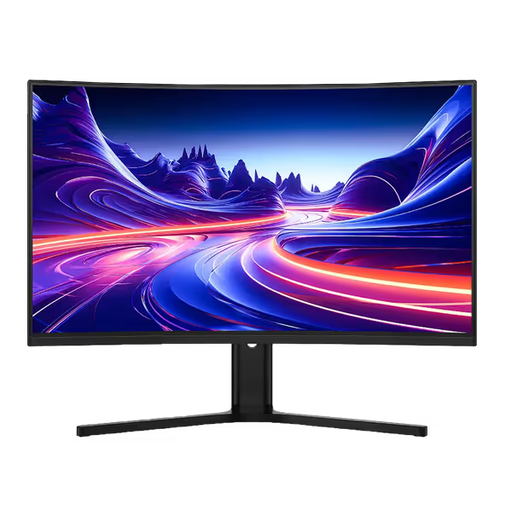
Dahua 32-inch curved QHD VA monitor
Consider this larger curved screen only after checking your rig clearance and seated distance; QHD at this size gives a larger image, not additional rendered pixels.
The product name specifies 2560 × 1440, 180Hz and a quoted 1ms MPRT response time. Check VRR compatibility and the refresh mode available through your intended connection.
View on Joybuy
Common questions
Do I need 200Hz to learn a street circuit on one screen?
No: a higher refresh rate does not add circuit detail. Start with a resolution and size that work at your viewing distance, then check VRR and the frame rates your PC can deliver. LG says the 27GS85Q-B needs DisplayPort 1.4-capable graphics hardware and cable for its 200Hz overclocked mode.
Should I connect the monitor by DisplayPort, HDMI or USB-C?
Use the connection that supports your target resolution and refresh rate on both the monitor and source device. Connector shape alone is not enough: LG specifies DisplayPort 1.4 hardware and cable for the 27GS85Q-B’s 200Hz overclocked mode, while ASUS says USB-C video on the ROG Strix XG27ACS requires DisplayPort Alt Mode from the source.
Can I cancel an online monitor order if the size does not suit my setup?
For an online distance sale, GOV.UK guidance says customers can cancel up to 14 days after delivery. Check the seller’s return process and take care when inspecting the monitor; remedies for a faulty or misdescribed screen are separate from changing your mind.
What product marking should I check in Great Britain?
For Great Britain, the Department for Business and Trade’s product-marking table lists UKCA or CE for the relevant electrical-equipment and electromagnetic-compatibility requirements. Northern Ireland has separate rules, so check the applicable marking guidance and product documentation rather than carrying the Great Britain answer across unchanged.


