Hosts facing an uncertain turnout
If you do not know how many guests will want custard, smaller packs let you open more as needed. Ambrosia labels its standard 400g can as three portions and says it can be served hot or cold.


Choose 400g ready-to-serve tins if turnout is uncertain and you want to open custard in small batches. For a planned crowd, a 1kg ready-to-serve carton offers more labelled portions per pack, but it is not a tin and you will need to manage any leftovers. Custard powder is another option if you have the time and facilities to make it before serving.
If you do not know how many guests will want custard, smaller packs let you open more as needed. Ambrosia labels its standard 400g can as three portions and says it can be served hot or cold.
With a firmer guest count, labelled portions can help you work out how many packs to prepare. Ambrosia labels its standard 1kg ready-to-serve carton as eight portions; check the serving statement on any other pack you choose.
For guests with dietary restrictions, read the ingredient and allergen statement on each exact product. You will also need the pack-specific instructions for refrigerating opened or prepared custard.
Start with the number of portions you expect to serve, then decide how much custard you can open or prepare at one time.
| Concern | What to check | Who this matters to |
|---|---|---|
| Flexible portions | Check the labelled serving count and whether the pack is ready to serve. Ambrosia labels its standard 400g can as three portions. | When turnout is uncertain, I want to open only the custard I expect to serve. About 46% of consumers put flexible portions and leftover control first. |
| Yield for a planned crowd | Compare labelled portions and the number of packs you would need. Ambrosia labels its standard 1kg ready-to-serve carton as eight portions. | With a more predictable dessert queue, I want enough portions without opening pack after pack. About 36% of consumers prioritise yield for a planned crowd. |
| Suitability and handling | Read each pack’s ingredients and allergens, then its instructions for opened or prepared custard. | If guests have dietary restrictions, I need to check the custard before serving and know how to handle what remains. About 18% of consumers make suitability and storage their primary concern. |
Ambrosia’s standard 1kg ready-to-serve custard is a carton, whereas its standard 400g product is a can. The format affects how you plan to open and serve it.
Check the pack format, net weight and labelled portions rather than searching by weight alone.
Weight alone does not tell you how many of your intended servings a pack will provide. A larger opened pack may also leave more custard to refrigerate.
Plan from the product’s labelled portions and your expected turnout, then choose packs your serving setup can handle.
Ambrosia labels its Light 400g can as having 30% less sugar and fat than its standard Devon Custard, but the Light product still contains milk ingredients.
Treat recipe preferences and allergy checks separately; read the current allergen statement on the exact pack.
Opened-pack instructions differ. Ambrosia says to refrigerate remaining custard and use it within three days; M&S says to refrigerate its opened 400g custard and eat it within two days. Bird’s says prepared custard should be refrigerated and treated as fresh food.
Open packs in stages where practical, and follow the storage directions for each product.
Custard left over from an opened pack may go unused if you cannot refrigerate and use it as directed.
Its ready-to-serve range includes a standard 400g can, a standard 1kg carton and a Light 400g can.
Bird’s 350g custard powder offers a make-up alternative to ready-to-serve tins and cartons.
Its own-label ready-to-eat 1kg custard provides another large-pack format to consider for a planned crowd.
Its Silky Smooth Custard is a 400g ready-to-serve option with whole milk and cream among its listed ingredients.
Tesco’s listings provide a place to compare ready-to-serve Ambrosia pack formats and Bird’s powder.
These options cover smaller ready-to-serve custards, a larger ready-to-serve pack and custard powder for hosts who can prepare it.
 Image unavailable
This ready-to-serve can suits opening custard in smaller batches when turnout is uncertain. Ambrosia labels it as three 130g portions and says it can be served hot or cold. It contains milk; after opening, transfer remaining custard from the can, refrigerate it and use it within three days.
 Image unavailable
This 1kg ready-to-serve carton is an option for a planned crowd, rather than for someone specifically seeking tins. Check the carton’s labelled portions and current ingredients when planning service; the Light name alone is not an allergy indication.
 Image unavailable
This 400g custard can is another smaller-pack option for staged serving. Check its own label for the portion count, ingredients and opened-pack instructions; do not assume it has the same recipe or serving statement as another Ambrosia 400g variant.
 Image unavailable
This strawberry-flavour 400g ready-to-serve custard offers a smaller pack for guests who want that flavour. It contains milk; check the exact pack for its labelled portions and instructions after opening.
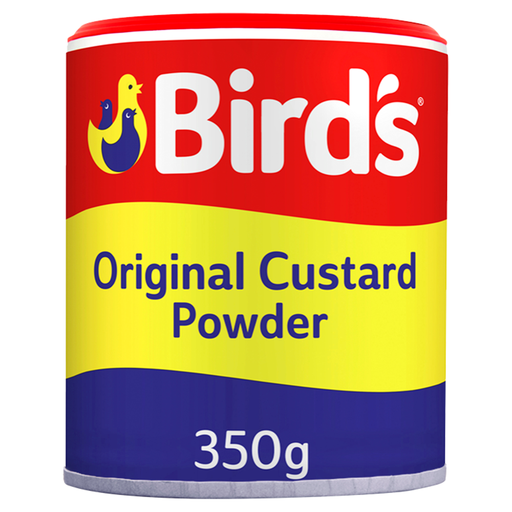 Image unavailable
Choose this powder only if you can make custard before serving rather than needing a ready-to-pour tin. Bird’s labels the 350g pack as 40 portions; its instructions use milk and sugar. The powder may contain milk, and prepared custard should be refrigerated and treated as fresh food.
Ambrosia labels its standard Devon Custard 400g can as three 130g portions. Check the exact product label rather than applying that count to every 400g custard; the amount you serve may also differ depending on the dessert.
Ambrosia says its standard ready-to-serve Devon Custard can be served hot or cold. If warming it, follow the pack directions and transfer it to a suitable container; do not put a metal can in a microwave.
Follow the instructions for the exact pack. Ambrosia says to refrigerate its opened standard custard and use it within three days, while M&S says to refrigerate its opened 400g Silky Smooth Custard and eat it within two days.
Do not assume any of these products is suitable. The Ambrosia and M&S ready-to-serve custards checked contain milk ingredients, and Bird’s 350g powder is labelled as possibly containing milk. Check the current pack for the exact product before serving.
If your arrangements amount to running a food business, GOV.UK says the business must register with its local authority, and Food Standards Agency guidance requires food businesses to provide allergen information for prepacked and non-prepacked food. If you are unsure whether your street-party arrangements fall within that scope, check with the relevant local authority before the event.