For a tea-led chai to serve with an afternoon snack, look for a black-tea blend with clear ingredients and directions for brewing with milk. Sainsbury's Taste the Difference Chai lists 64% black tea, while Sainsbury's describes Tea India Masala Chai as a strong cup. If you mean pronounced spice rather than tea body, Twinings describes Chai Ultra Spice as bold and spicy; Pukka Vanilla Chai is a caffeine-free herbal option, not a black-tea chai.
Who is each type of chai for?
Tea-led chai drinkers
If you want black tea to remain noticeable alongside milk and an afternoon snack, look at the ingredient list and the product's brewing directions. A declared tea percentage describes the dry blend; it does not measure the strength of the finished cup.
Spice-first shoppers
If cinnamon, ginger, cardamom or clove is the main attraction, a spice-forward black chai may fit your taste. Treat descriptions such as 'bold and spicy' as flavour positioning, not proof that the brew has a stronger tea base.
Caffeine-conscious drinkers
A clearly labelled caffeine-free herbal infusion offers chai-style spices without black tea. Check the exact variant's ingredients as well as its caffeine claim: Pukka Vanilla Chai contains liquorice root, while Pukka Original Chai contains black tea.
What should you check before choosing?
Decide whether 'strong' means more noticeable black tea or more pronounced spice, then check how you plan to brew the drink and whether its ingredients suit you.
| Priority |
What to check |
Your needs |
| Black-tea body |
Look for black tea in the ingredients and a declared proportion where available. Sainsbury's lists 64% black tea for its Taste the Difference Chai; that figure describes the blend, not brewed strength. |
I want the tea to remain noticeable when I make chai with milk to have alongside a snack. |
| Spice flavour |
Read both the spice list and the flavour description. Twinings calls Chai Ultra Spice bold and spicy, but that wording does not establish how its tea body compares with another blend. |
The cinnamon, cardamom and clove flavours matter more to me than a pronounced black-tea taste. |
| Brewing method |
Check whether the specific pack gives directions for water, milk or both, and follow its stated quantities and brewing method. |
I plan to make chai with milk, so I want directions that work for the pack I buy rather than assuming every tea bag is prepared the same way. |
| Caffeine |
Distinguish black-tea chai from an infusion explicitly labelled caffeine free. Check the exact variant: Pukka Vanilla Chai is a caffeine-free herbal tea, but Pukka Original Chai contains black tea. |
For an afternoon cup without black-tea caffeine, I would choose a clearly labelled herbal variant. |
| Ingredients |
Read the current pack for individual spices, flavourings and any ingredients relevant to an allergy or dietary restriction. Check liquorice root in herbal blends if it matters to you. |
I need to know what is in the particular pack I will serve, rather than relying on a product name or an older listing. |
Common chai-buying mistakes
-
Reading 'bold spice' as 'strong black tea'
Spice intensity and tea body answer different questions. Twinings describes Chai Ultra Spice as bold and spicy; its flavour description alone cannot establish how strong its brewed black-tea base will taste.
If tea body is your priority, check the black-tea ingredients and brewing directions as well as the flavour wording. Choose by the listed spices when spice is what you want to notice most.
-
Assuming all chai has the same caffeine and ingredients
Pukka Vanilla Chai is a caffeine-free herbal infusion containing liquorice root, whereas black-tea chai takes a different caffeine route. The NHS advises avoiding herbal teas containing liquorice root during pregnancy and limiting total daily caffeine intake during pregnancy to 200mg.
Check the exact variant before serving it. During pregnancy, account for caffeine from all drinks and foods, and avoid a herbal tea containing liquorice root in line with NHS guidance.
-
Relying on a saved ingredient listing
An online listing helps narrow the choice, but it may not reflect the label on the pack you receive. This matters when a particular spice, flavouring or allergen affects whether you can use the tea.
Read the current physical pack before serving, especially to someone with an allergy or a dietary restriction.
Brand and product-line references
These examples illustrate different chai styles; a brand name alone does not tell you whether a particular blend is tea-led, spice-forward or caffeine free.
Tea India
Tea India Masala Chai is a black-tea-and-spice option to consider if you want to serve chai with milk.
- Sainsbury's describes the Masala Chai as a strong cup made with Assam black tea and aromatic spices, and suggests serving it with milk.
- That description is not a measured comparison of its brewed strength against other chai blends.
Twinings
Twinings offers chai blends with different ingredient disclosures and flavour descriptions, so check the particular variant.
- Twinings describes Chai Ultra Spice as bold and spicy. Its Classic Chai ingredient list separately states 70% black tea.
- The Classic Chai percentage cannot be applied to Ultra Spice or used as a comparison of the finished drinks.
Sainsbury's
Taste the Difference Chai offers a disclosed black-tea proportion for shoppers comparing tea-led blends.
- Sainsbury's lists black tea at 64%, alongside ginger, cassia, cardamom, flavouring and black pepper.
- The ingredient proportion does not, by itself, predict the strength of a cup prepared with your chosen amount of milk.
Tesco
Tesco Finest Chai is a 50-bag black-tea-and-spice format for repeated afternoon cups.
- Tesco describes a blend of black tea with cinnamon, ginger, cloves and cardamom.
- Its pack strength label should not be read as a measured comparison with another brand's chai.
Clipper
Clipper Indian Chai is a black-tea option for shoppers looking for the listed organic and Fairtrade product credentials.
- Clipper Tea Shop lists black tea, cinnamon, orange peel, cloves and fennel seed for its Organic Indian Chai.
- The listed spices do not establish how its brewed tea body compares with another chai.
Pukka
Pukka Vanilla Chai is a herbal choice when chai-style spices without black tea are the aim.
- The Vanilla Chai listing identifies it as caffeine free and includes vanilla and liquorice root.
- Do not assume every Pukka chai is caffeine free: Pukka describes Original Chai as containing black tea.
Joybuy chai-style option
This herbal Vanilla Chai option suits the caffeine-free, spice-led route for an afternoon cup; it is not a substitute for black-tea body.
 No image available
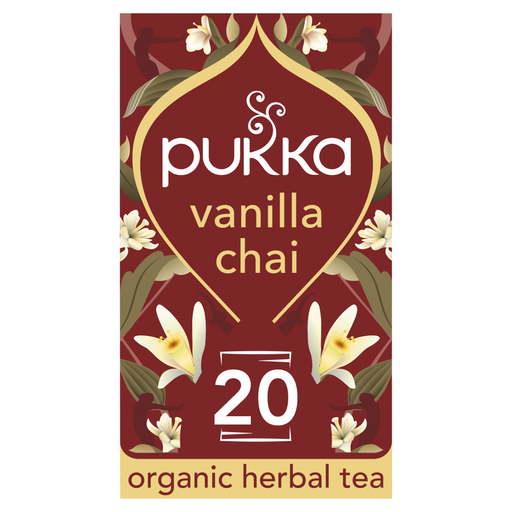
Pukka Vanilla Chai Herbal Tea, 20 Sachets, 40g
A chai-style herbal option for an afternoon snack when you want spices without black-tea caffeine. The pack contains 20 sachets and weighs 40g; the Pukka Vanilla Chai listing describes the infusion as caffeine free and identifies liquorice root among its ingredients. It is not a black-tea chai. The NHS advises avoiding herbal teas containing liquorice root during pregnancy.
View on Joybuy
Questions about strong chai
What makes chai taste strong alongside an afternoon snack?
First decide whether you want noticeable black tea, pronounced spices or both. Sainsbury's lists 64% black tea for Taste the Difference Chai, while Twinings describes Chai Ultra Spice as bold and spicy. Neither an ingredient percentage nor a flavour description measures how strong your finished cup will taste.
Can I make chai tea with milk instead of water?
Yes, if the specific product gives a method for doing so. Check its pack for the recommended amount of tea and milk and the brewing steps rather than applying another blend's directions; Sainsbury's suggests serving Tea India Masala Chai with milk.
What should I check in chai during pregnancy?
Check whether the blend contains black tea or liquorice root. NHS guidance limits total caffeine during pregnancy to 200mg a day and advises avoiding herbal teas containing liquorice root. Pukka Vanilla Chai contains liquorice root, so a caffeine-free label alone does not settle that choice.
Is an online ingredient list enough for an allergy check?
Read the current physical pack before consuming or serving the chai. An online list can help you shortlist blends, but the label on the item you receive is the one to check for its ingredients and allergen information.


