Workers wanting a bold tea break
A black-tea chai described as strong and suitable with plenty of milk may fit a snack break. A caffeinated drink is not a substitute for managing shift-work fatigue.


For a milk-based snack break, consider a black-tea chai explicitly described as strong, such as Teapigs Chai or Tea India Masala Chai; check its preparation instructions before taking it to work. If avoiding caffeine near the end of a shift matters more than having a black-tea cup, choose a caffeine-free herbal chai instead. A stronger spice flavour does not establish a higher caffeine content.
A black-tea chai described as strong and suitable with plenty of milk may fit a snack break. A caffeinated drink is not a substitute for managing shift-work fatigue.
If you add milk alongside sweet or savoury snacks, look for a blend whose stated flavour and preparation method suit the finished cup you want.
A chai-style herbal infusion offers a spiced option without the black-tea base. Check the exact pack for a caffeine-free label.
Choose the tea base first, then check whether the flavour and brewing method suit your break and the time you plan to drink it.
| Priority | What to check | Your needs |
|---|---|---|
| Tea and spice flavour | Look for an explicit strong-cup description, the stated tea base and guidance for adding milk. A spicy name alone does not establish tea strength or caffeine content. | I want a black-tea chai that keeps its intended flavour when I add milk to a snack-break cup. |
| Caffeine timing | Check whether the blend contains black tea or is labelled caffeine free. Twinings notes that caffeine extracted from tea varies with tea type, water temperature and brewing time. | For an on-shift cup, I may choose black tea; when avoiding caffeine later, I want a clearly labelled herbal option. |
| Preparation at work | Check the pack’s brewing time and whether it gives a kettle-and-mug method or a method using simmering milk. Teapigs advises at least 3 minutes; Tea India gives 3–5 minutes. | My break area and available time determine whether I can make the drink as instructed. |
A blend can emphasise cinnamon, ginger or other spices without establishing a stronger black-tea base or a higher caffeine content.
Check the tea base, any explicit strong-cup description and the preparation instructions separately.
Black-tea chai contains caffeine, while a product explicitly labelled as a caffeine-free herbal chai serves a different need.
Read the exact pack’s tea base and caffeine labelling before choosing a drink for a particular point in your shift.
Milk and optional sweeteners change what is in the cup compared with tea brewed in water alone.
Choose the preparation method and additions you intend to use when comparing options for a work break.
These examples show how differently chai products describe their tea bases, spice blends and preparation; they do not indicate Joybuy availability.
Teapigs describes its Chai tea as “strong and spicy” and suitable with plenty of milk.
Sainsbury’s describes Tea India Masala Chai as a strong cup and lists 73% Assam black tea in the 40-bag product.
Twinings describes its Ultra Spice black tea as having a bold, spicy taste.
Tesco Finest Chai is listed as a 50-bag black-tea and spice blend.
Sainsbury’s Taste the Difference Chai is listed as a 20-bag blend containing 64% black tea.
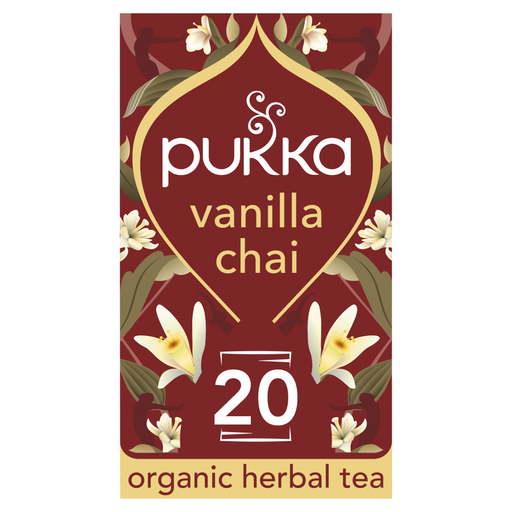
Pukka has both a black-tea Original Chai and a Spiced Vanilla Chai that it labels caffeine free.
This herbal chai is an option for a spiced drink when avoiding caffeine after a shift, rather than for a strong black-tea snack-break cup.
 No image available
For a spiced drink when avoiding caffeine after a shift, this is described as a caffeine-free herbal infusion with cinnamon, ginger, cardamom and vanilla. The pack contains 20 sachets, 40g; it is not a black-tea chai.
No. Black-tea chai contains caffeine, but some herbal chai products are labelled caffeine free, including Pukka Spiced Vanilla Chai. Check the exact pack rather than relying on the word “chai”.
Start with a product explicitly described as a strong black-tea cup and follow its own brewing instructions. Teapigs advises at least 3 minutes and Tea India gives 3–5 minutes; neither instruction establishes a caffeine amount for the finished drink.
Use a milk method only where the product gives one. Tea India provides instructions for simmering its chai in milk for 3–5 minutes; if you only have a kettle and mug, check the pack’s water-brewing method instead.
No. The Health and Safety Executive identifies sleep loss and fatigue as significant problems for shift workers. Choose chai as a drink, not as a replacement for sleep or a fatigue-management plan.