Hosts making espresso and milk drinks
If brunch includes espresso, cappuccinos or lattes, look for a blend whose maker recommends those preparations and whose flavour profile suits the drinks you plan to serve.


For a brunch centred on espresso and milk drinks, choose whole beans with a stated fit for those brews and a bold flavour profile. If guests have different preferences, consider a smoother option or decaf alongside the bold blend. An intensity label describes flavour rather than caffeine per cup, so check bean composition instead of treating the number as a caffeine measure.
If brunch includes espresso, cappuccinos or lattes, look for a blend whose maker recommends those preparations and whose flavour profile suits the drinks you plan to serve.
A bold coffee need not be the only choice. A smoother blend or decaf gives guests another option without assuming everyone likes the same roast or wants the same caffeine intake.
Choose whole beans recommended for your brewing method. Waitrose & Partners advises grinding only the beans needed and using them straight away for fresher flavour.
Start with the drinks and equipment you will use, then decide how bold a flavour will suit the group.
| Priority | What to check | Your needs |
|---|---|---|
| Flavour and roast | Read the roast description and tasting notes. Lavazza UK explains that its intensity label describes aroma and richness; do not compare brands’ numbers as though they share one scale. | I want coffee that remains noticeable in espresso or milk drinks, but I may need a smoother option for guests who dislike a darker-roast flavour. |
| Brewing method | Check whether the maker lists espresso, bean-to-cup, cafetière, moka or filter preparation. Grind the beans for the brewer you are using. | Will these beans work with the equipment I have, especially if some guests want filter coffee while others want espresso? |
| Caffeine | Check the Arabica and Robusta composition where stated. Waitrose & Partners notes that Robusta can contain up to twice the caffeine of Arabica; an intensity score does not give the amount in a prepared cup. | If a guest is limiting caffeine, I want a decaf option rather than judging caffeine from how strong the coffee tastes. |
| Pack and preparation | Choose a pack size with the number of drinks in mind. Waitrose & Partners advises grinding only what you need and using it straight away. | I want enough beans for brunch without grinding the whole bag before guests arrive. |
Lavazza UK describes intensity in terms of aroma and richness, while Waitrose & Partners says caffeine varies with bean type. A bold-tasting cup is not a dependable measure of its caffeine content.
Use intensity to judge flavour within a brand, then check the bean composition and offer decaf when guests want to avoid caffeine.
A dark roast may suit espresso, but it will not match every guest’s taste. Taylors of Harrogate describes its Rich Italian beans as smooth and without the bitterness that darker roasts can have.
For a mixed group, consider serving a smoother second coffee alongside a bold blend.
Preparation guidance differs between products: Union recommends Revelation Signature Espresso for espresso or bean-to-cup machines, while illy lists Intenso for moka, filter, espresso and lungo.
Check the stated brewing methods against your equipment, then grind only the beans you need for each preparation.
These examples show how brands describe particular beans and ranges; their intensity scales are not interchangeable.
Lavazza UK lists Crema e Gusto Classico for espresso or moka and describes it as suitable for a bold espresso or milky latte.
illy UK lists its 500 g Intenso whole beans as 100% Arabica, with an intensity rating of 7 of 9.
Taylors describes Rich Italian whole beans as rich and smooth, with 200 g, 454 g and 1 kg pack formats.
Union Hand-Roasted Coffee describes Revelation Signature Espresso as a dark-roast coffee and recommends it for espresso or bean-to-cup preparation.
Marks & Spencer lists whole-bean espresso blends as well as French and Italian single-origin coffees.
Waitrose & Partners carries whole beans from its own range and other brands, alongside guidance on roast and bean type.
These whole-bean options cover different pack sizes and espresso-oriented brunch choices. Check each product’s preparation guidance and flavour description against the drinks your guests want.
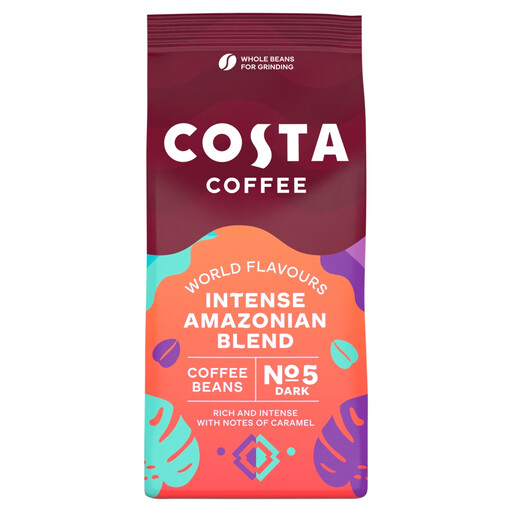 No image available
This 200 g whole-bean pack is an option to consider for espresso or filter coffee at brunch. Check the brewing details if a guest needs to limit caffeine.
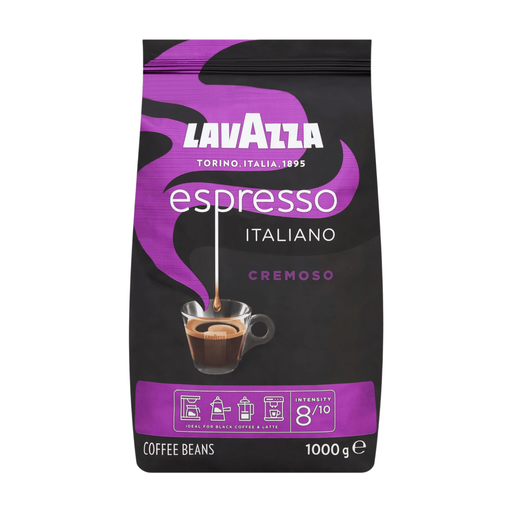 No image available
Consider this 1 kg whole-bean pack if you are serving espresso and milk drinks. Check its stated roast and brewing guidance rather than treating an intensity label as a caffeine measure.
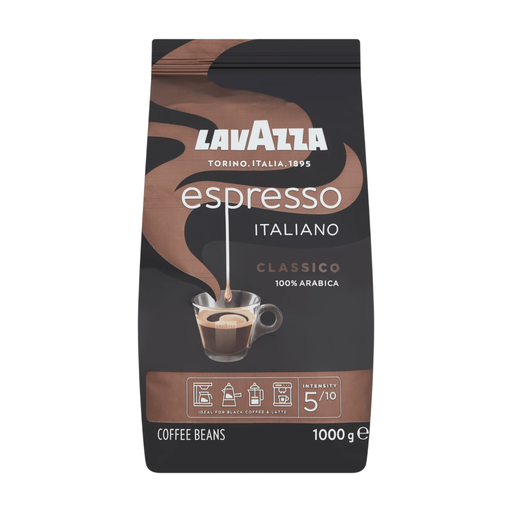 No image available
For an espresso-focused brunch, compare this 1 kg whole-bean pack with your machine’s preparation requirements. Confirm the roast description if a specifically dark profile matters to your group.
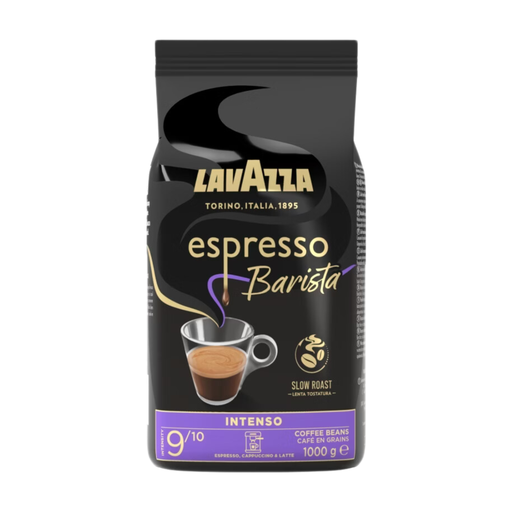 No image available
Consider this 1 kg whole-bean pack for espresso or bean-to-cup drinks. Check the roast description if you specifically want dark-roast beans, and the bean composition if caffeine is a concern.
No. Lavazza UK describes intensity in terms of aroma and richness, not caffeine per cup. Waitrose & Partners says caffeine varies with bean type and that Robusta can contain up to twice the caffeine of Arabica; check composition rather than relying on the intensity number.
Start with whole beans the maker recommends for espresso, then choose a flavour profile that suits your guests. Lavazza UK describes Crema e Gusto Classico as suitable for a bold espresso or milky latte; that does not mean every guest will prefer the same blend.
Yes. illy UK lists its Intenso whole beans for filter coffee, espresso, moka and lungo. Grind the beans to suit the brewer you use.
Grind only what you need for each round if that works for your brunch preparations. Waitrose & Partners advises using freshly ground beans straight away for fresher flavour, and the pack’s storage instructions should guide how you keep the remainder.
Offer a decaf choice rather than estimating caffeine from the coffee’s roast or intensity label. The NHS advises no more than 200 mg of caffeine a day during pregnancy and notes that filter and coffee-shop coffees can contain more caffeine than its 100 mg estimate for a cup of instant coffee.