For guests who want espresso or milk drinks, consider beans described for those preparations and a pronounced, chocolate-led flavour. If you will also serve filter coffee, look for stated suitability for both brewing methods and grind the beans accordingly. Coffee strength labels describe flavour rather than a standard amount of caffeine, so offer a separately labelled decaf option if guests may want one.
Who are you serving?
Guests having espresso or milk drinks
If the menu includes short espressos, cappuccinos or lattes, look for beans whose maker describes them for those drinks. Waitrose, for example, positions its No.1 Italian Espresso for espresso and as a base for milk drinks.
Guests choosing different brews
When one group wants espresso and another wants filter coffee or lungo, check each product’s stated brewing methods. illy lists espresso, moka, filter and lungo for its Whole Bean INTENSO; each method still needs an appropriate grind.
Hosts planning for a smaller gathering
A smaller pack may be easier to use promptly after opening. Check how many servings your brewer’s recipe calls for, follow the purchased pack’s storage directions and consider a separate decaf choice for guests who want one.
What should you check before buying?
Start with the drinks you plan to make, then check flavour descriptions, serving quantities and the pack’s storage advice.
| Priority | What to check | Your needs |
|---|
| Flavour with milk |
Read the tasting notes and stated uses rather than comparing intensity numbers across brands. Waitrose describes its No.1 Italian Espresso as a 50:50 Arabica-Robusta blend for espresso and milk drinks. |
I’m serving cappuccinos or lattes and want guests to recognise the coffee flavour alongside the milk. |
| Brewing method |
Confirm that the beans are described for your planned brewer. Match the grind to espresso, filter or cafetière preparation; illy lists several methods for Whole Bean INTENSO. |
Some guests want espresso, while others would prefer a larger brewed coffee from the same beans. |
| Pack size and storage |
Calculate beans from the recipe for each drink and expected servings. Compare the pack size with when you will next use it, then follow its after-opening directions. |
I’d like enough coffee for second cups without opening a larger bag than I can use promptly. |
| Caffeine choice |
Do not use roast darkness or a strength number as a caffeine figure. Waitrose distinguishes flavour intensity from caffeine content; choose an explicitly decaffeinated product for a decaf serving. |
For an afternoon gathering, I want guests to be able to choose decaf without guessing from the flavour label. |
What can go wrong?
-
Reading “strong” as a caffeine measurement
A dark or intense flavour label does not tell you how much caffeine will be in a prepared cup.
Use the strength description to choose flavour. If you want to serve decaf, buy a product explicitly labelled decaffeinated rather than relying on a lower intensity number.
-
Buying beans before checking the brewer
Beans described for espresso do not remove the need to prepare them for the equipment you will actually use.
Decide whether you will make espresso, moka, filter coffee or cafetière coffee, check the product’s stated uses and grind the beans for that method.
-
Opening a large bag for a small party
After-opening storage and use directions differ between products, so a pack that suits one event may leave more beans than you expect to use soon.
Work out your likely servings before choosing a pack. Keep any remaining beans as the purchased pack directs.
Brand and product-line references
Lavazza
An espresso-focused reference for hosts considering a pronounced flavour.
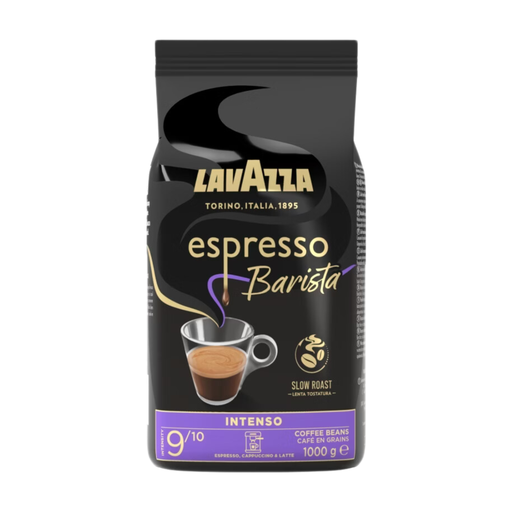
- Lavazza UK lists Espresso Barista Intenso at intensity 9/10 and describes cocoa and woody notes, an Arabica-Robusta blend, and espresso and moka uses.
- Those details describe Espresso Barista Intenso, not every Lavazza bean or the differently named Joybuy product below.
illy
A reference when one bag needs to cover several planned brewing methods.
- illy lists Whole Bean INTENSO as 100% Arabica, intensity 7 of 9, in a 250 g can, with stated uses including espresso, moka, filter and lungo.
- Check the quantity needed if you expect to serve many cups from a 250 g can.
Taylors of Harrogate
Its whole-bean range includes Rich Italian, Hot Lava Java and Decaffe.
- The Taylors of Harrogate range gives hosts both caffeinated and decaffeinated names to investigate.
- Check the individual bean’s pack for its flavour description and brewing directions rather than treating the range names as comparable strength measures.
Union
Revelation is a dark-roast espresso reference with chocolate and caramel tasting notes.
- Union describes Revelation for espresso machines or bean-to-cup preparation.
- Check the current product details if its precise flavour profile matters to your party menu.
M&S
Italian Style Coffee Beans are an own-label option described with chocolate and nougat notes.
- M&S describes this product as deep and rich and gives specific storage directions after opening.
- Use the current pack label for the product’s ingredients and storage instructions.
Waitrose
Its referenced espresso beans include blends with different stated compositions and roast descriptions.
- Waitrose describes No.1 Italian Espresso as a 50:50 Arabica-Robusta blend for espresso and milk drinks; its separate Espresso Beans product is 100% Arabica and medium-dark roasted.
- Keep the two products’ specifications separate when deciding which drink to serve.
Joybuy coffee bean options
These whole-bean options include two 200 g packs and one 1 kg pack to consider when planning coffee for an afternoon gathering.
 No image available
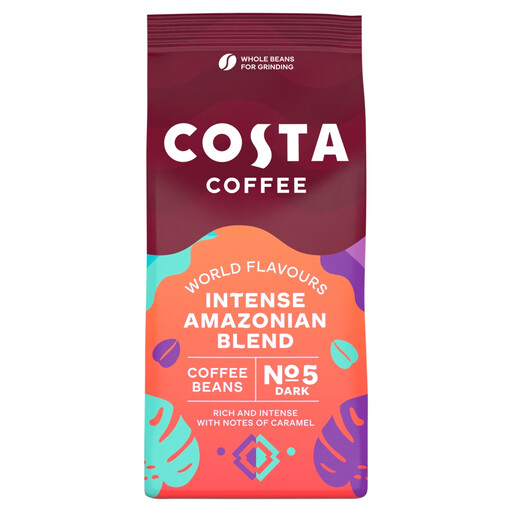
Costa Intensely Dark Amazonian Blend Coffee Beans 200 g
The 200 g pack is worth considering for a smaller gathering. If serving espresso or filter coffee, check the grind your equipment requires.
View on Joybuy
 No image available
Lavazza Barista Intenso Beans 1 kg
Consider the 1 kg pack if you expect to make enough coffee to use it across a larger gathering or later occasions. Plan how you will store the beans after opening, and check the pack’s brewing directions.
View on Joybuy
 No image available
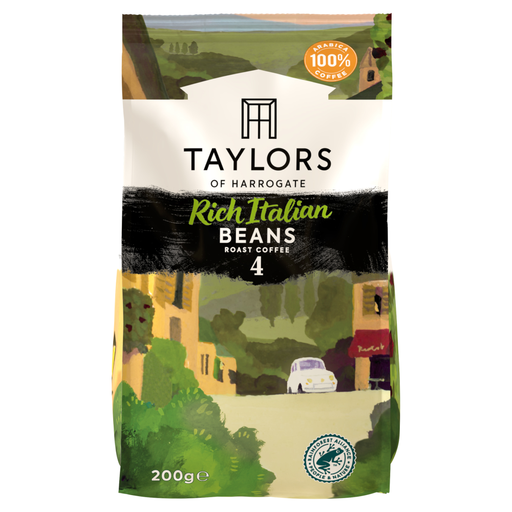
Taylors Rich Italian Coffee Beans 200 g
The 200 g pack offers another quantity to consider for a smaller gathering. Check its brewing directions against your equipment and follow the pack’s storage advice after opening.
View on Joybuy
Questions about serving coffee
Does a higher coffee strength number mean more caffeine?
No: a strength number is a flavour cue, not a standard measure of caffeine in a cup. Waitrose explains that caffeine also varies by bean type. Choose an explicitly decaffeinated product if you need to offer decaf, rather than relying on a lower strength number.
How many beans should I allow for each drink?
Base your calculation on the drinks and brewer you will use. Waitrose recommends 16–17 g for a 50 ml double espresso, or 15 g per 250 ml cup for filter or cafetière coffee on its Espresso Beans product page. Multiply the relevant amount by your expected servings and allow for second cups.
What grind should I use for different brewers?
Grind whole beans for the equipment making the drink: typically fine for espresso, medium for filter and coarse for cafetière. Check your brewer’s instructions before preparing beans for several methods at the party.
How should I keep beans left after the party?
Follow the directions on the beans you bought, as storage advice varies by product. For its Italian Style Coffee Beans, M&S specifies an airtight container after opening and gives directions for refrigerator or freezer storage; those directions should not be assumed to apply to other beans.


