Care-home catering teams
Teams serving espresso or bean-to-cup coffee need whole beans whose preparation guidance matches their equipment. Pack size also matters when deciding how quickly an opened bag will be used.


Choose whole beans for care-home dining by checking that the stated flavour and brewing guidance suit the home’s equipment and the residents who want a bold cup. Lavazza describes intensity as a measure of aroma and body, not caffeine content, so keep individual choice and a decaf option separate from the decision about the main blend.
A bold house coffee has to work both for the way the home prepares it and for the people offered it.
Teams serving espresso or bean-to-cup coffee need whole beans whose preparation guidance matches their equipment. Pack size also matters when deciding how quickly an opened bag will be used.
A strong house blend need not be everyone’s choice. In England-regulated services, the Care Quality Commission says providers must assess nutritional needs and provide food to meet them; the home should also use individual preferences and care plans when arranging coffee service.
Where residents want a bold-tasting coffee with less caffeine, a separate whole-bean decaf choice lets the team consider flavour and caffeine needs independently.
Start with the equipment used at service, then assess flavour, resident choice and how quickly the home gets through an opened pack.
| Priority | What to check | Your needs |
|---|---|---|
| Brewing method | Check that the beans are whole and that the producer’s preparation guidance matches the grinder or machine in daily use. Do not assume espresso, bean-to-cup, moka and filter guidance are interchangeable. | Our team needs a bold cup that we can prepare with the equipment already used at mealtimes. |
| Flavour intensity | Compare stated roast, body and tasting notes. Lavazza explains that an intensity score describes aroma and body rather than caffeine content. | Residents asking for a strong coffee may mean a fuller-bodied flavour; I would check what they enjoy rather than use the intensity number as a caffeine guide. |
| Individual choice | Check how the house blend fits residents’ preferences and individual care arrangements. Consider which other coffee choices the service needs to offer. | I want a house coffee without making its flavour the only option for everyone. |
| Decaf choice | Check the decaf beans’ own flavour description and brewing guidance; do not assume they match the main blend. Consider individual requirements when planning service. | Some residents may want less caffeine but still prefer a full-bodied coffee. |
| Pack and storage | Match pack size to actual bean use and follow its storage instructions. Waitrose & Partners advises using its No.1 Italian Espresso beans within two weeks of opening; apply that timeframe to that product, not every bag. | For an occasional or trial service, I would rather choose a pack we can use within its stated post-opening period. |
Lavazza uses intensity to describe aroma and body. A high number therefore cannot tell the team how much caffeine a resident will receive.
Use roast and flavour descriptions to choose the intended taste, and address caffeine needs separately through individual arrangements and a decaf choice where appropriate.
A bold whole-bean product may be presented for particular equipment: Lavazza specifies espresso and moka for Espresso Barista Intenso, while Union recommends Revelation for espresso or bean-to-cup preparation.
List the machines and preparation methods used in the home, then check the guidance for the exact beans before ordering.
A full-bodied house coffee will not reflect every resident’s flavour preference or individual care requirements.
Plan how staff will offer and identify other choices, including decaf where appropriate, alongside the main blend.
Waitrose & Partners says contact with air affects the flavour and aroma of its No.1 Italian Espresso beans. A pack size that works for a busy service may be less practical when beans are used irregularly.
Choose the bag size against actual consumption, note when it was opened and follow that product’s closing, storage and post-opening instructions.
These product and range descriptions can help narrow a tasting trial; brand inclusion does not establish that every bean in a range has the same flavour or brewing guidance.
Lavazza presents Espresso Barista Intenso as an espresso and moka option for teams seeking a stated bold profile.
illy lists Whole Bean INTENSO roast coffee in a 250 g pack for a smaller-pack trial.
Waitrose & Partners lists Taylors of Harrogate Rich Italian Beans in a 200 g pack.
Union presents Revelation Signature Espresso as a dark-roast whole-bean option for espresso or bean-to-cup service.
M&S presents a coffee-bean range with different strength and grind choices.
Waitrose & Partners describes its No.1 Italian Espresso beans as full-bodied, with dark-chocolate notes.
These whole-bean options give care-home teams different pack sizes to consider for a bold coffee service. Check each exact product’s flavour and preparation guidance against the home’s equipment and residents’ preferences.
 No image available
The 200 g pack is a quantity to consider for a trial or a service with lower bean use. Check the preparation guidance against the home’s equipment and assess the dark flavour profile with residents before making it a house choice.
 No image available
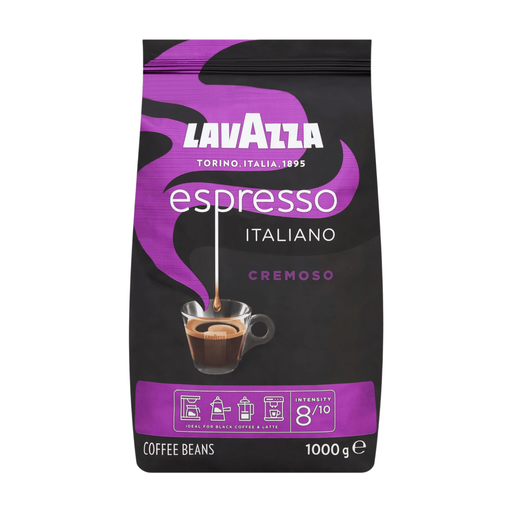
The 1 kg pack is worth considering where the home gets through beans regularly. Check its preparation guidance and whether that quantity fits the service’s storage and post-opening routine; the product name alone does not establish caffeine content.
 No image available
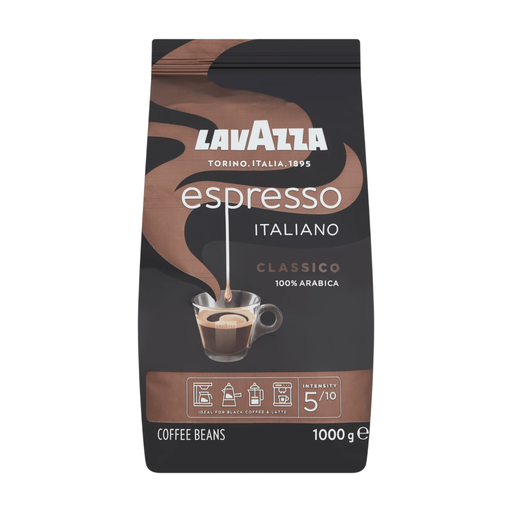
This 1 kg pack gives teams considering espresso beans another quantity to assess against regular use. Check the exact pack’s roast and flavour description against the desired bold cup, as well as its preparation and storage instructions.
No. Lavazza describes coffee intensity in terms of aroma and body. Use the number as a flavour guide, not an estimate of the caffeine in a serving.
A decaf choice lets residents who want less caffeine choose separately from the main blend. Check that the decaf beans suit the equipment and the flavour residents prefer; Lavazza lists Decaf Intenso for espresso, moka and filter preparation.
Do not treat a strong house blend as everyone’s automatic choice. For England-regulated services, the Care Quality Commission says providers must assess nutritional needs and provide food to meet them; use individual preferences and care arrangements when deciding which coffee to offer each resident.
Follow the instructions for the exact product. Waitrose & Partners advises re-closing its No.1 Italian Espresso beans, keeping them in a cool place or refrigerator and using them within two weeks of opening; another pack may give different directions.