Choose plain coffee beans for the flavour you want, then consider what you add to the drink: Diabetes UK advises trying coffee without sugar or with a low- or no-calorie sweetener. A strong or dark-roast label is a flavour guide, not a caffeine measurement. If caffeine intake matters, check the exact bean composition and any product-specific caffeine information rather than relying on intensity alone.
Who needs to consider what?
Strong-coffee drinkers managing diabetes
Look for the espresso, moka or cafetière flavour you enjoy, but assess the finished drink as well as the beans. Diabetes UK advises trying coffee without sugar; check syrups and milk or plant-drink additions separately.
Caffeine-conscious coffee drinkers
A bold flavour need not settle the caffeine decision. Waitrose & Partners notes that caffeine varies by bean type, so check the blend and any caffeine information for the exact product instead of relying on roast darkness.
Pregnant coffee drinkers managing diabetes
Caffeine requires a separate check during pregnancy: the NHS advises no more than 200 mg a day. A decaf bean may be worth considering, but check the product and account for caffeine from other sources too.
What matters when choosing strong coffee beans?
Decide how you want the coffee to taste and prepare it, then assess additions and caffeine as separate choices.
| Priority |
What to check |
Your needs |
| Finished drink |
Check that the beans are plain coffee, then read the labels on syrups, creamers and milk or plant drinks. Diabetes UK advises trying coffee without sugar or with a low- or no-calorie sweetener. |
I want a bold cup without overlooking what I add after brewing. |
| Flavour |
Compare the roast description, stated flavour and intended brewing method. Lavazza describes intensity as the richness of coffee aroma; its intensity number does not measure caffeine. |
A full-bodied espresso or moka flavour matters more to me than a high number on the pack. |
| Caffeine |
Check whether the beans are Arabica, Robusta or a blend, and look for caffeine information for the exact product. Waitrose & Partners says Robusta can have up to twice the caffeine of Arabica; brewing and serving details still matter. |
I want to make a deliberate caffeine choice rather than assume that darker coffee contains more. |
| Reduced caffeine |
Compare decaf whole beans with the flavour-led options, and check the exact pack if residual caffeine matters. During pregnancy, the NHS advises no more than 200 mg of caffeine a day. |
I would consider decaf if I want coffee flavour while keeping track of caffeine from all sources. |
Common mistakes when choosing beans
-
Reading ‘strong’ as a caffeine claim
Lavazza uses intensity to describe aroma, while Waitrose & Partners says bean type affects caffeine: Robusta can contain up to twice as much as Arabica.
Use intensity to narrow down flavour, then check bean composition and any caffeine disclosure if intake is part of your decision.
-
Checking the beans but not the additions
Sugar and other carbohydrate-containing additions change the finished drink. Diabetes UK advises trying coffee without sugar or with a low- or no-calorie sweetener.
Read the labels on syrups, creamers and milk or plant drinks you intend to use.
-
Considering one cup in isolation
Caffeine can come from sources other than coffee. The NHS advises a maximum of 200 mg a day during pregnancy; individual medical circumstances may call for different advice.
Consider your total caffeine intake and seek advice from your care team if pregnancy, a medical condition or medicines affect your choices.
-
Relying only on an online food description
Retailers including M&S and Waitrose & Partners caution that product information can change. The current pack is particularly important when checking ingredients or allergens.
Read the label on the pack you buy, especially if you need to check flavourings, ingredients or caffeine-related details.
Brand and retailer reference points
Lavazza
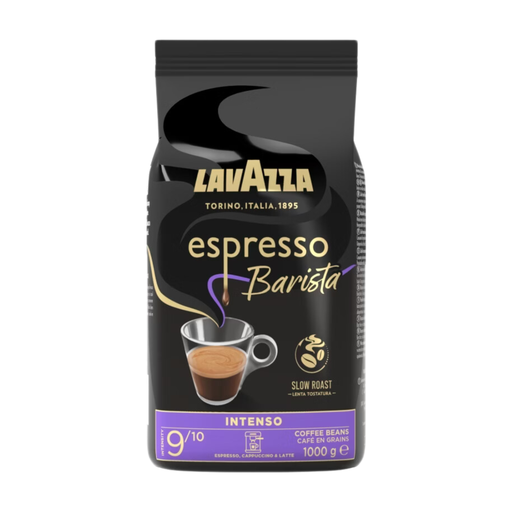
Lavazza positions Espresso Barista Intenso whole beans for espresso and moka preparation.
- Lavazza lists this specific 1 kg Arabica–Robusta blend at intensity 9/10, a guide to its stated flavour profile.
- That intensity figure does not give a caffeine amount for a brewed serving.
illy
illy offers INTENSO roasted whole beans in a 250 g pack.
- illy lists the ingredient as 100% Arabica coffee and states caffeine content not higher than 1.5% for this product.
- The product-specific percentage is not a caffeine figure for your brewed cup or a measure of an individual response.
M&S
M&S describes its Espresso Blend Coffee Beans as Arabica beans for a rich, dark, full-bodied espresso.
- The product description helps shoppers choosing by espresso flavour.
- Check the current pack when ingredients or caffeine details affect your decision.
Waitrose
Waitrose & Partners provides guidance on how coffee strength and bean type relate to different buying questions.
- Its guidance distinguishes roast-led flavour from caffeine differences between Arabica and Robusta.
- A retailer strength or caffeine rating for one product should not be treated as a measured amount in every brewed cup.
Joybuy whole-bean options
These beans offer dark- or Intenso-labelled flavour choices alongside a decaf option. Choose by the flavour and caffeine information relevant to you, and assess additions to the finished drink separately.
 No image available
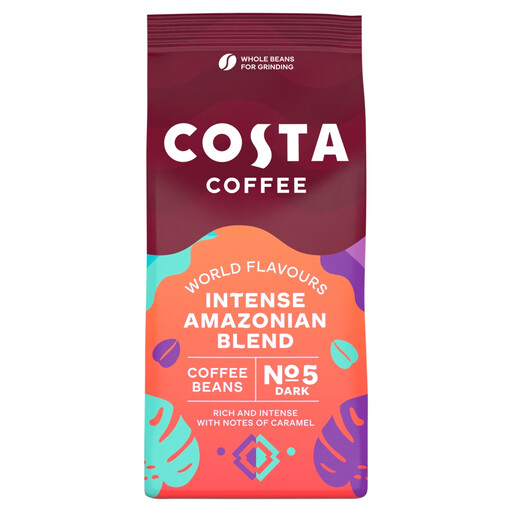
Costa Intensely Dark Amazonian Blend Coffee Beans, 200 g
A dark-labelled whole-bean option for shoppers choosing by flavour. Check the current pack for ingredients and caffeine information if either affects your choice; the name does not establish caffeine per brewed cup.
View on Joybuy
 No image available
Lavazza Barista Intenso Beans, 1 kg
An Intenso-labelled bean option if a pronounced coffee flavour is your starting point. Check the exact pack’s bean composition and caffeine information when comparing intake; the name alone cannot answer that question.
View on Joybuy
 No image available
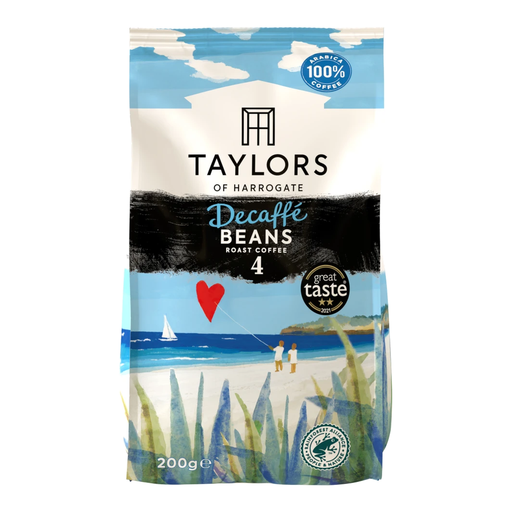
Taylors Decaf Coffee Beans, 200 g
A whole-bean decaf option when reducing caffeine matters more than choosing an intensity-labelled coffee. Decaf does not mean caffeine-free; check the pack if residual caffeine or its flavour description matters to you.
View on Joybuy
Questions about strong coffee beans
Does ‘strong’ tell me how much sugar is in coffee beans?
No: a strength description is not a sugar declaration. Check the beans’ ingredients and what you add after brewing; Diabetes UK advises trying coffee without sugar or with a low- or no-calorie sweetener.
Does a higher intensity number mean more caffeine?
Not on its own. Lavazza describes intensity in terms of aroma, while Waitrose & Partners says caffeine varies with bean type and that Robusta can have up to twice the caffeine of Arabica. Check the exact product when caffeine matters.
Should I choose Arabica or Robusta for bold flavour while watching caffeine?
Choose flavour and caffeine on separate grounds. An Arabica product can be described as dark and full-bodied, while Waitrose & Partners says Robusta can contain up to twice the caffeine of Arabica. Check the exact blend and any caffeine disclosure rather than assuming either bean type determines your brewed serving.
How should I account for coffee caffeine during pregnancy?
The NHS advises no more than 200 mg of caffeine a day during pregnancy. Account for caffeine from other sources as well as coffee; decaf beans are an option to consider, but decaf does not mean caffeine-free.


