First-time whole-bean buyers seeking a bold cup
If you have a grinder or bean-to-cup machine, start with the brewing guidance, roast description and pack size. A printed intensity number alone will not tell you how one brand compares with another.


For a first food shop, choose strong coffee beans by the way you brew and the flavour you want, not by comparing intensity numbers across brands. Lavazza lists Espresso Barista Intenso for espresso and moka when you want a full-bodied profile; illy Intenso offers a 250g way to try an intense 100% Arabica coffee across several brewing methods, while Taylors describes Rich Italian as rich and smooth without the bitterness it associates with darker roasts. A smaller pack limits the commitment while you work out which profile you prefer.
The useful meaning of “strong” changes with your brewer, preferred flavour and willingness to try a larger bag.
If you have a grinder or bean-to-cup machine, start with the brewing guidance, roast description and pack size. A printed intensity number alone will not tell you how one brand compares with another.
If you make these drinks regularly, beans explicitly listed for your method give you a clearer starting point. Lavazza lists Espresso Barista Intenso for espresso and moka; illy also lists Intenso for both methods.
If “strong” means a rich flavour rather than the darkest roast character, consider a different profile. Taylors of Harrogate describes Rich Italian as rich and smooth, without the bitterness it says darker roasts often have.
Begin with the equipment you use, then compare flavour descriptions and the amount you want to buy for a first trial.
| Priority | What to check | Your needs |
|---|---|---|
| Brewing method | Check the producer’s guidance for your brewer. Lavazza lists Espresso Barista Intenso for espresso and moka; illy lists Intenso for moka, filter, espresso and lungo; Union recommends House Roast for cafetière and filter. | I mainly make espresso or moka, so I want beans listed for that method. If I use a cafetière or filter brewer, I would start with guidance for those instead. |
| Flavour and intensity | Read tasting notes and roast descriptions alongside any intensity score. Lavazza describes intensity in terms of aroma and richness; its 9/10 scale and illy’s 7-of-9 scale are not a shared measurement. | A full-bodied cup matters more to me than the largest number on a pack. I want to know whether the described flavour is cocoa-led, smooth or more roast-forward. |
| Bean composition | Check whether the beans are Arabica, Robusta or a blend when that information matters to you. Lavazza describes Espresso Barista Intenso as an Arabica-Robusta blend; illy lists Intenso as 100% Arabica. | If I am thinking about caffeine, I will not use a flavour-intensity number as a substitute for checking the beans. Waitrose notes that caffeine can vary by coffee species. |
| Pack size | Compare the amount you will use while trying a new profile. Taylors lists Rich Italian in 200g, 454g and 1kg packs; illy lists a 250g Intenso can; Lavazza lists a 1kg Espresso Barista Intenso pack. | I have not settled on a favourite flavour yet, so a 200g or 250g option would be a smaller first commitment than 1kg. |
Lavazza’s 9/10 and illy’s 7-of-9 labels use different scales. They do not establish which coffee has more caffeine or provide a precise cross-brand flavour ranking.
Use each score with that producer’s roast description, tasting notes and brewing guidance. Compare numbered products within a brand rather than treating every score as interchangeable.
Lavazza uses intensity to describe aroma and richness, whereas Waitrose notes that caffeine varies by bean species. A bold flavour label does not state the caffeine content of a cup.
If caffeine is a deciding factor, check the pack or producer’s information for the particular beans rather than relying on the intensity number.
Producers highlight different methods: Lavazza lists Espresso Barista Intenso for espresso and moka, while Union recommends House Roast for cafetière and filter.
Start with the brewer you use most often, then check whether the producer recommends the coffee for that method.
A 1kg pack is a bigger commitment when you have not yet decided whether you enjoy its roast and flavour profile.
Where the profile you want comes in a smaller size, try that amount first. Taylors lists Rich Italian in 200g as well as larger packs, and illy lists Intenso in 250g.
These brand examples illustrate different ways of describing strong coffee; their ranges do not use one common intensity scale.
Lavazza provides intensity labels and brewing guidance for individual whole-bean coffees.
illy’s whole-bean range includes a 250g Intenso option for shoppers trying an intense 100% Arabica coffee.
Taylors describes Rich Italian as a rich, smooth whole-bean coffee and lists several pack sizes.
Union provides method guidance for House Roast, a medium-roast blend it recommends for cafetière and filter.
M&S lists own-label whole beans, including espresso blends and Italian-style options.
Waitrose offers guidance on roast character, coffee strength and bean types alongside its grocery range.
These whole-bean options cover a dark-labelled 200g trial pack, a larger Lavazza Barista Intenso pack and a 200g Taylors Rich Italian pack for shoppers considering a rich but smoother profile.
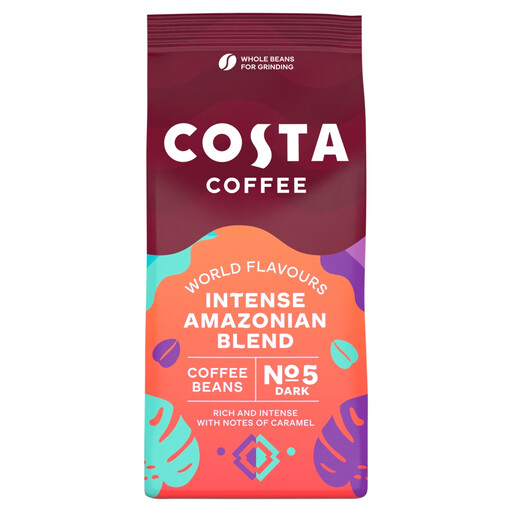 Image unavailable
A 200g pack for trying Costa’s Intensely Dark Amazonian Blend without starting with a larger bag. If brewing method or caffeine information matters to your choice, check the details for this pack.
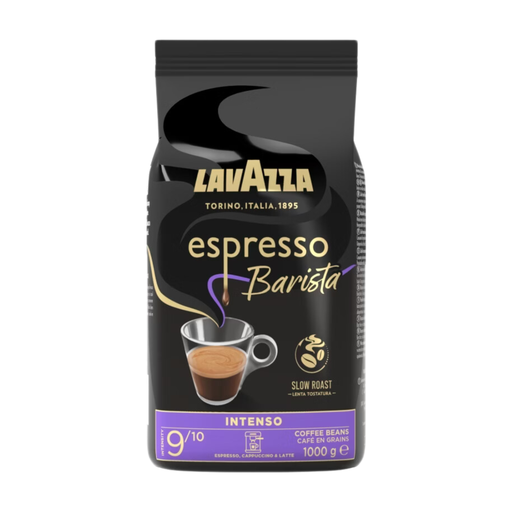 Image unavailable
This 1kg whole-bean pack is a larger first purchase, better considered once you know how quickly you use beans and whether you like the profile. Check the intensity figure and brewing guidance on this specific pack rather than applying figures from a similarly named product.
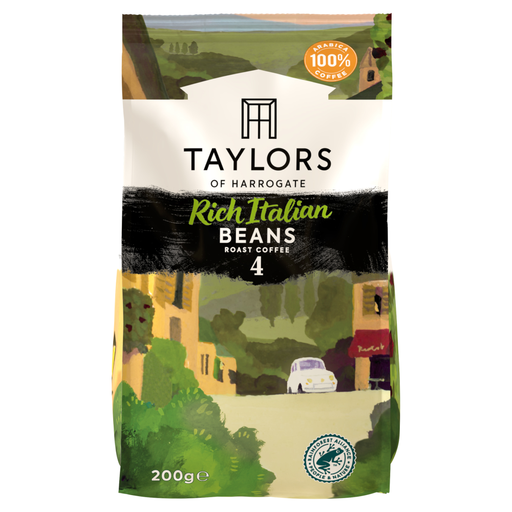 Image unavailable
A 200g way to try the Rich Italian profile before choosing a larger pack. Taylors describes Rich Italian as rich and smooth rather than marked by the bitterness it associates with darker roasts; check the pack for guidance if a particular brewing method is essential.
No: an intensity number is not a caffeine measurement. Lavazza describes intensity in terms of aroma and richness, while Waitrose notes that caffeine varies by bean species. Use the number to understand that producer’s flavour description, not to compare caffeine across brands.
Start with beans the producer lists for your method. Lavazza lists Espresso Barista Intenso for espresso and moka and describes it as intense and full-bodied; illy also lists Intenso for both. Their stated intensity scores use different scales, so the numbers do not establish which cup you will find stronger.
Whole beans can be ground for different brewers, but check whether the coffee’s stated profile suits the drink you make. illy lists Intenso for filter as well as espresso and moka, while Union recommends House Roast for cafetière and filter. Lavazza lists Espresso Barista Intenso specifically for espresso and moka.
A smaller available pack is a cautious starting point if you do not yet know whether you like the flavour. Taylors lists Rich Italian in 200g, 454g and 1kg sizes, illy lists Intenso in 250g, and Lavazza lists Espresso Barista Intenso in 1kg. Choose the larger amount once the profile and your rate of use make sense for you.