What matters when choosing beans?
For revision coffee, decide when you will drink it and how you will brew it, then compare flavour descriptions and pack sizes.
| Priority |
What to check |
Your needs |
| Flavour and caffeine |
Read roast and intensity descriptions for expected flavour. Check whether the beans are Arabica, Robusta or a blend if caffeine matters: Waitrose says Robusta can contain up to twice the caffeine of Arabica, but bean type does not give a prepared-cup amount. |
I want a bold-tasting coffee without mistaking a dark-roast label for a caffeine measurement. |
| Brewing method |
Check the named preparation methods and whether you can grind whole beans. Lavazza lists Espresso Barista Intenso for espresso and moka; illy lists Intenso for moka, filter, espresso and lungo. |
The beans need to work with the coffee equipment I actually use while revising. |
| Time of day |
Compare regular and decaf beans for later sessions. The NHS says caffeine can affect sleep; a strong flavour alone does not tell you whether a coffee is decaf. |
For an evening cup, I would rather choose the coffee with my sleep plans in mind than rely on its roast name. |
| Pack size and storage |
Compare the stated bag size before trying an unfamiliar flavour. Follow that product’s storage instructions after opening rather than assuming every pack has the same guidance. |
If I am still finding a flavour I like, a smaller bag is less of a commitment than a 1 kg pack. |
Brand references
These examples illustrate different flavour, format and decaf choices; the details apply to the named products, not every coffee each brand makes.
Lavazza
An example to compare if you make espresso or moka coffee and want an intense whole-bean blend.
- Lavazza lists Espresso Barista Intenso as a medium-roast Arabica–Robusta blend, intensity 9/10, with cocoa and woody notes.
- Its intensity rating is not a caffeine-per-cup measurement. The listed 1 kg format is a larger commitment if you are still testing the flavour.
illy
An option to examine if you want an intense-tasting, 100% Arabica bean for more than one brewing method.
- illy lists its 500 g Intenso beans at intensity 7/9 and names moka, filter, espresso and lungo preparation.
- Arabica is not caffeine-free. illy’s stated caffeine content of no more than 1.5% does not specify the amount in a brewed cup.
Taylors of Harrogate
A smaller whole-bean format to consider when trying a flavour.
- Waitrose lists Taylors of Harrogate Rich Italian Beans in a 200 g pack.
- Check the individual pack’s brewing and flavour details before deciding whether it suits your equipment and taste.
Union
A reference for shoppers comparing clearly described espresso flavours.
- Union describes Revelation Signature Espresso as a bold espresso with treacle, cinnamon and dark-chocolate notes.
- Union’s coffees have different profiles; check the particular beans rather than assuming the whole range is dark or intense.
M&S
A reference for comparing regular and decaf whole-bean options.
- M&S describes its Italian Style Coffee Beans as Arabica with chocolate and nougat notes, and its Roast & Ritual Decaf beans as decaffeinated Arabica with a deep, rich flavour.
- Choose between those products according to whether you want regular or decaf coffee; their flavour descriptions do not establish caffeine per cup.
Waitrose
A retailer reference for interpreting coffee-strength descriptions alongside whole-bean choices.
- Waitrose explains that longer roasting develops a more intense flavour and richer body, with lower acidity.
- A roast description cannot by itself tell you the caffeine amount in your prepared coffee.
Coffee beans on Joybuy
These whole-bean options include a dark-flavour choice, another regular-coffee blend and two decaf choices for later revision. Compare each pack with your preferred brewing method before buying.
 No image available
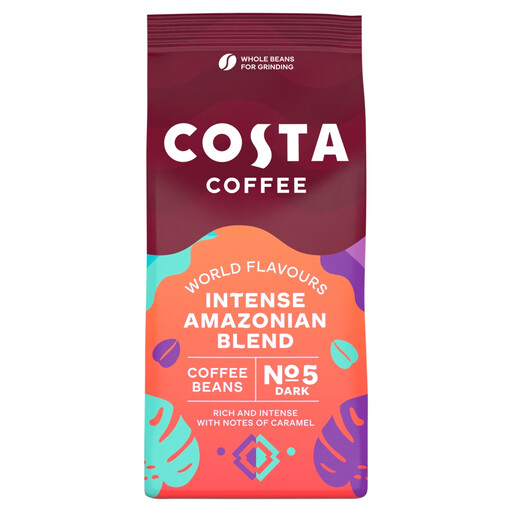
Costa Intensely Dark Amazonian Blend Coffee Beans 200 g
Consider these whole beans if a dark flavour appeals for a revision coffee. The 200 g pack is a smaller commitment than a 1 kg bag; check the brewing guidance for your equipment and do not use the flavour name as a caffeine measurement.
View on Joybuy
 No image available
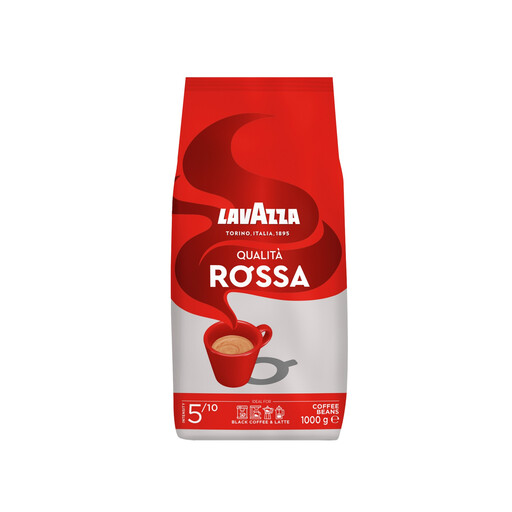
Lavazza Qualita Rossa Coffee Beans 1 kg
This 1 kg bag makes more sense once you know you want this blend regularly than when you are trying a flavour for the first time. If an extra-bold taste is the priority, check its roast and flavour description before choosing it.
View on Joybuy
 No image available
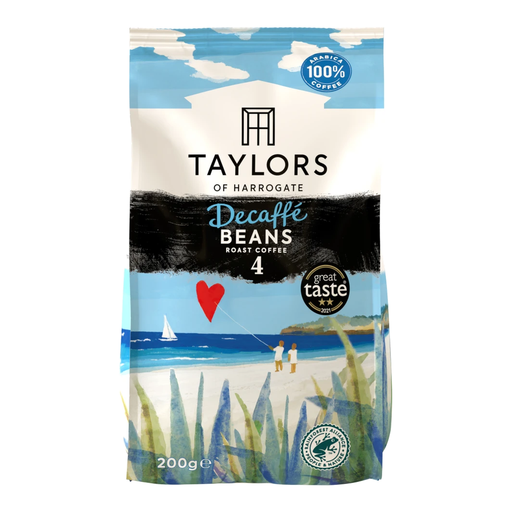
Taylors Decaf Coffee Beans 200 g
These decaf whole beans are an option to consider for a later revision coffee. The 200 g bag lets you try the flavour in a smaller format; check the pack’s brewing guidance for your equipment.
View on Joybuy
 No image available
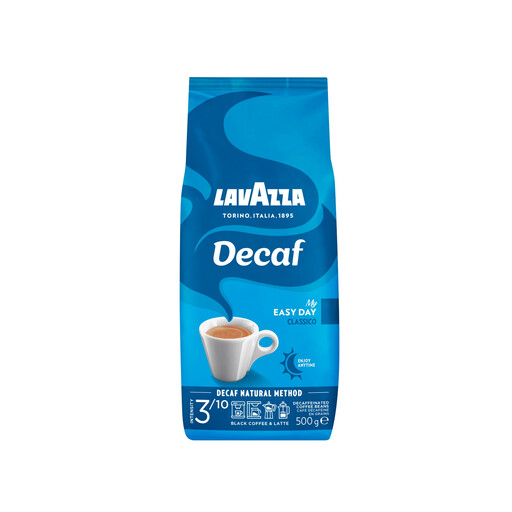
Lavazza Decaffeinated Coffee Beans 500 g
Consider these decaffeinated whole beans if you want a coffee option for later study. At 500 g, the pack is a larger flavour commitment than a 200 g bag; check its preparation guidance if you use a particular brewer.
View on Joybuy
Common questions
Does a higher coffee intensity score mean more caffeine?
No: an intensity score describes a product’s flavour profile, not the caffeine in a prepared cup. Waitrose says roast strength affects flavour, body and acidity, while Robusta can contain up to twice the caffeine of Arabica. Check bean composition and any caffeine disclosure separately.
Which intense beans are listed for espresso or moka?
Lavazza lists Espresso Barista Intenso for both espresso and moka. illy lists its Intenso beans for those methods as well as filter and lungo; choose between them by the flavour and bean composition you prefer, not by comparing their intensity scores as caffeine amounts.
Is decaf worth considering for evening revision?
Decaf is an option if you want coffee later in the day while reducing caffeine exposure. The NHS says caffeine can affect sleep, so a dark or intense regular coffee is not automatically the better fit for an evening cup.
Can I use a daily caffeine figure to count my revision coffees?
Not without knowing how much caffeine is in each prepared drink and what you consume from other sources. The European Food Safety Authority’s 2015 opinion says daily intake from all sources up to 400 mg does not raise safety concerns for adults in the general population, except pregnant women; it gives a separate figure of up to 200 mg per day for pregnant women. These are safety assessments, not targets or a number of cups.
How should I store beans after opening the bag?
Follow the instructions for the particular beans rather than applying one rule to every pack. For its Roast & Ritual Decaf beans, M&S specifies an airtight container for two weeks in the fridge or four weeks in the freezer after opening.


