Espresso and bean-to-cup drinkers
If your morning break calls for a short coffee, look for beans listed for your machine or moka pot. You will also need a grind suited to the brewer; a dark flavour description cannot settle that practical choice.


For a bold-tasting morning coffee, choose whole beans by their flavour description and suitability for your brewer, rather than by an intensity number alone. If by “strong” you mean more caffeine, check the bean blend and the amount of coffee you use: a dark roast or high intensity score does not tell you how much caffeine is in your cup. Pack size matters too if you only brew occasionally.
If your morning break calls for a short coffee, look for beans listed for your machine or moka pot. You will also need a grind suited to the brewer; a dark flavour description cannot settle that practical choice.
Chocolate, cocoa and smoky descriptions can help you narrow down beans when you want a fuller-tasting cup rather than a light, fruit-led profile. Compare the individual product descriptions, not just their strength numbers.
If “strong” means caffeine to you, check the Arabica and Robusta composition and how much ground coffee goes into each drink. Waitrose notes that Robusta can contain up to twice as much caffeine as Arabica, but the blend alone does not give a per-cup amount.
Decide whether you want a bolder flavour or are asking about caffeine, then match the beans and grind to the drink you actually make.
| Priority | What to check | Your needs |
|---|---|---|
| Bold flavour | Read the roast and flavour notes, then check what the maker means by intensity. Lavazza describes its intensity scale in terms of aroma and body; its number is not a caffeine measurement or a direct match for another brand’s scale. | I want a richer-tasting morning cup, perhaps with chocolate or smoky notes, rather than choosing beans because their strength number looks high. |
| Caffeine | Check the bean composition, any declared caffeine information and the amount used per drink. Waitrose says caffeine varies by bean type; an intensity label alone cannot establish the caffeine in a prepared cup. | When I say “strong”, I mean caffeine. I need to consider the beans and my usual serving, not assume a darker roast answers the question. |
| Brewing method | Check the maker’s suggested methods and whether you can grind whole beans appropriately. Waitrose advises a coarse grind for cafetière, medium for filter and fine for espresso-style brewing. | My beans need to work with the equipment I use before work, whether that is an espresso machine, moka pot, bean-to-cup machine, filter brewer or cafetière. |
| Coffee with milk | Look for product-specific guidance on milk drinks and a flavour profile you want with milk. Union describes Foundation as its darkest roast and recommends it for espresso or bean-to-cup coffee; the brand also describes its body as suitable for milky drinks. | I make a latte or cappuccino and want to choose the coffee flavour that comes through in that drink, rather than judging the beans only as a black espresso. |
| Pack and storage | Compare pack size with how quickly you use beans, and follow the particular pack’s instructions after opening. Waitrose advises airtight storage and use within two weeks for its beans’ flavour; M&S gives product-specific chilled or frozen storage instructions for its Espresso Blend. | For an occasional morning coffee, I would rather choose a pack I can use as directed than leave a large one open for weeks. |
A 9/10 from one maker and a 7/9 from another use different scales. Lavazza describes intensity in terms of aroma and body, so neither number establishes a cross-brand flavour ranking or caffeine level.
Read the accompanying roast, flavour and brewing descriptions before comparing beans.
Roast descriptions help explain the intended flavour, while caffeine also varies with bean type and the amount brewed. Waitrose notes that Robusta can contain up to twice as much caffeine as Arabica.
Choose by flavour notes for a bolder taste; if caffeine is the concern, check blend composition and your serving rather than roast colour alone.
Whole beans need grinding for the brewer you own. Waitrose recommends different grind sizes for cafetière, filter and espresso-style preparation.
Check that you have a suitable grinder or bean-to-cup machine, then adjust the grind for the drink you are making.
Storage advice differs by product. Waitrose advises airtight storage and use within two weeks after opening for flavour, while M&S gives separate instructions for its Espresso Blend.
Choose a pack size that fits your routine and follow its current storage directions.
These examples illustrate different ways brands describe strong-tasting coffee; check the precise product and format before choosing.
Lavazza lists Espresso Barista Intenso whole beans for espresso and moka, with an intensity of 9/10 on its own scale.
Illy lists its Intenso whole beans for moka, filter, espresso and lungo coffee, with an intensity of 7/9 on illy’s scale.
Taylors describes Hot Lava Java as an extra-dark coffee with smoky and peppery notes. Its official product description here is for ground coffee.
Union calls Foundation its darkest, Italian-style roast and recommends it for espresso or bean-to-cup preparation.
M&S lists whole-bean espresso and other coffee styles. Its Espresso Blend has its own instructions for storage after opening.
Waitrose describes its No.1 Italian Espresso whole beans as full-bodied, with dark-chocolate notes.
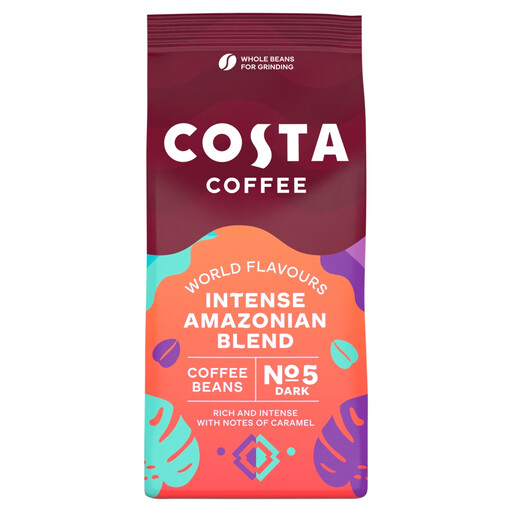
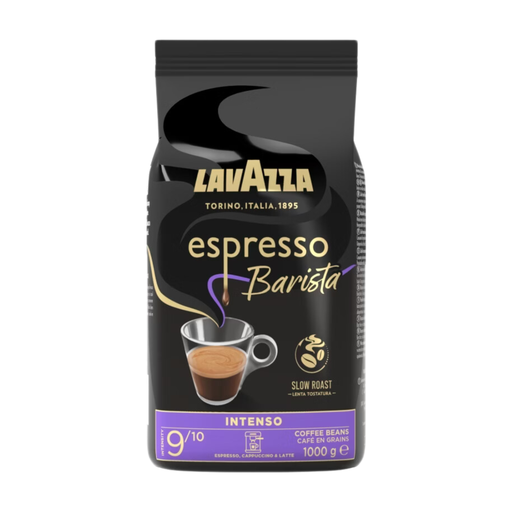
These whole-bean options offer different starting points for a bold morning coffee: a 200g dark-flavoured blend and a 1kg espresso-oriented blend. Check the roast and brewing details of the exact pack against your usual drink.
 No image available
A 200g whole-bean option to consider if you want a dark-flavoured morning coffee. For espresso or filter preparation, grind the beans to suit your brewer; check the pack if bean composition or caffeine is central to your choice.
 No image available
A 1kg whole-bean option for an espresso or moka morning routine. The product information describes a medium roast, so compare its roast description with darker options if an extra-dark flavour is what you want. This Joybuy listing is for Barista Intenso; do not assume it is the Espresso Barista Intenso product discussed above.
No: an intensity number alone does not establish caffeine content. Lavazza describes intensity mainly through aroma and body, while Waitrose says caffeine varies by bean type. Check the blend and any product-specific caffeine information alongside the amount you brew.
Start with the preparation methods stated for the exact beans. Lavazza lists Espresso Barista Intenso for espresso and moka; Union recommends Foundation for espresso or bean-to-cup. Choose between their flavour descriptions as well as their method guidance, and check the identity of any product you buy.
Yes, when the beans are ground appropriately for your brewer. Waitrose recommends a medium grind for filter coffee and a coarse grind for cafetière. Illy explicitly lists filter preparation for its Intenso beans; check other products’ brewing guidance individually.
Follow the instructions on the particular pack. Waitrose advises closing opened beans in an airtight container and using them within two weeks for flavour. M&S gives different, product-specific refrigerator and freezer instructions for its Espresso Blend, so do not apply one pack’s directions to every coffee.