Breakfast hosts seeking a pronounced coffee flavour
If you want the coffee to have a distinct flavour alongside a Full Scottish breakfast, compare the products’ stated flavour profiles rather than assuming all decafs taste alike.


For a Full Scottish breakfast, start with a decaf described as bold, intense or rich, then choose a format that fits your equipment: instant for a kettle-made cup, beans or ground coffee for brewing, or pods for a compatible machine. Those flavour descriptions come from brands rather than a comparative taste test; a coffee strength number is not a measure of its caffeine content.
If you want the coffee to have a distinct flavour alongside a Full Scottish breakfast, compare the products’ stated flavour profiles rather than assuming all decafs taste alike.
Instant decaf avoids the need for a grinder or cafetière. NESCAFÉ Original Decaf and Kenco Millicano Decaff are two examples, though their stated flavour profiles differ.
If you already use a cafetière or grind beans, check the pack format before choosing. Taylors of Harrogate gives cafetière guidance for Decaffé, while M&S offers Roast & Ritual Decaf as whole beans.
Choose the preparation method first, then compare the flavour descriptions of decafs that fit it.
| Priority | What to check | Your needs |
|---|---|---|
| Flavour profile | Look for specific descriptions such as bold, intense or rich. Treat them as the maker’s account of flavour, not a standardised comparison between coffees. | I want a decaf with a pronounced flavour alongside a substantial breakfast, rather than choosing on the word “decaf” alone. |
| Caffeine and strength | Choose a product labelled decaf if reducing caffeine is the aim. NESCAFÉ’s coffee-strength guide says strength scales tend to describe flavour intensity, not caffeine content. | A stronger-tasting cup appeals to me, but I do not want to mistake a high strength number for a caffeine measurement. |
| Brewing format | Check whether the pack contains instant coffee, ground coffee or whole beans, and whether you have the equipment to prepare it. Taylors of Harrogate gives a 4–5 minute cafetière brew as guidance for Decaffé. | On a busy morning I may prefer instant; when I have time to brew, I can choose a format that suits my cafetière or grinder. |
| Pod compatibility | Match the capsule to the exact machine system stated on the pack. Tesco’s decaf-pod listing includes products for Nespresso, Dolce Gusto and Tassimo; those system names are not interchangeable. | If I use a pod machine, the coffee has to fit my machine before its flavour description matters. |
A coffee can be described as strong-tasting without the number telling you how much caffeine it contains. NESCAFÉ’s strength guide associates these scales with flavour intensity.
Choose decaf for caffeine reduction, then use the strength and flavour wording to narrow down the taste you want.
Decaf capsules are listed for different machine systems, including Nespresso, Dolce Gusto and Tassimo.
Check both your machine model and the compatibility statement on the capsule pack before ordering.
An incompatible pack may leave you with capsules you cannot use in your machine.
“Bold” and “rich” describe what a brand says about its own coffee; they do not establish which decaf tastes strongest in a direct comparison.
Use those descriptions to shortlist a flavour profile, and check the pack size before committing to a particular coffee.
M&S notes that product information and availability can change, which matters when buying coffee for a particular breakfast.
Check the current listing and pack label for the format and product details you need.
An instant-coffee option for a kettle-made decaf. NESCAFÉ describes Original Decaf as bold and intense.
Millicano Decaff combines decaffeinated instant coffee with finely milled whole beans.
Decaffé is an option for shoppers who want to brew rather than make instant coffee.
Roast & Ritual Decaf Coffee Beans are a whole-bean option described by M&S as rich and bold.
A retailer reference for comparing decaf pods by machine system during a breakfast shop.
These options cover instant coffee for a kettle-made breakfast cup and capsules for a Dolce Gusto machine. Compare their stated flavour profiles within the format you can use.
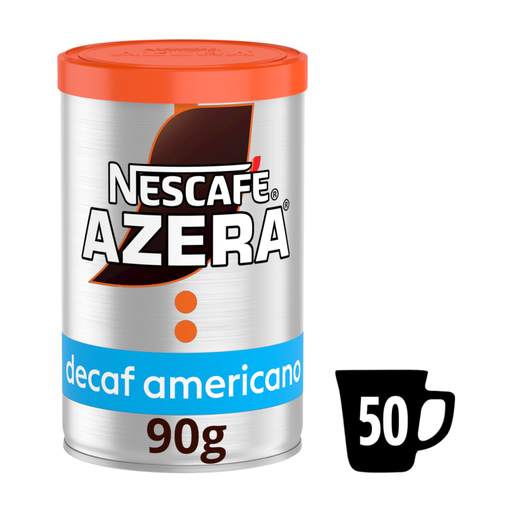 No image available
This instant decaf suits a kettle-made breakfast cup if you are looking for the full-bodied profile described in its product information. That description does not establish how its flavour compares with other decafs.
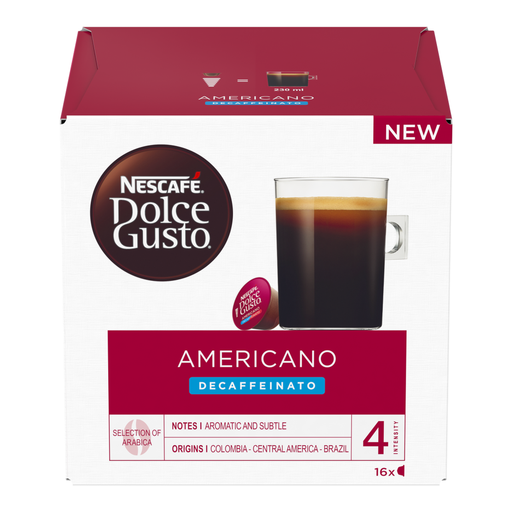 No image available
Choose these decaf Americano pods only for a compatible Dolce Gusto machine. The product information describes an intense, full-bodied flavour; check your machine before ordering the 16-capsule pack.
 No image available
This soluble decaf is an option for a quick, kettle-made cup. Its product description calls the flavour rich and full-bodied, rather than providing a measured comparison with other coffees.
 No image available
This instant decaf fits a kettle-made breakfast routine if its described smooth, full-bodied profile appeals to you. Smoothness does not establish that it tastes stronger than the other options.
A strong flavour description does not tell you the caffeine content. NESCAFÉ’s coffee-strength guide says strength scales tend to reflect flavour intensity, so check that the product is decaf rather than using its strength number to judge caffeine.
Do not assume it does: NESCAFÉ says most of the caffeine is removed from its Original Decaf, not that none remains. If the remaining caffeine matters to your choice, check the current product label for relevant information.
Choose the format your equipment and morning routine can accommodate. Instant coffee makes a kettle-made cup; beans and ground coffee require suitable brewing equipment; pods need to match the specific capsule system stated on the pack.