Hosts serving several guests
If you are making individual mugs throughout a coffee morning, an instant decaf lets you prepare each one without brewing a batch. Check the flavour description if guests expect a bold cup.


For guests who want a bold-tasting decaf, look for an explicit flavour description rather than assuming a high strength number means more caffeine. NESCAFÉ describes Original Decaf as bold and intense; Kenco describes its Decaf as balanced and gives it an intensity rating of 7. If you have time and equipment to brew, Taylors of Harrogate describes caramel and malt notes in Decaffé, but its flavour cannot be ranked against those instant coffees using a common strength scale.
If you are making individual mugs throughout a coffee morning, an instant decaf lets you prepare each one without brewing a batch. Check the flavour description if guests expect a bold cup.
Choose decaf for the caffeine preference, then assess flavour separately. NESCAFÉ explains that coffee-strength numbers generally describe flavour intensity rather than caffeine content.
If you have a cafetière or equipment for whole beans, ground or bean decaf offers another preparation route. Allow time to brew and clear up when serving a group.
Decide how you will serve the coffee, then compare flavour descriptions within the format that works for your coffee morning.
| Priority | What to check | Your needs |
|---|---|---|
| Bold flavour | Read the product’s roast and flavour wording. Treat an intensity rating as guidance for that brand’s product, not a cross-brand measurement; NESCAFÉ says strength scales generally describe flavour rather than caffeine. | I want a decaf with a pronounced flavour, so I would choose a description that matches what my guests mean by strong rather than relying on a number alone. |
| Caffeine preference | Check that the pack identifies the coffee as decaffeinated. If a guest needs to limit caffeine closely, let them check the current product information rather than assuming decaf means none. | Some guests are choosing decaf to limit caffeine; I need to describe the coffee accurately without promising it is caffeine-free. |
| Preparation | Choose between individual instant mugs and a brewed service. For ground coffee or beans, check the equipment and preparation instructions before deciding how much to make. | I may need to serve several mugs quickly, or I may have time and equipment to brew coffee for the group. |
| Choice of flavours | Compare a clearly bold description with balanced or medium-roast wording. Kenco describes Decaf as rounded, while M&S describes its Colombian ground decaf as medium roast with caramel and blackcurrant notes. | Not everyone wants a dark-tasting cup. Offering two clearly described styles could make it easier for guests to choose. |
NESCAFÉ explains that strength numbers generally refer to flavour, and a Kenco rating of 7 is not a common measurement shared by every brand.
Read the roast and flavour description alongside any rating. Try a mug before the coffee morning if a particular taste matters to your guests.
A darker or more intense flavour description does not establish how much caffeine is in a decaf product.
Choose the flavour profile separately. For a guest who needs to limit caffeine closely, offer the current pack information so they can assess the product.
NESCAFÉ describes Original Decaf as bold and intense, while Kenco describes Decaf as rounded and M&S identifies medium-roast decaf options. Those descriptions point to different flavour preferences, not a universal winner.
If you offer more than one decaf, label each by its stated flavour style so guests can choose.
An instant option for hosts looking for an explicitly bold flavour description.
An instant decaf for guests who prefer a rounded flavour description.
A brewed decaf route when the host has suitable preparation equipment.
Ground and micro-ground instant decaf references for guests interested in medium-roast descriptions.
A retailer reference for comparing decaf instant products.
These options include decaf coffees for individual mugs and a whole-bean option for hosts with suitable grinding and brewing equipment. Compare their stated flavour descriptions with what your guests prefer.
 No image available
For guests asking for a bold-tasting decaf, NESCAFÉ describes Original Decaf as bold and intense. This is the brand’s flavour description, not an independent comparison; check the current pack if a guest needs to limit caffeine closely.
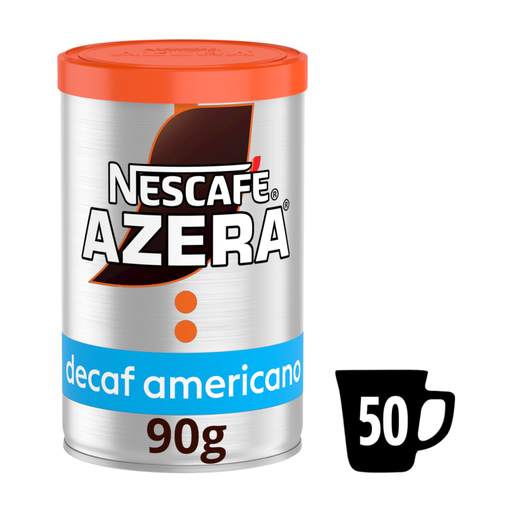 No image available
An Americano-labelled decaf to consider for individual mugs. If guests specifically want a dark or intense flavour, check this product’s current flavour description rather than assuming its style from the name.
 No image available
For quick individual mugs when guests prefer a rounded flavour, Kenco describes its Decaf as balanced and gives it an intensity rating of 7. That rating should not be compared directly with another brand’s scale.
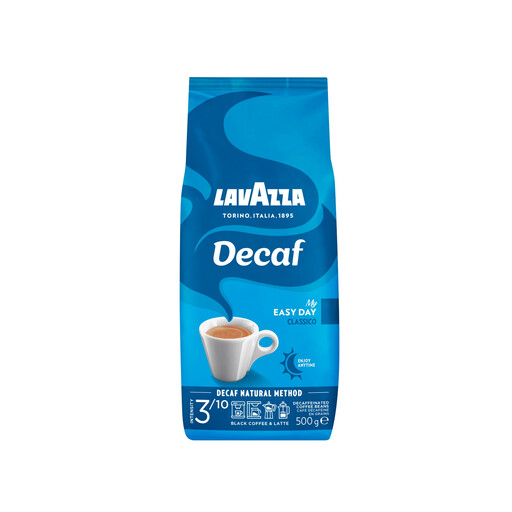 No image available
Whole beans provide a brewed decaf route if you have equipment that can grind and brew them. Check the pack’s roast and flavour description if guests specifically want a bold cup.
 No image available
Another decaf option for a coffee morning. If a distinctly bold flavour is the deciding factor, check this Gold Blend variant’s current roast and flavour wording rather than applying the description of NESCAFÉ Original Decaf to it.
Not necessarily. NESCAFÉ explains that coffee-strength numbers generally describe flavour intensity rather than caffeine content. Check the decaffeinated designation separately from any flavour or roast description.
Choose instant decaf if you want to prepare individual mugs quickly. Ground coffee or beans make sense when you have suitable brewing equipment and time for preparation and clear-up; Taylors of Harrogate provides cafetière guidance for its Decaffé.
Do not make a blanket zero-caffeine promise: NESCAFÉ describes its Original Decaf as having most of the caffeine removed. If a guest needs to limit caffeine closely, let them check the current pack information before choosing a cup.
Start with the product’s preparation directions and try one mug before serving the group. Changing the coffee-to-water ratio changes the concentration of that mug, but a more concentrated cup may not suit every guest.