Milk-tea drinkers looking for a fuller cup
If your usual afternoon tea is a strong black tea with milk, a decaf English Breakfast or a hearty everyday blend gives you a more relevant starting point than choosing by pack size alone.


For a strong-tasting afternoon cup, start with a decaf English Breakfast or everyday black tea whose maker describes it as robust, hearty or full-bodied, then follow that product’s brewing guidance. Those descriptions are not comparable strength measurements, and decaf tea can still contain very low levels of caffeine, according to University Hospitals of Leicester NHS Trust.
If your usual afternoon tea is a strong black tea with milk, a decaf English Breakfast or a hearty everyday blend gives you a more relevant starting point than choosing by pack size alone.
Decaf may suit a change in your afternoon routine, but it does not necessarily mean caffeine-free. Check the individual pack if the remaining caffeine matters to you.
Organic or Fairtrade credentials and a larger supply may shape your choice once you have found a tea style you want to drink regularly. Neither tells you how strong the cup will taste.
Choose the black-tea profile first, check how that particular tea is brewed, then consider caffeine information, sourcing credentials and pack size.
| Priority | What to check | Your needs |
|---|---|---|
| Tea profile | Look for the exact decaf product’s blend and flavour description. Twinings describes its English Breakfast Decaffeinated as a robust Assam, Kenyan and Ceylon blend; Clipper describes its Organic Everyday Decaf as full and rich. These are brand descriptions, not results from a shared taste test. | I usually take milk and want a black tea with a stated robust or hearty profile, rather than assuming every decaf bag will taste equally strong. |
| Brewing | Follow the instructions for the tea you buy. Twinings allows up to four minutes for more punch from its English Breakfast Decaffeinated; Clipper gives a two-to-five-minute range for its Organic Everyday Decaf. | Before changing teas, I’d like to see whether brewing my current choice within its stated guidance makes a cup I enjoy. |
| Remaining caffeine | Read the current pack’s caffeine statement rather than applying another tea’s figure. University Hospitals of Leicester NHS Trust notes that decaffeinated tea can still contain very low levels of caffeine. | Reducing caffeine matters to me, so I need to know whether the particular tea meets my requirements without treating “decaf” as “caffeine-free”. |
| Sourcing and quantity | Check credentials on the exact product and compare bag counts before choosing a large pack. Clipper states that its Organic Everyday Decaf is organic and Fairtrade; Tesco has listed 160-bag Yorkshire Tea and PG Tips decaf packs. | I may prefer particular sourcing credentials or enough bags for regular breaks, but I want to settle on a flavour profile I like first. |
University Hospitals of Leicester NHS Trust says decaffeinated tea can still contain very low levels of caffeine. The word “decaf” alone therefore cannot establish the remaining amount in a particular pack.
Check that pack’s caffeine information if complete avoidance matters to you; seek appropriate clinical advice when avoidance is medically necessary.
Brands use terms such as hearty, robust and flavour-packed to describe different teas. They do not form a common strength scale, so a large pack could leave you with a cup lighter than you prefer.
Check the exact tea’s description and brewing instructions, and consider trying a smaller pack before committing to a larger one.
A larger pack takes longer to get through if its flavour does not suit your usual tea break.
Organic and Fairtrade credentials describe sourcing or production standards; they do not establish how dark or strong a brewed cup will taste.
Choose a stated tea profile that appeals to you, then check those credentials on the exact product if they are important to your decision.
Twinings offers both English Breakfast Decaffeinated and Everyday Decaffeinated black teas, with different stated profiles for an afternoon cup.
Clipper describes its Organic Everyday Decaf as a full, rich black tea containing Assam, with organic and Fairtrade credentials.
Yorkshire Tea describes its Decaf as flavour-packed; Tesco has listed it in a 160-bag pack.
Tesco has listed PG Tips Decaf Black Tea in a 160-bag pack, an option to examine if you regularly make decaf tea.
These bagged decaf black teas offer everyday and stated full-bodied profiles to consider for an afternoon cup. A description such as “rich” or “full-bodied” is a starting point for choosing, not a measured comparison between them.
 No image available
The product description suggests this decaf black tea for an afternoon cup with milk and describes its flavour as deep and rich; that is not a comparative taste-test result. The pack contains 80 bags weighing 250g, and its stated brewing time is 2–3 minutes. Check the current pack if its remaining caffeine matters to you.
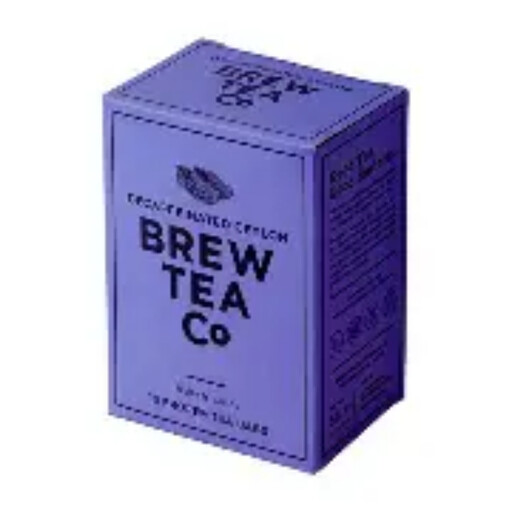 No image available
The product description calls this whole-leaf Ceylon black tea full-bodied and robust, which may appeal if you want a fuller stated profile; it does not establish a comparative strength level. It is CO₂-decaffeinated and comes as 40 bags weighing 200g. Check the preparation guidance and pack information if milk use or remaining caffeine affects your choice.
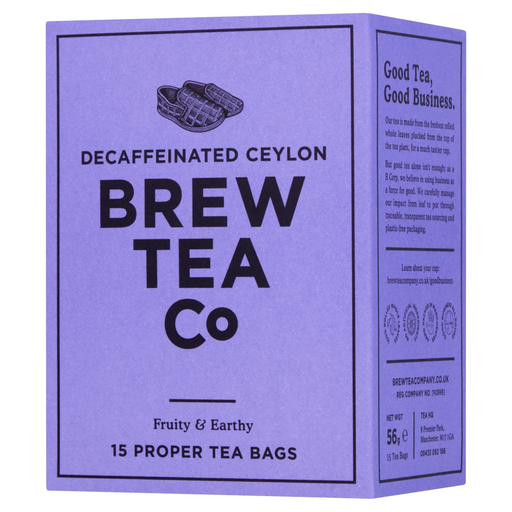 No image available
This 15-bag, 56g Ceylon black tea offers a smaller pack in the same stated full-bodied style, rather than a measured strength guarantee. The description specifies CO₂ decaffeination. Check the packaging if organic status, brewing guidance, milk use or remaining caffeine matters to you.
A decaf English Breakfast or an everyday black tea explicitly described as robust or full-bodied is a useful starting point. Twinings describes its English Breakfast Decaffeinated as robust and rich, while Clipper describes its Organic Everyday Decaf as full and rich; these are manufacturers’ descriptions, not proof that either will match your usual extra-strong tea.
Follow the guidance for the particular tea before deciding whether its flavour suits you. Twinings says its English Breakfast Decaffeinated can brew for up to four minutes for more punch; Clipper gives a two-to-five-minute range for its Organic Everyday Decaf. Do not apply either instruction to every decaf bag.
Not necessarily. University Hospitals of Leicester NHS Trust says decaffeinated tea can still contain very low levels of caffeine. Check the individual pack if the remaining amount matters to you, and seek appropriate clinical advice if you must avoid caffeine for a medical reason.
The pack is the relevant place to check information for the tea you are buying. Twinings’ English Breakfast Decaffeinated product information has displayed two different decaffeination figures, so do not select one of those figures as the amount that applies to your pack; contact the manufacturer if the distinction affects your decision.
If a strong-tasting cup is your main concern, consider the exact tea’s stated profile and a smaller pack first. Tesco has listed 160-bag Yorkshire Tea and PG Tips decaf packs, but the number of bags cannot tell you whether either tea will suit your preferred brew.