What should you check before choosing?
Start with the cup delegates will be served, then check whether the brewing method and pack format work during a busy break.
| Priority |
What to check |
Your needs |
| Black-tea flavour |
Look for a description of the exact decaf blend, not an assumption based on the brand. Try a cup with the venue’s water, cups and intended milk. |
I want decaf that still tastes like a considered black-tea choice when milk is added. Clipper calls its Organic Everyday Decaf robust; Twinings describes body in its English Breakfast Decaffeinated. These are the makers’ descriptions, not comparative taste results. |
| Consistent brewing |
The UK Tea & Infusions Association advises one bag per cup, freshly drawn water at 90–98°C for black tea, and the tea’s recommended brewing time. Put the method where staff prepare drinks. |
Different staff will make tea during short breaks, so I need a method they can repeat. In a Tea Census reported by the UK Tea & Infusions Association in May 2025, 75% of more than 1,000 British respondents said they brewed tea for less than its recommended 3–4 minutes; that describes brewing behaviour, not conference buying preferences. |
| Pack and cup planning |
Estimate cups across all breaks and repeat servings, then compare bag counts and confirm the format of the exact product. Tesco listed Yorkshire Tea Decaf in a 160-bag, 500 g format. |
I need enough tea for replenishment without treating one bag as one delegate or assuming a larger pack will produce a stronger cup. |
| Caffeine information |
Check the current pack or manufacturer information before giving a precise residual-caffeine figure. Keep decaf and regular tea clearly labelled at self-service points. |
Guests should be able to identify the decaf option. I do not want a caffeine-free claim based solely on the word “decaf”. |
| Ingredients and service additions |
Keep information for the exact tea, milk, other drinks and accompaniments accessible. The Food Standards Agency’s MyHACCP guidance addresses control of allergen-containing ingredients and cross-contamination. |
Staff need to answer questions about what is served with the tea as well as the tea itself. |
| Procurement requirements |
If organic or Fairtrade tea is specified, check the exact product and pack. Clipper describes its Organic Everyday Decaf as an organic, Fairtrade black-tea blend in an 80-bag format. |
Our event specification may call for those attributes, but we still need to try the prepared tea and plan enough bags. |
Brand references for decaf black tea
These product-line and retail references can help form a tasting shortlist; brand descriptions are not results from a like-for-like conference taste test.
Clipper
Clipper describes its Organic Everyday Decaf as a robust blend of organic and Fairtrade black teas.
- Its 80-bag product page gives a 2–5 minute infusion range.
- Try the prepared tea with the venue’s milk before treating the maker’s flavour description as a service result.
Twinings
Twinings describes its English Breakfast Decaffeinated as a tea with body and a light finish.
- Twinings says a four-minute brew gives this blend more punch.
- The maker’s cited product page is for 40 bags; confirm the pack format needed for the event.
Yorkshire Tea
Yorkshire Tea describes its decaf blend as flavour-packed; Tesco listed a 160-bag, 500 g format.
- The listed bag count gives buyers a concrete format for planning replenishment.
- The maker’s description does not establish how strong the tea will taste in the planned service.
Tetley
Tesco listed Tetley Decaffeinated in 80-bag and 160-bag formats.
- Those formats offer different bag counts to consider for the expected cup volume.
- Choose a strength-led conference tea by trying the exact product, rather than inferring flavour from its pack size.
PG Tips
Tesco listed PG Tips Decaf Black Tea in 70-bag and 160-bag formats.
- The 160-bag listing provides another large-pack format to compare for service planning.
- A listing for a large pack does not establish a robust flavour in the prepared cup.
Tesco
Tesco is a retailer reference for comparing listed decaf black-tea pack formats, rather than a manufacturer description of the other brands’ flavour.
- Its UK listing included decaf options from Yorkshire Tea, PG Tips, Tetley, Twinings and Clipper, alongside own-brand tea.
- Confirm the exact pack and event requirements before relying on a retail listing for conference supply.
Joybuy decaf tea options for conferences
These decaf tea options include smaller packs to try for a strength-led service and an 160-bag format to consider when planning replenishment. Compare the exact pack and prepare a trial cup before choosing a conference tea.
 Image unavailable
Clipper Organic Fairtrade Decaf Everyday 80 Tea Bags 277g
Consider this 80-bag pack when the event calls for organic and Fairtrade decaf black tea as well as a strength-led trial. Clipper describes its Organic Everyday Decaf as robust and gives a 2–5 minute infusion range; check the physical pack’s preparation details before briefing staff.
View on Joybuy
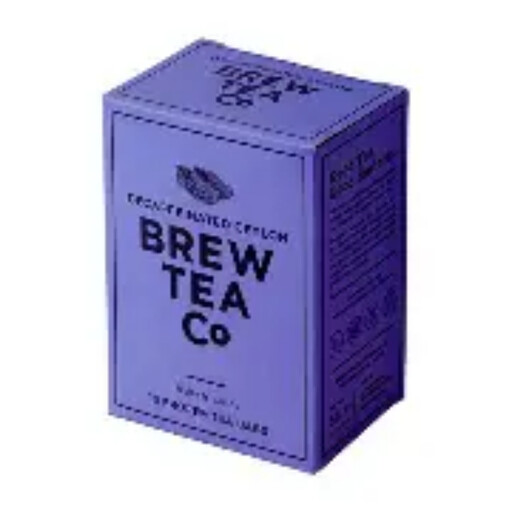 Image unavailable
Brew Tea Co Co2 Decaffeinated Tea 40 Proper Tea Bags 200g
The 40-bag pack is a manageable format for trying this decaffeinated tea with the venue’s water and milk. Its product description calls the black tea full-bodied and robust; check the pack’s brewing directions and plan further packs if serving more cups.
View on Joybuy
 Image unavailable
Taylors of Harrogate Yorkshire Tea Decaf 250g
This 250 g decaf pack is another candidate for a venue-water and milk trial. Yorkshire Tea describes its decaf blend as flavour-packed; confirm this pack’s service format and cup yield before using it to plan conference quantities.
View on Joybuy
 Image unavailable
Tetley 80 Decaffeinated Tea Bags 250g
The 80-bag, 250 g format gives staff a bag-per-cup starting point for planning this decaf tea service. Follow the exact pack’s brewing instructions and try the prepared tea with the milk offered to delegates before settling on it for a strength-led brief.
View on Joybuy
 Image unavailable
Tetley 160 Decaf Tea Bags 500g
The 160-bag, 500 g pack is worth considering when the expected number of cups makes replenishment a priority. Bag count alone says nothing about strength: try it with the venue’s water and milk, and check the pack’s brewing directions for staff.
View on Joybuy
Conference decaf tea questions
How can I prepare a stronger-tasting decaf black tea for a conference?
Start by trying a decaf black tea whose exact blend has a body- or strength-led description, using the venue’s water and intended milk. The UK Tea & Infusions Association advises one bag per cup, freshly drawn water at 90–98°C for black tea, and the product’s recommended brewing time. Twinings says four minutes gives its English Breakfast Decaffeinated more punch; Clipper gives a 2–5 minute range for Organic Everyday Decaf.
How many decaf tea bags should I plan for?
Estimate the cups likely to be served across breaks and repeat visits, then use one bag per cup as the brewing baseline recommended by the UK Tea & Infusions Association. Compare that estimate with the exact pack count; a 160-bag format may simplify replenishment but does not replace a cup estimate.
Does decaf tea mean caffeine-free?
Do not use the terms interchangeably without checking the exact current product information. Twinings’ English Breakfast Decaffeinated page gives conflicting residual-caffeine figures, so check the pack or obtain current manufacturer information before making a precise claim to attendees.
What allergy information should a conference tea station have available?
Keep information for the exact tea and everything offered with it, including milk, other drinks and accompaniments, where staff can consult it. The Food Standards Agency’s MyHACCP guidance calls for control of allergen-containing ingredients and protection against cross-contamination.


