For a cream tea served with milk, start with a decaffeinated English Breakfast or another black tea explicitly described as robust or full-bodied. Twinings gives milk-serving and longer-brew guidance for its English Breakfast Decaffeinated; Clipper offers an organic, Fairtrade alternative described by the maker as robust, though neither description guarantees how strong your cup will taste alongside scones and clotted cream.
Who is this choice for?
The useful starting point is how you serve the tea: milk changes the choice more than the word ‘decaf’ alone.
Cream tea hosts who add milk
If you want black tea to remain noticeable with a splash of milk, decaffeinated English Breakfast is a starting style to try. Twinings describes its version as having body and gives a four-minute brew option for a more pronounced cup; taste with your usual amount of milk before settling on it for guests.
Tea drinkers reducing caffeine
If you still want a black-tea cup in the afternoon, Yorkshire Tea describes its Decaf blend as retaining character, while Clipper calls its Organic Everyday Decaf robust. Those are the makers’ flavour descriptions, not measurements of strength with milk.
Organic and Fairtrade-focused buyers
Clipper’s Organic Everyday Decaf is an option when its stated Organic and Fairtrade attributes matter alongside black-tea flavour. Clipper recommends a two-to-five-minute infusion, leaving room to try the brew at different points in that range.
What should you check?
Choose the tea style first, then compare its brewing instructions and pack format. If milk is central to the cream tea, assess the finished cup rather than the dry tea’s flavour description.
| Priority |
What to check |
Your needs |
| Body with milk |
Look for a decaf black tea described as English Breakfast, robust or full-bodied. Twinings suggests a splash of milk with its English Breakfast Decaffeinated; Clipper describes its Organic Everyday Decaf as robust. |
I add milk and want to taste the tea alongside scones and clotted cream. A maker’s description helps me choose what to try, but the prepared cup decides. |
| Brewing |
Follow the exact tea’s instructions before changing the brew time. Twinings specifies two to three minutes for its English Breakfast Decaffeinated, or four minutes for more punch; Yorkshire Tea’s general guidance is four to five minutes and milk after brewing in a mug. |
When I make tea in a mug, I want to brew it before adding milk. I can then adjust within the tea’s guidance instead of squeezing the bag aggressively; Yorkshire Tea warns that mashing it can taste bitter. |
| Caffeine |
Check the exact pack if the amount of caffeine matters to you. Twinings explains that minor traces can remain in decaffeinated tea, so ‘decaf’ does not mean caffeine-free. |
I am choosing a decaffeinated afternoon cup, but I do not want to mistake it for a drink with zero caffeine. |
| Pack format |
Check the stated tea-bag count or net weight and whether the serving format suits your plans. Do not assume that two packs with similar names contain the same number of bags. |
For an occasional cream tea, I may want to try a pack before committing to a larger format; for regular cups, the quantity matters more. |
What can catch you out?
-
Assuming every decaf will suit milk
A delicate tea or herbal infusion is a different choice from the black-tea cup many people expect with a cream tea. Adding milk may make a lightly brewed cup less noticeable.
Start with a decaf black tea described as English Breakfast, robust or full-bodied. Brew it according to its instructions, then add your usual amount of milk and judge the result.
-
Reading ‘decaf’ as ‘caffeine-free’
Twinings says minor traces of caffeine tend to remain after decaffeination. The label alone therefore cannot tell you that a cup contains none.
If you need to keep track of caffeine, check the information for the exact tea you buy rather than assuming that all decaf teas have the same amount.
Brand references
These references describe particular decaf teas and styles; a brand name alone does not establish how a cup will taste with milk.
Yorkshire Tea
Yorkshire Tea describes its Decaf blend as retaining character after caffeine removal. Its general brewing guidance calls for four to five minutes and adding milk after brewing directly in a mug.
- A familiar black-tea option to compare with your usual milk-added cup.
- The Decaf range description does not give a measured strength or a Decaf-specific milk method.
Twinings
Twinings describes its English Breakfast Decaffeinated as having body and a light finish, and suggests serving it with a splash of milk.
- Product-specific instructions give a two-to-three-minute brew, or four minutes for more punch.
- Its product information gives inconsistent caffeine figures in different passages; check the exact pack if a figure matters to you.
Clipper
Clipper describes Organic Everyday Decaf as a robust blend of rich and bright Fairtrade and Organic teas, blended with Assam.
- The maker recommends a two-to-five-minute infusion for this tea.
- Its flavour description does not establish how strong an individual cup will taste with milk.
PG Tips
Tesco lists PG Tips Decaf Black Tea in its UK decaf-tea assortment, including a 160-bag format.
- A decaf black-tea option to compare by the exact pack and its instructions.
- The assortment listing does not establish its strength when served with milk.
Tetley
Tesco lists Tetley Decaffeinated tea bags in a 160-bag format, while the Joybuy selection below includes a distinct 80-bag pack.
- Check the pack size that fits how often you serve decaf tea.
- Pack size does not tell you how the brewed tea will taste after milk is added.
Decaf tea options on Joybuy
These decaffeinated black-tea options offer different pack formats and stated styles to consider for a cream tea. Check the exact pack and try the prepared tea with your usual amount of milk if strength is the deciding factor.
 No image available
Tetley Decaffeinated Tea Bags, 80 bags, 250g
An 80-bag decaf option if you regularly serve black tea in the afternoon. For a milk-added cream tea, check the pack’s brewing directions and taste the finished cup rather than assuming a particular strength from the name.
View on Joybuy
 No image available
Clipper Organic Fairtrade Decaf Everyday, 80 bags, 277g
Consider this decaf black tea if its Organic and Fairtrade attributes matter to you. Clipper describes Organic Everyday Decaf as robust and recommends a two-to-five-minute infusion; that description does not establish how it will taste with milk at a cream tea.
View on Joybuy
 No image available
Taylors of Harrogate Yorkshire Tea Decaf, 250g
A Yorkshire Tea decaf option for trying a familiar black-tea style with your usual milk. Yorkshire Tea’s general guidance is to brew for four to five minutes and add milk afterwards when brewing in a mug; check this pack for its own directions and bag count.
View on Joybuy
 No image available
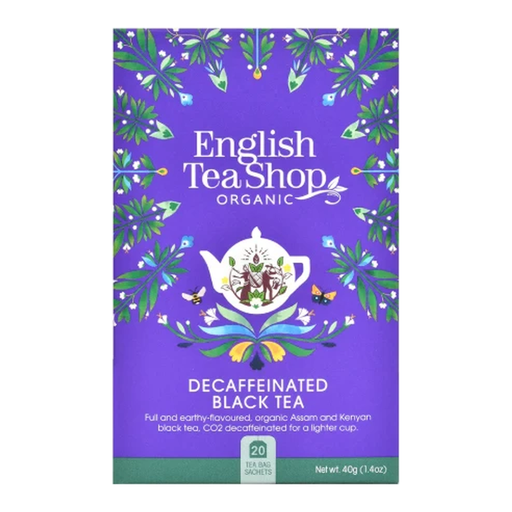
English Tea Shop Organic Decaffeinated Black Tea, 20g
This 20g organic decaf black tea is an option to assess if you prefer a smaller stated quantity. Check its serving format and brewing directions on the pack, and try it with milk before relying on it for a cream tea.
View on Joybuy
Common questions
Which type of decaf tea should I try with milk?
Start with decaffeinated English Breakfast or another black tea explicitly described as robust. Twinings describes its English Breakfast Decaffeinated as having body and suggests a splash of milk; Clipper describes Organic Everyday Decaf as robust. Neither maker’s description guarantees the strength of your prepared cup.
How can I make a more pronounced cup before adding milk?
Brew according to the tea’s instructions before adding milk to a mug. Twinings specifies two to three minutes for its English Breakfast Decaffeinated, or four minutes for more punch; Yorkshire Tea’s general guidance is four to five minutes and warns that aggressively mashing a bag can make tea bitter.
Does decaf tea contain no caffeine at all?
No: Twinings says minor traces tend to remain after tea is decaffeinated. If the amount matters to you, check the information on the exact pack rather than treating ‘decaf’ as a zero-caffeine claim.


