Regular second-home visitors
If you keep a tea cupboard for frequent stays and prefer a fuller black-tea-style mug, compare each blend’s flavour description and brewing guidance rather than assuming that all decaf teas taste alike.


For a fuller-tasting decaf black tea, start with a blend whose maker describes its body or richness, then follow the brewing instructions on the pack. At a second home, a smaller pack makes sense for occasional visits or a first taste test; a larger reserve is more practical for frequent stays if you can store it somewhere cool and dry. Decaf tea can still contain caffeine, so check an appropriately labelled naturally caffeine-free herbal infusion instead if avoiding caffeine entirely is essential.
If you keep a tea cupboard for frequent stays and prefer a fuller black-tea-style mug, compare each blend’s flavour description and brewing guidance rather than assuming that all decaf teas taste alike.
Decaf black tea offers a familiar tea choice when you want less caffeine. The British Heart Foundation notes that decaf tea is not necessarily completely caffeine-free.
When guests use the property only now and then, choose a pack size around likely visits and check that there is a cool, dry place to keep it. A smaller pack also lets you try the flavour before stocking up.
Choose the flavour profile and brewing routine first, then size the pack for how often the second home is used.
| Priority | What to check | When it matters to me |
|---|---|---|
| Fuller flavour | Look for a description of body or richness on the exact blend. Compare its stated infusion time and follow the instructions for the pack you buy. | I want a black-tea-style mug with some body, not just a decaf label. Twinings describes its English Breakfast Decaffeinated blend as having body and suggests four minutes for more punch; PG Tips describes its Decaf blend as full-bodied. |
| Caffeine | Check whether the pack says decaffeinated black tea or identifies a naturally caffeine-free infusion. Read any residual-caffeine statement for the particular product. | For an evening cup, I may want less caffeine without changing to a herbal infusion. If I need to avoid caffeine entirely, I would not rely on a decaf label: the British Heart Foundation says decaf tea can retain caffeine. |
| Pack size | Match the bag count to visit frequency and the number of tea drinkers. Check the best-before date before putting a large pack into storage. | If visits are occasional, I would try a smaller pack before leaving a large reserve in the cupboard. For frequent stays or several guests, a larger pack could mean less restocking. |
| Storage and labels | Check the pack’s storage directions and keep tea in a suitable cool, dry place. Read the physical ingredient and allergen label when buying for guests with relevant requirements. | I need tea that can be kept away from damp, sunlight and strong cupboard odours. For a guest with an allergy or dietary requirement, I would check the pack received rather than rely only on an online description; Tesco warns that food products can be reformulated. |
Decaffeination removes most caffeine, but the British Heart Foundation says decaf tea is not completely caffeine-free.
If avoiding caffeine entirely is essential, check the label of a naturally caffeine-free herbal infusion instead of treating decaf black tea as equivalent.
A flavour description cannot tell you whether everyone using the second home will like the finished cup. Brewing instructions differ between blends, too.
Try a smaller format first if the blend is unfamiliar. Stock up once its flavour and the household’s likely use justify a larger pack.
Product descriptions offer different clues: Twinings describes body and a longer-brew option, while PG Tips describes a full-bodied blend with shorter brewing guidance. Those descriptions are not an independent taste comparison.
Compare the exact blend’s wording and instructions, then taste-test it before depending on it as the property’s regular tea.
Clipper and the checked Yorkshire Tea product information call for cool, dry storage; the Yorkshire listing also advises keeping tea away from sunlight and strong odours. GOV.UK explains that a best-before date concerns quality.
Use a cool, dry cupboard away from strong-smelling supplies, follow the pack’s storage directions and check dates when rotating the reserve.
These brand and retailer descriptions can help narrow a choice, but flavour claims do not establish which tea will taste strongest to you.
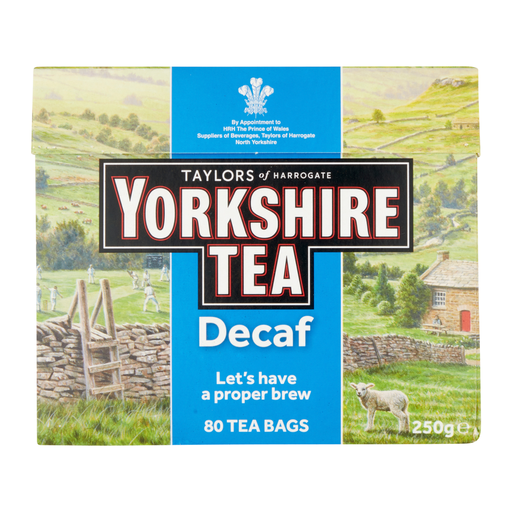
Yorkshire Tea describes its decaf blend as retaining character after decaffeination.
Twinings describes English Breakfast Decaffeinated as having body and suggests a four-minute brew for more punch.
Clipper describes its Organic Everyday Decaf black tea as full and rich.
Tesco’s PG Tips Decaf product information describes a full-bodied blend and gives a one-to-two-minute brewing instruction.
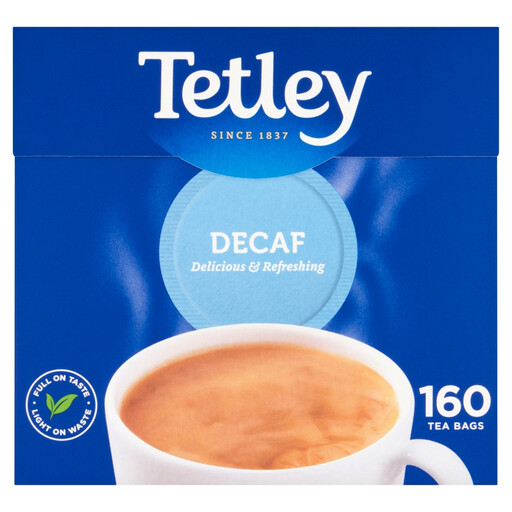
Tetley Decaffeinated is a black-tea option for a conventional cupboard reserve.
Tesco Decaff Original offers an own-label option for keeping decaf tea in the cupboard.
These decaf black-tea options offer different pack sizes for trying a blend or keeping a second-home reserve. A product name or flavour description alone cannot establish which will make your preferred strength of tea.
 No image available
An 80-bag pack may suit a second-home reserve if that quantity matches your visits. Clipper describes its Everyday Decaf blend as rich; check the brewing directions on this pack when deciding how you prefer it.
 No image available
This 250g pack is an option if you want to try Yorkshire Tea’s decaf blend before planning a larger reserve. The brand describes the blend as retaining character after decaffeination; check this pack for its bag count, brewing directions and storage advice.
 No image available
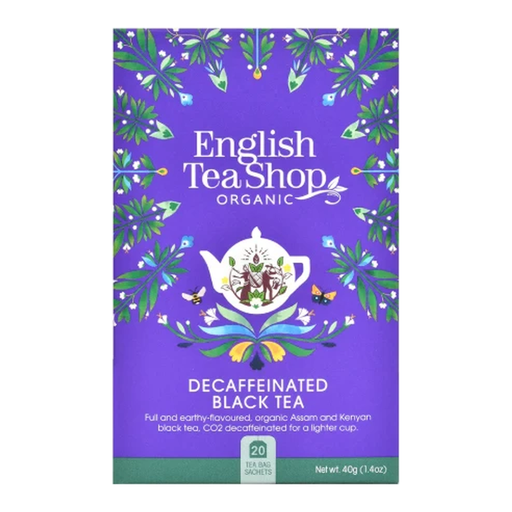
The stated 20g pack weight gives you a smaller quantity to consider when trying a decaf black tea. Check the pack format and brewing instructions before using it to plan a cupboard reserve.
 No image available
A 160-bag pack is worth considering for frequent stays or several tea drinkers, provided the blend suits them and there is suitable storage space. If a particularly strong cup is important, try the flavour before relying on this larger pack.
It can. The British Heart Foundation says decaf tea has had most caffeine removed but is not completely caffeine-free. If avoiding caffeine entirely is essential, check an appropriately labelled naturally caffeine-free herbal infusion instead.
Choose a blend whose description matches the flavour you want and follow its own brewing instructions. Twinings suggests four minutes for more punch from its English Breakfast Decaffeinated blend, while Tesco’s PG Tips Decaf information recommends one to two minutes. Check the directions on the pack you buy rather than applying one blend’s timing to another.
Start smaller if visits are occasional or you have not tried the blend. A larger pack may mean less restocking during frequent stays, but check the best-before date and whether you can store it as directed before leaving it at the property.
Use it to narrow your choice, then check the physical pack when an allergy or dietary requirement matters. Tesco warns that food products can be reformulated and advises shoppers to read the product label rather than rely solely on website information.
A best-before date concerns quality, according to GOV.UK; it is different from a use-by date. Follow the tea’s storage directions and use the date to help rotate a second-home reserve while its flavour matters to you.