Hosts serving tea alongside coffee
If guests take tea with milk, look for a decaf black-tea blend described as robust or full-bodied. Check the brewing directions, then try a cup prepared as you intend to serve it.


For a fuller-tasting decaf tea to serve alongside coffee, start with a black-tea blend described as robust or full-bodied, then brew within its maker’s recommended time and try it with the milk you plan to offer. Twinings describes its English Breakfast Decaffeinated as robust, while Clipper describes its Organic Decaf Black Tea as a robust blend; neither description guarantees that every guest will prefer it. Decaf black tea can still contain caffeine, so check the particular pack when that matters to a guest.
If guests take tea with milk, look for a decaf black-tea blend described as robust or full-bodied. Check the brewing directions, then try a cup prepared as you intend to serve it.
A decaf black tea lets you keep a familiar style of drink, but decaf does not mean caffeine-free. Compare blend descriptions for flavour and check the particular pack if residual caffeine matters.
Clipper describes its Organic Decaf Black Tea as a robust blend of Fairtrade and organic teas. Those sourcing preferences can help narrow your choice, but try the tea with your preferred brewing time and milk before serving it to a group.
Choose the flavour style first, then check how the tea is brewed and whether the pack suits the number of guests.
| Priority | What to check | Your needs |
|---|---|---|
| Black-tea character | Read the exact blend description for words such as robust or full-bodied. If serving with milk, try the tea with the amount you intend to offer. | I want a decaf cup that still tastes distinctly of black tea beside the coffee. |
| Brewing time | Follow the product’s stated window rather than assuming every decaf needs the same time. Twinings suggests four minutes for a punchier English Breakfast Decaffeinated; Tesco directs buyers to brew Decaff Original for 4–5 minutes. | Guests may prefer different strengths, so I want a brewing instruction I can use consistently. |
| Residual caffeine | Check the current pack’s caffeine information for the exact tea. Do not treat the word decaf as a guarantee of zero caffeine. | If a guest needs to avoid caffeine entirely, I need to confirm whether this drink meets that requirement before serving it. |
| Pack and sourcing | Check the bag count and net weight when planning several servings. If organic or Fairtrade sourcing matters, check the claim on the particular product rather than assuming it applies across a brand. | For a group, I want enough bags on hand; sourcing and packaging may also influence which pack I choose. |
Decaffeinated black tea can contain residual caffeine, which matters if a guest needs to avoid it entirely.
Check the current label for the tea you will serve. If a guest requires a caffeine-free drink, confirm that an alternative meets their requirement rather than assuming decaf does.
Blend descriptions range from robust to smooth and rounded, and a familiar name does not tell you how a decaf tea will taste with your chosen brewing time and milk.
Choose a flavour description that fits your guests, follow the pack directions and try a cup in the serving style you have planned.
These descriptions concern the named decaf products, not every tea made by each brand.
Yorkshire Tea describes its decaf blend as designed to retain character after decaffeination.
Tetley offers decaffeinated tea and publishes information about caffeine remaining in its decaf tea.
PG Tips Decaf Black Tea is another everyday black-tea option listed in Tesco’s UK decaf range.
Twinings describes its English Breakfast Decaffeinated as a robust blend of Assam, Kenyan and Ceylon teas.
Clipper describes its Organic Decaf Black Tea 20 Pyramid Bags as a robust blend of Fairtrade and organic teas.
Tesco describes Decaff Original as smooth and rounded and recommends a 4–5 minute brew for full flavour.
These decaf black-tea packs offer different blend descriptions and bag counts for serving tea alongside coffee. Check each pack’s directions before making several cups.
 No image available
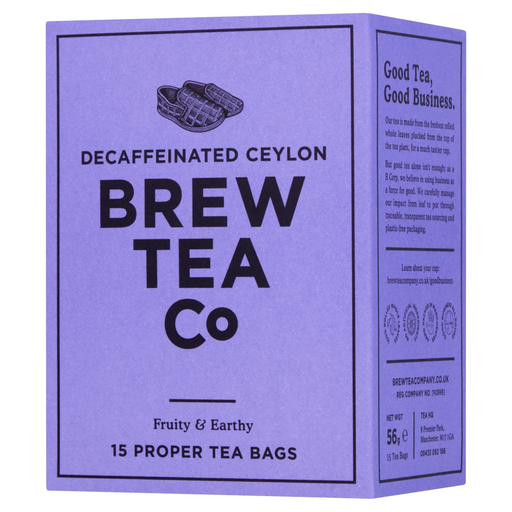
Described as a full-bodied, rich Ceylon black tea, this is worth trying if you want a pronounced tea flavour beside coffee. The product description specifies CO2 decaffeination and 3¾ g of rolled whole-leaf tea per bag. Check the pack for brewing directions and caffeine information if either matters to your guests.
 No image available
This decaffeinated black-tea listing describes a blend intended to retain bold flavour. The pack has a stated net weight of 250g; check its bag count and brewing directions when planning cups for a group. Check the current pack if residual caffeine matters.
 No image available
The 80-bag pack may be convenient when serving several guests. Its listing describes a rich flavour and recommends brewing for 2–3 minutes, with milk as a serving option. Try that stated window rather than extending it on the assumption that decaf needs longer; decaf does not mean caffeine-free.
 No image available
This 80-bag decaf black-tea pack is listed as organic and Fairtrade, with plastic-free, unbleached bags. The product description calls its flavour balanced rather than explicitly robust, so try it first if a pronounced black-tea taste is essential. Check this pack’s brewing directions before serving.
No. Decaffeinated black tea can retain caffeine. If a guest needs to avoid caffeine entirely, check the exact pack and confirm that the drink you offer meets their requirement.
Start with a blend described as robust or full-bodied and brew it within the maker’s stated window. Twinings suggests four minutes for a punchier English Breakfast Decaffeinated, Clipper gives 3–5 minutes for its Organic Decaf Black Tea 20 Pyramid Bags, and Tesco gives 4–5 minutes for Decaff Original. Try your chosen tea with the milk you plan to serve; steeping beyond its directions is not a reliable way to please every guest.
Try a decaf black-tea blend whose description fits the fuller flavour you want. Twinings describes English Breakfast Decaffeinated as robust, while Tesco describes Decaff Original as full-bodied. Prepare a trial cup with your intended amount of milk, because those descriptions cannot establish which taste your guests will prefer.