For guests who enjoy a bold cup, Sainsbury’s Fairtrade Intense Roast is labelled extra strong and suitable for a filter machine; Lavazza Qualità Oro Dark Roast is another filter-suitable choice with a dark-roast profile. If a smoother flavour matters more, Taylors describes its filter-suitable Rich Italian as rich without the bitterness often associated with darker roasts. A strength label does not tell you the caffeine amount in a brewed cup, so take account of guests’ preferences and any individual advice they follow about caffeine.
Who is this choice for?
The right coffee depends on how many people you are serving, how pronounced they like the flavour and how you will brew it.
Hosts serving a small group of older guests
Choose a flavour the group will enjoy rather than assuming everyone wants an extra-strong roast. If a guest follows advice about caffeine, consider the coffee alongside their other sources of caffeine that day.
Drinkers who prefer richness without pronounced bitterness
A dark roast is not the only way to serve a substantial-tasting cup. Taylors describes Rich Italian as smooth, while Lavazza lists cocoa and dried-fruit notes for its Qualità Oro Dark Roast; both are stated to suit filter preparation.
Hosts brewing for a larger gathering
Check that the coffee is intended for the filter machine you will use and that the pack size suits how often you serve it. Douwe Egberts offers a professional filter-machine pack of 6 × 1 kg, a different proposition from a small pack for occasional afternoon tea.
What should you check?
Settle on the flavour your guests would welcome, confirm the brewing method, then choose a pack you can use and store as directed.
| Priority |
What to check |
Your needs |
| Flavour and body |
Read the roast and tasting descriptions. Sainsbury’s calls its Fairtrade Intense Roast extra strong, full-bodied and spicy; Taylors describes Rich Italian as rich and smooth. Neither description measures caffeine in the finished cup. |
I want a bold pot if guests enjoy an assertive flavour, but a smoother coffee may suit a group with mixed tastes. |
| Brewing method |
Look for an explicit filter-machine or cafetière-and-filter instruction. Lavazza lists filter preparation for Qualità Oro Dark Roast; Tesco lists filter use for Taylors Rich Italian. Follow the coffee and brewer instructions when making a pot. |
My coffee needs to suit the brewer I will actually use, rather than merely being labelled ground coffee. |
| Caffeine considerations |
Do not use roast or intensity as a caffeine-per-cup figure. Consider the brewing dose and other caffeine sources. The European Food Safety Authority says its general assessment does not cover people with medical conditions or caffeine taken alongside medicines. |
If a guest has been advised to limit caffeine or check a medicine interaction, I need to respect that individual advice rather than rely on a strength label. |
| Pack size and storage |
Compare the amount you are likely to brew with the pack format: Sainsbury’s Intense Roast is listed at 227 g, Taylors Rich Italian at 200 g, and the Douwe Egberts professional filter-coffee pack at 6 × 1 kg. Check the storage directions on the pack you buy. |
For occasional afternoon tea, I would rather choose an amount I can use as directed; a larger group may have a practical use for a bulk pack. |
What can go wrong?
-
Treating “strong” as a caffeine measurement
Douwe Egberts describes intensity in terms of flavour strength and mouthfeel. That does not establish the caffeine amount in a prepared serving.
Choose the flavour your guests want, and do not calculate caffeine intake from the roast or intensity label alone.
-
Assuming every ground coffee suits a filter machine
The preparation directions determine whether a particular coffee is intended for the brewer on your counter; “ground” by itself does not specify a filter method.
Check for filter-machine or filter-preparation wording and follow the stated brewing instructions.
-
Buying a professional pack for occasional pots
The Douwe Egberts professional filter-coffee offering is 6 × 1 kg. That format is a different commitment from a smaller pack when coffee is brewed only now and then.
Match the pack to how often you serve coffee and follow its directions after opening.
-
Assuming general caffeine guidance applies to every older guest
The European Food Safety Authority’s general assessment does not address people with medical conditions or caffeine interactions with medicines. Age alone cannot settle what is appropriate for an individual.
If a guest follows advice to restrict caffeine or needs advice about a medicine, ask what they would prefer and leave individual guidance to their clinician or pharmacist.
Relevant brand references
These examples show different filter-coffee formats and flavour descriptions; a brand’s wider range should not be assumed to share the same characteristics.
Lavazza
Lavazza lists Qualità Oro Dark Roast as ground coffee for filter, French press and moka preparation.
- Lavazza describes this specific dark-roast variant as 100% Arabica, with cocoa and dried-fruit notes.
- Check the complete variant name: a Qualità Oro listing without “Dark Roast” does not establish that it is the same coffee.
Taylors of Harrogate
Rich Italian is a ground coffee listed by Tesco as suitable for cafetière or filter preparation.
- Tesco lists roast level 4, 100% Arabica coffee and dark-chocolate and almond notes; Taylors describes the blend as rich and smooth.
- It is a medium-roast route for richness, not a product labelled extra strong.
Sainsbury’s
Fairtrade Intense Roast is a 227 g ground coffee that Sainsbury’s labels extra strong and gives filter-machine instructions for.
- Sainsbury’s describes this dark roast as full-bodied and spicy.
- The extra-strong description is about the coffee’s profile, not a caffeine figure for a brewed cup.
Douwe Egberts
Its Real Filter Coffee professional pack is designed for filter-style machines.
- JDE Professional UK identifies a filter-specific grind and a 6 × 1 kg pack for larger-volume use.
- The professional pack may be more coffee than an occasional small gathering needs.
M&S
M&S lists Italian-style ground coffee cup filters for making individual cups.
- M&S describes this specific coffee as 100% Arabica, with chocolate and nougat notes.
- A cup-filter format serves a different preparation need from ground coffee for a shared filter-machine pot.
Joybuy filter-coffee options
These ground Lavazza coffees are options to consider for a filter-brewed afternoon pot. They are distinct products from the Qualità Oro Dark Roast discussed above; choose between them using their own preparation descriptions and pack sizes.
 No image available
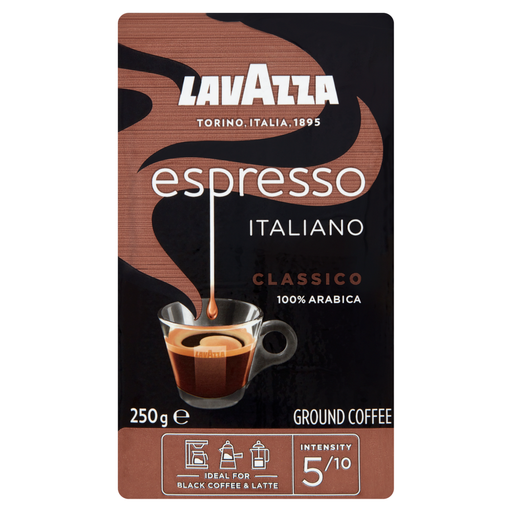
Lavazza Espresso Italiano Classico Ground Coffee 250g
For a pronounced-tasting afternoon pot, the product information describes a strong black-coffee profile and filter-machine preparation. Check the pack label and intended-use instructions before buying, as the product description also contains dietary-supplement warnings.
View on Joybuy
 No image available
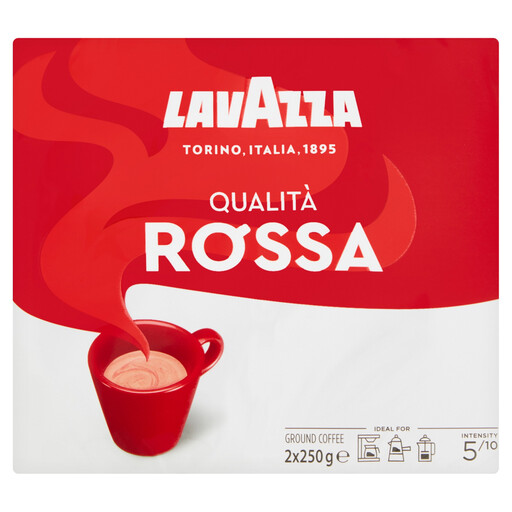
Lavazza Qualità Rossa Ground Coffee 500g
For a filter-brewed pot that can vary from milder to bolder with preparation, the product information describes filter and French-press use. The 500 g pack is worth weighing against how often you brew coffee for guests.
View on Joybuy
Questions about choosing and serving
Does “strong” filter coffee necessarily contain more caffeine?
No: a strength or intensity description is not a measurement of caffeine in the cup. Douwe Egberts describes intensity as flavour strength and mouthfeel, so consider the coffee and brewing dose separately from the taste description.
What could suit guests who dislike pronounced dark-roast bitterness?
Taylors Rich Italian is a filter-suitable option to consider for a rich but smoother profile. Taylors says it does not have the bitterness often associated with darker roasts, while Tesco lists it as roast level 4.
Can Sainsbury’s Fairtrade Intense Roast go in a filter machine?
Yes. Sainsbury’s gives filter-machine preparation directions for its Fairtrade Intense Roast; follow the instructions for your machine when making the pot.
How should opened ground coffee be stored?
Follow the directions for the particular pack rather than applying one rule to every coffee. For example, M&S advises keeping its Italian-style cup filters in an airtight container for two weeks after opening.
What if a guest needs to limit caffeine?
Ask what the guest would prefer and respect any individual advice they follow. The European Food Safety Authority says its general caffeine assessment does not cover people with medical conditions or caffeine interactions with medicines; a clinician or pharmacist can advise on an individual concern.


