Choose a hibiscus-led berry infusion if “strong” means a tart fruit flavour beside a full English breakfast; choose ginger and citrus if you prefer warming spice. Neither gives you the character of conventional black breakfast tea. If that is what you mean by a strong brew, choose black tea instead.
Who is fruit tea for at breakfast?
The useful distinction is whether you want pronounced fruit or spice flavour, or the familiar character of black breakfast tea.
Shoppers avoiding caffeine
A fruit or herbal infusion can provide a hot breakfast drink without tea leaves. Twinings explains that its fruit and herbal infusions are caffeine-free because they contain no tea leaves; check the individual pack if a blend is described simply as “tea”.
Fruit-infusion drinkers seeking more flavour
If a lightly flavoured cup would get lost alongside a cooked breakfast, look for a flavour direction you enjoy: the makers describe hibiscus and berry blends as tart, while ginger-and-citrus blends take a different, warming route. Follow the pack’s brewing directions before changing the steeping time.
Black-tea drinkers considering a change
A pronounced fruit infusion offers variety, but it does not reproduce the taste of English Breakfast tea. If the tea-leaf character of your usual breakfast brew matters more than fruit flavour, stay with black tea.
What should you check before choosing?
Decide what “strong” should taste like first, then check the ingredients and brewing directions of the particular blend.
Tart berry and hibiscus
Choose when: You want a sharp fruit flavour beside a rich breakfast; Teapigs calls Super Fruit punchy and slightly tart, while Twinings calls Cranberry & Raspberry tart and tangy.
Bear in mind: Tart fruit flavour is different from black-tea flavour, and some berry blends contain liquorice root.
Citrus and ginger
Choose when: You would rather have ginger warmth and citrus than berry tartness; Clipper describes its Lemon & Ginger infusion as zesty and warming.
Bear in mind: This is still an herbal infusion, not a black breakfast tea; Clipper’s blend also lists liquorice root.
Black breakfast tea
Choose when: By “strong”, you mean the familiar taste of black tea rather than an assertive fruit flavour.
Bear in mind: It is a different choice from a caffeine-free fruit infusion; check the pack if you need a decaffeinated black tea.
| Priority |
What to check |
Your needs and respondents’ preferences |
| Flavour direction |
Read the ingredients and the maker’s flavour description. Teapigs describes its hibiscus-based Super Fruit as slightly tart; Clipper describes Lemon & Ginger as zesty and warming. These are brand descriptions, not independent taste tests. |
I want a fruit or spice flavour I will notice alongside a cooked breakfast, and I would choose berry tartness differently from ginger warmth. |
| Breakfast-tea character |
Check whether the product is a fruit or herbal infusion without tea leaves, or a black tea. Twinings explains that fruit and herbal infusions are caffeine-free because they do not use tea leaves. |
If I want my usual black tea, fruit flavour is not a substitute. In its 2025 Tea Census of more than 1,000 Britons, the UK Tea & Infusions Association reported that 71% named traditional black tea, with or without milk, as their main infusion of choice. |
| Brewing control |
Check the stated water volume and steeping time. For Cranberry & Raspberry, Twinings specifies one bag in 200 ml of freshly boiled water for three minutes, or longer for a stronger cup. Follow each other blend’s own directions. |
I want to adjust the cup without assuming that every infusion responds to a longer steep in the same way. |
| Ingredients |
Read the full ingredient list, particularly for liquorice root. For pregnancy, NHS guidance says to avoid teas containing liquorice root and to drink no more than four cups of herbal tea a day. |
Ingredients matter to me as well as the caffeine-free label; I need to check the particular blend before drinking it. |
What can lead to the wrong choice?
-
Expecting fruit tea to taste like English Breakfast tea
Even a tart or strongly spiced infusion lacks the tea-leaf character of a conventional black breakfast tea.
Choose by the flavour you actually want: fruit or spice for an infusion, or black tea for a familiar breakfast brew.
-
Choosing by the words “fruit tea” alone
The makers describe hibiscus-and-berry blends as tart, lemon-and-ginger blends as zesty and warming, and Pukka’s Wild Apple & Cinnamon as apple-and-spice-led. Those descriptions point to different cups, not one level of strength.
Use the ingredients and flavour description to pick between berry sharpness and warming spice, rather than treating every fruit blend as interchangeable.
-
Assuming caffeine-free means the ingredients need no checking
Some fruit and herbal infusions list liquorice root. NHS pregnancy guidance says to avoid teas containing it and to drink no more than four cups of herbal tea a day during pregnancy.
Read the ingredients on the particular pack, especially if you are pregnant; the caffeine-free label does not answer that separate question.
Brands and retail references
These examples show how product descriptions distinguish tart berry, citrus-and-ginger and apple-and-spice infusions; they do not establish which products a retailer currently stocks.
Teapigs
Super Fruit is a hibiscus-based berry infusion that Teapigs describes as naturally caffeine-free.
- Teapigs describes Super Fruit as punchy and slightly tart, a useful starting point if you want a sharp berry profile.
- That flavour description is the brand’s own; the infusion is not conventional black breakfast tea.
Twinings
Cranberry & Raspberry is a fruit infusion that Twinings describes as tart and tangy.
- Twinings gives a method of one bag per 200 ml for three minutes and explicitly allows a longer infusion for a stronger cup.
- Cranberry & Raspberry lists liquorice root, which matters under NHS pregnancy guidance.
Clipper
Clipper’s Lemon & Ginger and Blackcurrant & Blueberry show two different fruit-and-herbal flavour directions.
- Clipper describes Lemon & Ginger as zesty and warming; Blackcurrant & Blueberry contains hibiscus and rosehip and is described as naturally sweet.
- Both of these specific blends list liquorice root, so check the pack if that ingredient matters to you.
Pukka
Wild Apple & Cinnamon takes an apple-and-spice route rather than a tart berry one.
- Pukka names apple, cinnamon, orange, cardamom and ginger and describes the infusion as naturally caffeine-free.
- Its stated flavour direction is not evidence of the sharp hibiscus taste some shoppers mean by “strong fruit tea”.
Tesco
Tesco is a retail reference for comparing fruit-and-herbal tea bags, rather than a single flavour style.
- Its fruit-and-herbal tea category has shown an own-label Red Berries product alongside branded options.
- Check an individual product listing for its ingredients, brewing directions and current availability.
Fruit and herbal infusions on Joybuy
These options cover a tart hibiscus-and-ginger infusion and two citrus-and-ginger blends for shoppers who want an alternative to black tea with breakfast.
 No image available
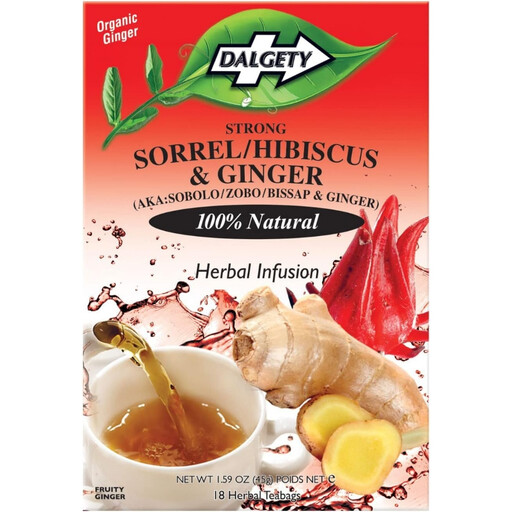
Dalgety Sorrel, Hibiscus & Ginger Tea 45G
Consider this loose infusion if you want the listed tart hibiscus-and-ginger flavour beside breakfast rather than black-tea character. The listing describes it as caffeine-free and gives a hot-infusion range of 5–7 minutes using 1–2 teaspoons, followed by straining; check the water quantity in the preparation directions.
View on Joybuy
 No image available
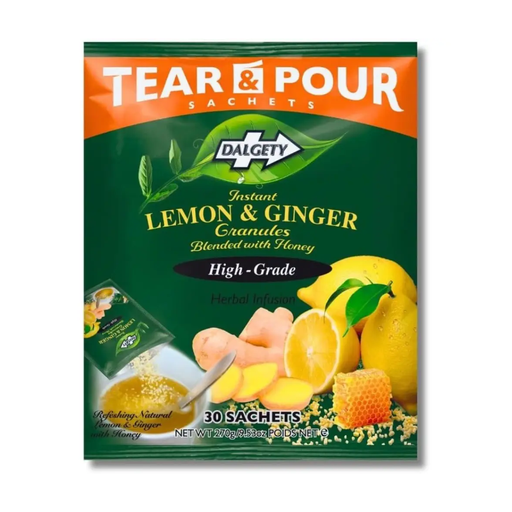
Dalgety Lemon & Ginger Tea Pouch 270g
This is a citrus-and-ginger option if you prefer warming spice to tart berries. The listing names ginger, lemon peel, orange peel and lemongrass and describes the blend as caffeine-free; check the pack for brewing directions. Its nutrition figure for sugars conflicts with the listed ingredients, so check the pack’s nutrition and ingredient information before choosing it.
View on Joybuy
 No image available
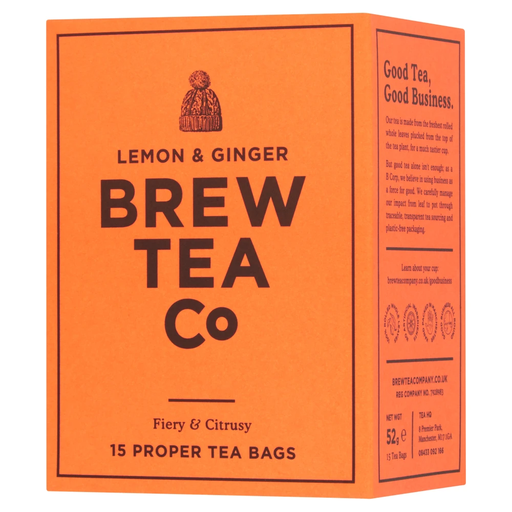
Brew Tea Co Lemon & Ginger, 15 tea bags, 52g
Choose this flavour direction if ginger and citrus appeal more than sharp berry fruit. The listing names ginger at 55%, alongside apple, lemon verbena, hibiscus, rosehip and lemon peel. Check the pack for brewing directions and caffeine status if either affects your choice.
View on Joybuy
Frequently asked questions
Can fruit tea taste strong beside a full English breakfast?
Yes, if you mean pronounced fruit or spice flavour rather than the taste of black tea. Teapigs describes its hibiscus-based Super Fruit as punchy and slightly tart, while Clipper describes Lemon & Ginger as zesty and warming. Choose black breakfast tea instead if its tea-leaf character is what you want.
How can I make a fruit infusion taste stronger?
Start with the directions for that blend. Twinings specifies one Cranberry & Raspberry bag in 200 ml of freshly boiled water for three minutes and says you can infuse it longer for a stronger cup. Do not assume the same steeping time or result applies to every product.
Is fruit tea caffeine-free?
A fruit or herbal infusion without tea leaves is caffeine-free; Twinings explains this distinction for fruit and herbal infusions. Check the ingredients of an individual product if it might also contain conventional tea leaves.
Does liquorice root matter when choosing fruit tea?
Yes, particularly during pregnancy. NHS guidance says to avoid teas containing liquorice root and to drink no more than four cups of herbal tea a day during pregnancy. Read the ingredients of the particular blend rather than relying on its caffeine-free label.


