For a strong pure-green-tea flavour, consider loose-leaf gunpowder tea: Twinings describes its Gunpowder Green as strong, slightly smoky and lingering, though it requires loose-leaf equipment. Choose a mint blend when you want mint to provide a distinct flavour, or a matcha-containing bag when that ingredient appeals to you; neither name alone promises an extra-bold cup. Pukka says its Supreme Matcha Green contains 2% matcha.
Who is each option for?
First-time shoppers seeking more flavour
If standard green tea tastes too delicate to you, decide what kind of flavour you want: a stronger pure-tea profile, mint, or a blend containing matcha. Those are different choices, even when product names all suggest a distinctive cup.
Pure-tea drinkers with loose-leaf equipment
Twinings describes its Gunpowder Green as strong, honeyed and slightly smoky. It is worth considering if that profile appeals to you and you can prepare loose tea with a strainer or teapot.
Shoppers who prefer tea bags
Bags avoid loose-leaf preparation, but the flavour still depends on the product. Compare the ingredients and the maker’s description: Teapigs describes its mint blend as delicate green tea with peppermint, while Clipper describes its pure green tea as light and delicate.
What should you check before buying?
Choose the flavour direction first, then check whether the ingredients and preparation format fit your first shop.
Pure gunpowder green tea
Choose it when: You want a pure-tea flavour like the strong, honeyed and slightly smoky profile Twinings describes for Gunpowder Green.
Bear in mind: This example is loose leaf, so you need a way to measure and strain it.
Mint green-tea blend
Choose it when: You want mint as part of the flavour rather than a stronger plain green-tea base; Teapigs combines delicate green tea with peppermint.
Bear in mind: The mint does not establish that the underlying green tea is extra-bold.
Matcha green-tea blend
Choose it when: You want a green-tea bag containing matcha alongside other green tea.
Bear in mind: A blend is not pure matcha; Pukka says its Supreme Matcha Green contains 2% matcha.
| Priority |
What to check |
Your needs |
| Flavour |
Read the maker’s flavour description. Separate a strong pure-tea description from flavour supplied by mint or another blended ingredient. |
I want more noticeable flavour, but I need to decide whether that means smoky pure tea or a flavoured blend. |
| Ingredients |
Check whether the product is pure green tea or a blend. For a matcha-labelled blend, look for a stated matcha proportion; Pukka says Supreme Matcha Green contains 2%. |
If I choose a named ingredient such as matcha, I want to know what is actually in the bag. |
| Preparation |
Check whether you need tea bags or loose leaves, and follow the product’s water-temperature and infusion instructions. Teapigs specifies 80°C water and three minutes for Mao Feng green tea. |
Tea bags fit a shop where I do not want to use a strainer or teapot; I can choose loose leaf if I have that equipment. |
| Caffeine |
Check the exact product’s caffeine information if your intake matters. A green-tea blend should not be assumed to be decaffeinated unless it is labelled as such. |
I need to account for caffeine from my drinks rather than judging a tea by its flavour alone. |
What can lead to the wrong choice?
-
Assuming a matcha-labelled bag is pure matcha
Matcha can be one ingredient in a green-tea blend. Pukka says its Supreme Matcha Green contains 2% matcha, so the name does not establish how bold the cup will taste.
Read the ingredient list and any stated proportion before choosing a blend for its matcha content.
-
Assuming every pure green tea tastes strong
Clipper describes its pure green tea as light and delicate, whereas Twinings describes Gunpowder Green as strong and lingering. Both descriptions concern green tea, but they point to different flavour expectations.
If a stronger pure-tea taste is the aim, look for a product description that actually addresses flavour rather than relying on the words ‘pure green tea’.
-
Overlooking the preparation format
A loose-leaf tea may suit your flavour preference but be inconvenient if you only have what you need to make tea bags.
Choose a format you can prepare, and check its brewing directions before making your first cup.
Loose leaves require a way to measure and strain the tea.
Which brands offer relevant options?
Twinings
A reference point for shoppers considering a stronger-tasting pure green tea.
- Twinings describes Gunpowder Green loose leaf as strong, honeyed and slightly smoky, with a lingering flavour.
- Gunpowder Green requires loose-leaf preparation rather than simply using a tea bag.
Clipper
An option to compare when you want pure green tea in bags.
- Its Organic Fairtrade Pure Green Tea is offered as a pure-green-tea bag.
- Clipper describes this tea as light and delicate, so its own description does not point to an extra-bold flavour.
Pukka
A reference for shoppers interested in green-tea blends containing matcha.
- Pukka says Supreme Matcha Green combines green tea with matcha.
- Pukka states that the blend contains 2% matcha; that does not make it pure matcha or establish a stronger taste than another tea.
Teapigs
Options to compare if you are considering pure green tea or a mint blend.
- Teapigs describes its green tea with mint as delicate green tea blended with peppermint.
- That description makes mint the relevant flavour distinction, not an extra-bold pure-tea claim.
Tesco
An own-label green-tea reference for a first shop.
- Tesco has listed a Tesco Green Tea 20-pack.
- The listing alone does not establish a strong or extra-bold flavour; check the product description against the taste you want.
Green tea bags on Joybuy
This tea-bag option is for a first shop where you want green tea without loose-leaf equipment. Compare its pack information with the flavour and preparation you have in mind.
 No image available
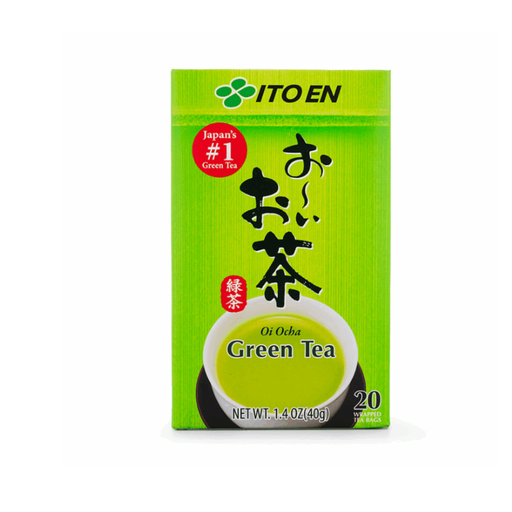
ITOEN OH-I OCHA Green Tea Bags, 40g, 20 bags
The 20 tea bags offer a green-tea option without loose-leaf equipment. Check the pack’s brewing directions and caffeine information if either affects your choice.
View on Joybuy
Questions about choosing green tea
What does ‘strong green tea’ mean on a first shop?
Start with the flavour you want rather than treating ‘strong’ as a grade shared by all products. Twinings describes Gunpowder Green as strong, honeyed and slightly smoky; Clipper describes its pure green tea as light and delicate, while Teapigs describes its mint blend as delicate green tea with peppermint.
Should I use boiling water to make green tea stronger?
Follow the directions for the tea you buy rather than assuming boiling water will produce the flavour you want. Preparation varies by product: Teapigs specifies 80°C water and three minutes for its Mao Feng green tea, so check the pack for your chosen tea’s temperature and infusion time.
Does a matcha green-tea bag promise an extra-bold taste?
No. A matcha-labelled bag can be a blend rather than pure matcha. Pukka says its Supreme Matcha Green contains 2% matcha; check the ingredients and flavour description instead of using the name alone to judge strength.
Does green tea count towards caffeine intake during pregnancy?
Green tea can contribute to total caffeine intake. The Royal College of Midwives cites UK NHS and RCOG guidance of up to 200mg of caffeine a day during pregnancy from all sources; that figure is a daily total, not a green-tea allowance per cup. Check the caffeine information for the product you choose.


