Who is each style for?
The useful distinction is whether you want a stronger taste from plain green tea, a more pronounced flavour from added ingredients, or a lighter cup.
Drinkers seeking a bolder plain green tea
If ordinary green tea tastes too light for your morning break, check the description of the exact variety. Twinings describes its Gunpowder Green as strong, honeyed and slightly smoky; that smoky note is part of the choice, not a feature of every green tea.
Drinkers who prefer citrus and botanical flavours
Yogi Tea describes Green Tea Matcha Lemon as a citrusy, caffeinated blend with lemon and lemongrass. It suits a preference for those added flavours rather than a plain green-tea taste.
Drinkers who prefer a delicate cup
Teapigs describes Mao Feng as delicate, while Clipper calls its Organic & Fairtrade Green Tea light and delicate. Both are worth considering when an assertive or smoky flavour is not what you want.
What should you check before choosing?
Start with the flavour you mean by “strong”, then check the format, preparation instructions and caffeine information for the exact tea.
| Priority |
What to check |
Your needs |
| Plain-tea flavour |
Read the exact product’s flavour description. Twinings calls Gunpowder Green strong, honeyed and slightly smoky; Teapigs and Clipper describe the named alternatives as delicate. |
I want green tea itself to taste more assertive, without added citrus or spice. A smoky note may appeal to me, but “pure green tea” alone does not tell me how bold the cup will taste. |
| Added flavours |
Check the blend’s named ingredients and flavour description. Yogi Tea describes Green Tea Matcha Lemon as citrusy; Pukka describes Supreme Matcha Green as smooth. |
Citrus or matcha character matters more to me than a plain, smoky cup. I would choose the particular blend for its stated flavour, not assume that every matcha tea tastes stronger. |
| Preparation |
Check whether the tea is loose leaf or bagged, and follow its own brewing directions. Teapigs specifies 80°C water and three minutes for Mao Feng; Yogi Tea permits a longer infusion for stronger flavour in its Green Tea Matcha Lemon. |
For a short break, I may prefer a bag to preparing loose leaves. If I brew longer, I want to know which product’s instructions allow it and what sort of flavour I am intensifying. |
| Caffeine |
Check the exact product’s caffeine information, including whether it is decaffeinated. The NHS notes that caffeine in tea can vary with tea type and brewing time; Yogi Tea states that Green Tea Matcha Lemon contains caffeine. |
Caffeine matters to my morning routine, so I need to consider green tea alongside other drinks and foods that contain it rather than assume every green tea has the same amount. |
Brand and product-line references
These descriptions concern the named teas and product lines, not every green tea made by each brand.
Twinings
Its green-tea range includes loose-leaf, flavoured and decaffeinated options. Gunpowder Green is the relevant variety when you want a strong plain-tea flavour.
- Twinings describes Gunpowder Green as strong, honeyed and slightly smoky.
- That description does not apply to every tea in the Twinings green-tea range.
Yogi Tea
Green Tea Matcha Lemon is a flavoured green-tea and matcha blend for a citrus-led cup.
- Yogi Tea describes it as citrusy, states that it contains caffeine and allows a longer infusion for stronger flavour.
- Its added flavours make it a different choice from plain, strong green tea.
Pukka
Supreme Matcha Green combines green teas and matcha in a blend that Pukka describes as smooth.
- The product description identifies both green tea and matcha.
- The smooth-flavour description is not an extra-strong flavour claim.
Teapigs
Mao Feng Green Tea is a pure-green-tea option that Teapigs describes as delicate.
- Teapigs gives specific directions: one tea temple per person, 80°C water and a three-minute brew.
- Its stated delicate taste does not match a request for an extra-bold cup.
Clipper
Organic & Fairtrade Green Tea is a plain tea-bag option.
- Clipper describes the named tea as light and delicate.
- Choose it for that stated profile rather than for an extra-strong flavour.
Tesco
Tesco’s Green Tea 20 Pack is a plain tea-bag option described by Tesco as bright and refreshing.
- Tesco instructs shoppers to use one bag per person per cup.
- Its stated flavour description does not establish an extra-bold cup.
Joybuy green-tea options
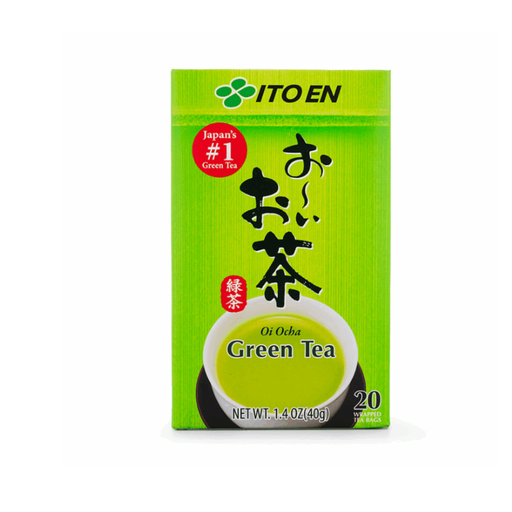
This green-tea bag option is described as bold in its product copy, making it relevant to a morning break when you prefer bags to loose leaves.
 No image available
ITOEN OH-I OCHA Green Tea Bags, 40g (20 bags)
The product description calls this tea rich and bold, a useful flavour cue if you want a stronger-tasting bagged green tea for a morning break. The pack contains 20 tea bags and is labelled 40g; check the preparation directions and caffeine information if either affects your choice.
View on Joybuy
Questions about strong green tea
Which plain green tea has a stated strong flavour?
Twinings describes its loose-leaf Gunpowder Green as strong, honeyed and slightly smoky. That makes it a product to consider if you want a bolder plain green tea and are comfortable preparing loose leaves; it is Twinings’ flavour description, not a comparison from an independent taste test.
Does matcha automatically make a green-tea blend taste stronger?
No: choose by the exact blend’s flavour description rather than the word “matcha”. Pukka describes Supreme Matcha Green as smooth, while Yogi Tea describes Green Tea Matcha Lemon as citrusy; those descriptions do not establish that either tastes stronger than every plain green tea.
How should I prepare Teapigs Mao Feng?
Teapigs specifies one tea temple per person, water at 80°C and a three-minute brew for Mao Feng. The brand describes its taste as delicate, so its stated profile is a lighter alternative to a tea chosen for bold flavour.
Can Yogi Tea Green Tea Matcha Lemon be brewed longer?
Yes. Yogi Tea instructs shoppers to infuse a bag in 250ml of freshly boiled water for five minutes or longer for stronger flavour. The resulting cup remains a citrusy, flavoured green-tea blend rather than a plain tea.
What should I check if caffeine matters to my morning routine?
Check whether the exact tea is caffeinated or decaffeinated; Yogi Tea states that Green Tea Matcha Lemon contains caffeine. The NHS notes that caffeine in tea can vary by type and brewing time, and its pregnancy guidance sets a 200mg daily limit across all caffeine sources.


