Who is this choice for?
The useful starting point is what you mean by ‘strong’: a more noticeable flavour, a different blend or a choice that accounts for caffeine.
Snack-break tea drinkers who find plain green tea too mild
If taste is the issue, compare flavoured and matcha-containing teas with plain green tea. Their different ingredients give you a more useful basis for choosing than an assumed caffeine strength.
Revisers keeping track of caffeine
If coffee, energy drinks or caffeine supplements are also part of your day, include a caffeinated tea when considering your total intake. This matters particularly for blends containing another caffeine source, such as guarana.
Late-evening revisers
If you want a green-tea-style drink without deliberately choosing another caffeinated tea, compare decaffeinated products and check the individual pack’s caffeine statement.
What should you check?
Decide whether ‘strong’ describes the flavour you want or the caffeine quantity you need to assess. Then compare ingredients, the product’s caffeine information and a format that suits a short snack break.
| Priority |
What to check |
Your needs |
| Flavour |
Compare plain green tea with flavoured, roasted and matcha-containing options. Read the flavour description without treating it as a caffeine measurement. |
Plain green tea tastes too delicate with my snack, so I’d like a more noticeable flavour. |
| Ingredients |
Check whether the product is pure green tea, a matcha blend or a botanical blend. Yogi Tea lists guarana in Green Energy, making it different from a pure green-tea bag. |
I want to know what I’m brewing, especially if a blend contains ingredients beyond green tea. |
| Caffeine |
Look for a caffeine amount per prepared serving if you need a numerical comparison. Consider tea alongside other caffeine-containing drinks and supplements; the European Food Safety Authority’s 2015 assessment addresses intake from all dietary sources. |
When I’m revising over a long day, I need to account for caffeine from more than one drink. |
| Time of day |
Compare a caffeinated tea with a decaffeinated green-tea option if avoiding another caffeine source matters. Check the individual product’s caffeine statement. |
For an evening snack break, I may prefer a decaffeinated option rather than a matcha or guarana blend. |
| Preparation |
Check whether you are buying tea bags or another format, and follow that product’s brewing directions. Instructions for pure green tea need not apply to every blend. |
I’d like a cup I can prepare during a short break without guessing how to brew it. |
Relevant brands and ranges
These brand references help distinguish product formats and ingredients; a brand’s wider range does not tell you the caffeine amount or composition of an individual pack.
Twinings
Twinings’ UK green-tea range offers pure, decaffeinated, flavoured and matcha options.
- Its listed flavours include lemon, mint and jasmine if you want a different taste from pure green tea.
- Compare the individual packs rather than assuming a flavoured option has more caffeine.
Clipper
Clipper lists pure green tea, matcha-containing tea and a decaffeinated green-tea option.
- Clipper describes its pure green tea as light and delicate; its Green Tea Matcha lists 5% matcha granules alongside green tea and acerola granules.
- The matcha ingredient percentage does not establish a caffeine amount per prepared cup.
Pukka
Pukka Mint Matcha Green is a mint, sencha and matcha blend for shoppers considering something other than plain green tea.
- Pukka identifies field mint and spearmint alongside sencha and matcha in its UK product description.
- Pukka says its matcha green tea contains caffeine, but that statement alone is not a per-serving dose.
Teapigs
Teapigs has a UK matcha category for shoppers willing to consider formats beyond conventional green-tea bags.
- The matcha category offers a starting point for comparing that format.
- Check the ingredients, preparation method and caffeine information of the particular product you choose.
Yogi Tea
Yogi Green Energy is a caffeinated green-tea blend with guarana, ginger and other botanicals, according to Yogi Tea’s UK product information.
- Its stated ingredients make the botanical-blend route distinct from pure green tea.
- Do not use ‘energy’ as a measure of its caffeine dose or as a reason to treat it as equivalent to a pure green-tea bag.
Tesco
Tesco’s green-tea listings provide a way to compare branded products rather than identifying a particular strong own-label tea.
- The listed branded options include Clipper and Pukka green teas.
- Check the current listing and the individual pack before comparing ingredients or formats.
Green tea options on Joybuy
These options span green tea bags, a roasted tea and matcha-containing blends for revision snack breaks. Choose by the stated format and flavour direction, and check the pack if caffeine quantity matters to you.
 No image available
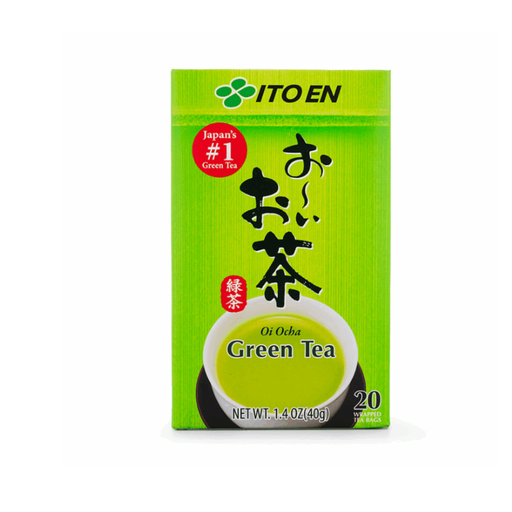
ITOEN OH-I OCHA Green Tea Bags, 40g (20 bags)
A green-tea-bag option for a straightforward cup with a snack. Its listing describes a bold taste; treat that as a flavour description, not a measure of caffeine strength. The pack is labelled 40g and contains 20 tea bags.
View on Joybuy
 No image available
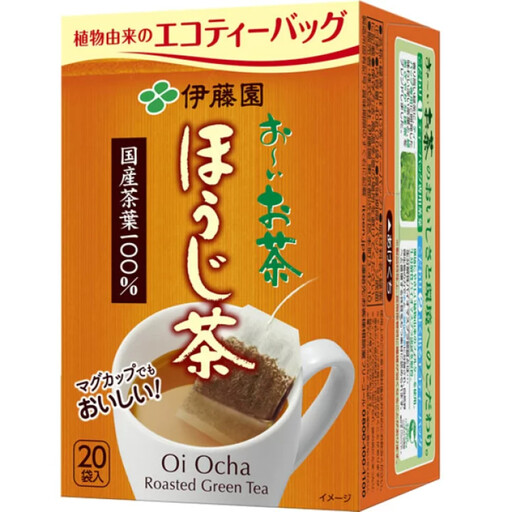
Itoen Oi Ocha Hojicha Premium Roasted Green Tea, 1.8g × 20
Consider this roasted green tea if you want a different flavour direction from an unroasted cup. Its listing describes a toasty, nutty profile and calls it low-caffeine, but that wording is not a quantified per-cup comparison. The title specifies 20 portions of 1.8g.
View on Joybuy
 No image available
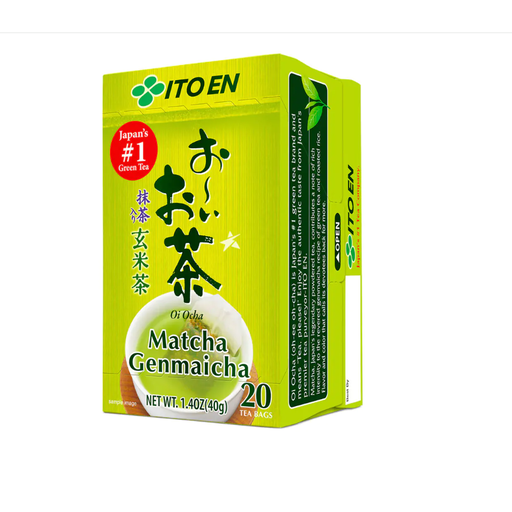
Itoen Oi Ocha Japanese Matcha Genmaicha Tea Bags, 40g (20 bags)
Choose this if a matcha genmaicha blend appeals more than plain green tea alongside a snack. The pack title specifies 40g and 20 tea bags. Check its ingredient list and caffeine statement rather than assuming the matcha in its name indicates a particular dose.
View on Joybuy
 No image available
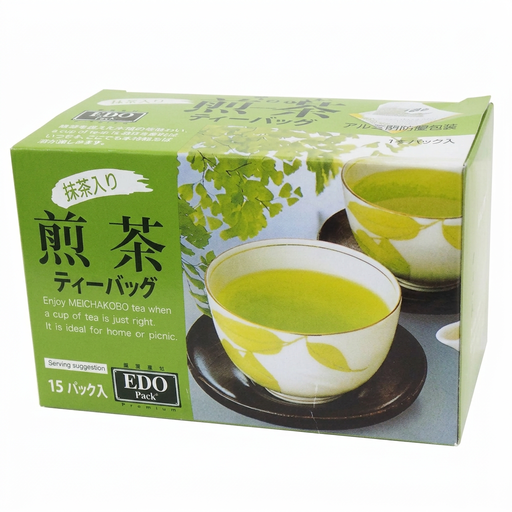
Cooling Hydration EDO Matcha Injected Sencha Pyramid Tea Bags, 30g
This sencha-and-matcha tea-bag option suits a break when you want that blend rather than an ordinary green-tea bag. The title specifies pyramid tea bags and a 30g pack. Check the pack for preparation directions and a caffeine amount if either affects your choice.
View on Joybuy
 No image available
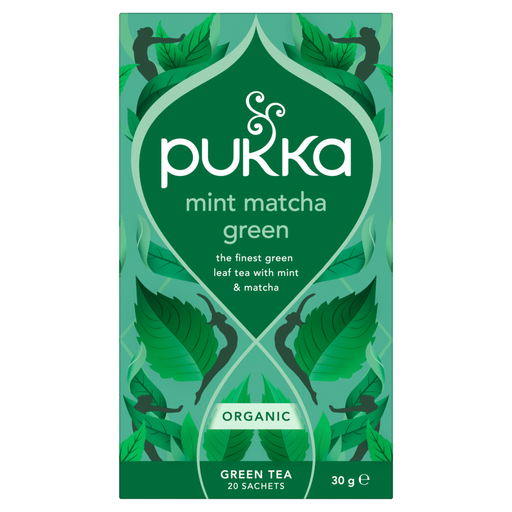
PUKKA Mint Matcha Green, 30g
Consider this 30g mint-and-matcha blend if you want a mint flavour rather than plain green tea. Pukka’s UK information describes Mint Matcha Green as a blend of mint, sencha and matcha; check this pack’s ingredients and preparation directions for the variant you receive. Do not infer a caffeine dose from the name.
View on Joybuy
Frequently asked questions
Does a stronger-tasting green tea contain more caffeine?
Taste alone does not establish its caffeine dose. Pure green tea, matcha blends and botanical blends have different compositions; use a stated amount per prepared serving if you need to compare their caffeine quantities.
Does matcha green tea contain caffeine?
Yes. Pukka says its matcha green tea contains caffeine. For a particular matcha blend, check the individual product information if the amount per serving matters to your choice.
Is Yogi Green Energy the same as pure green tea?
No. Yogi Tea’s UK product information lists green tea with guarana, ginger and other botanicals, and states that Green Energy contains caffeine. Compare its ingredients and caffeine information as a botanical blend, not as a pure green-tea bag.
Should I count tea alongside coffee during revision?
Yes, if the tea contains caffeine. The European Food Safety Authority’s 2015 assessment considers caffeine from all dietary sources, so coffee, tea, energy drinks and caffeine supplements belong in the same total-intake consideration. Its assessment is not a caffeine measurement for any of the teas listed here.
How should I brew green tea for a snack break?
Follow the instructions for the product you choose. For Clipper Organic Fairtrade Pure Green Tea, Clipper advises boiling fresh water, leaving it to cool for a minute and then infusing the bag for 1–3 minutes; a matcha or botanical blend may have different directions.


