Drinkers who want a bold cup
Look for an explicit extra-strong, intense or full-bodied description, then read the flavour notes. A dark roast and a spicy profile may appeal for different reasons than a chocolate-led one.


For a deliberately bold coffee to serve with biscuits, start with a ground coffee whose own description says extra strong, intense or full-bodied, then check that its preparation guidance suits your brewer. Sainsbury's describes its Fairtrade Intense Roast as extra strong and full-bodied, while its Fire Up Your Morning is an intense dark roast; if you want richness without the bitterness Taylors associates with darker roasts, its Rich Italian is a different direction. Strength numbers are brand-specific cues, not a shared measure of caffeine or flavour.
Look for an explicit extra-strong, intense or full-bodied description, then read the flavour notes. A dark roast and a spicy profile may appeal for different reasons than a chocolate-led one.
If you want a rich cup but dislike pronounced dark-roast bitterness, compare the stated chocolate, cocoa or nut notes with descriptions that emphasise a spicy or intense roast.
Check the exact coffee's brewing guidance before choosing it for your equipment. The coffee you use and the way you prepare it both affect the finished cup.
Choose the flavour direction first, then check the brewer guidance and the pack instructions you will use at home.
| Priority | What to check | Your needs |
|---|---|---|
| Flavour and body | Read the exact product's roast, body and flavour description. Sainsbury's calls Fairtrade Intense Roast extra strong, full-bodied and spicy; its Fire Up Your Morning is described as an intense dark roast with dark-chocolate and cardamom notes. | I want a bold coffee with biscuits, but I would choose differently for spicy dark-roast flavour than for chocolate-led flavour. |
| Strength labels | Check what the producer means by its number and use it within that range. Lavazza describes intensity in terms of aroma richness and body; a score from another brand is not the same scale. | A large number catches my eye, but I do not want to mistake it for a comparable caffeine measurement. |
| Brewing method | Look for guidance naming your cafetière, filter machine, moka pot or espresso equipment. Check the pack's dose and brewing instructions rather than relying on its strength label alone. | My coffee needs to work with the brewer I actually use, and I want a starting point I can adjust to taste. |
| Pack storage | Read the storage directions for the exact product, including any instructions that apply after opening. Consider whether the pack size suits how often you make coffee. | If I make coffee only occasionally, I want to know how the opened pack should be kept. |
Lavazza explains its intensity measure through aroma richness and body. Its number cannot establish that a coffee has more caffeine or a stronger flavour than a product on another producer's scale.
Use a number to navigate its own range, then compare the individual coffees' roast descriptions, flavour notes and brewing guidance.
Product guidance can be preparation-specific: illy presents its Intenso ground coffee for Italian espresso, while a Sainsbury's listing names filter machines, French presses and moka pots for Lavazza Espresso Barista Intenso.
Check the exact pack against your equipment before buying, and start with its instructions when brewing.
Extra-strong and smooth are different flavour directions. Taylors describes Rich Italian as rich and smooth, without the bitterness it associates with darker roasts; Sainsbury's describes its Fairtrade Intense Roast as extra strong, full-bodied and spicy.
Choose by the flavour you want alongside biscuits, rather than treating the darkest-sounding description as the automatic answer.
These descriptions concern particular products or ranges; they are not a shared strength scale.
Its Fairtrade Intense Roast and Taste the Difference Fire Up Your Morning offer two clearly described dark-roast directions in 227g packs.
A Sainsbury's listing describes Lavazza Espresso Barista Intenso ground coffee as medium roast with intensity 9 and names filter, French press and moka preparation.
Illy UK describes its Intenso ground espresso coffee as a 250g, 100% Arabica product with intensity 7/9 and cocoa and dried-fruit notes.
Taylors describes Rich Italian Ground Coffee as rich and smooth, with chocolate and nut notes.
Rombouts UK lists vacuum-packed ground coffees, including Cachet d'Or and a decaffeinated option.
The Tesco Finest ground-coffee collection includes origin-named options such as Peruvian, Colombian Supremo and Sumatra Mandheling.
These Lavazza ground coffees offer options for making coffee to serve with biscuits. If extra-strong flavour is your priority, compare each pack's roast and preparation guidance before choosing.
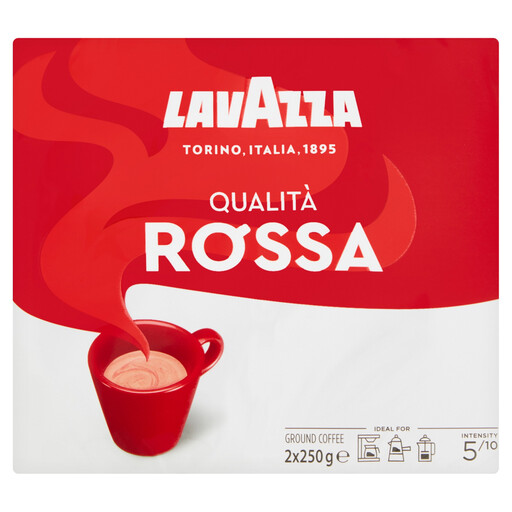 No image available
A 500g ground-coffee option to consider if you prepare coffee in a moka pot, filter machine or cafetière. For a deliberately bold cup, check the pack's brewing guidance and adjust your preparation to taste rather than assuming one fixed strength.
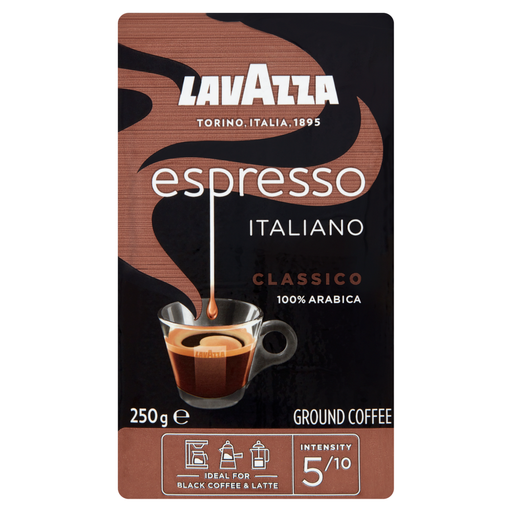 No image available
A 250g ground-coffee option for shoppers considering moka, filter or cafetière preparation. If you specifically want an extra-strong dark-roast cup with biscuits, check this pack's roast description and brewing instructions before deciding.
No: an intensity number alone does not establish caffeine content. Lavazza describes intensity in terms of aroma richness and body, so compare the exact blends' information rather than treating different brands' numbers as a caffeine scale.
Consider the flavour description before an extra-strong label. Taylors describes its Rich Italian ground coffee as rich and smooth and says it lacks the bitterness it associates with darker roasts; it does not describe that product as extra strong.
Yes, preparation matters as well as the coffee you choose. Match the product's guidance to your brewer, begin with its stated dose and brewing method, and adjust after tasting rather than relying only on a strength label.
Check that the exact ground coffee gives suitable preparation guidance for a cafetière or French press. An espresso-focused description alone does not establish that its grind suits your cafetière.